

| Type | Standard / Implementation Specification | Standards Process Maturity | Implementation Maturity | Adoption Level | Federally required | Cost | Test Tool Availability |
|---|---|---|---|---|---|---|---|
|
Implementation Specification
|
Balloted Draft
|
Pilot
|
 |
No
|
Free
|
No
|
|
|
Implementation Specification
|
Balloted Draft
|
Pilot
|
|
No
|
Free
|
Yes
|
|
|
Emerging Implementation Specification
|
Balloted Draft
|
Pilot
|
|
No
|
Free
|
Yes
|
|
|
Emerging Implementation Specification
|
Balloted Draft
|
Pilot
|
|
No
|
Free
|
No
|
|
|
Emerging Implementation Specification
|
Balloted Draft
|
Pilot
|
|
No
|
Free
|
No
|
|
|
Emerging Implementation Specification
|
Balloted Draft
|
Pilot
|
Feedback Requested |
No
|
Free
|
No
|

 = Federal FHIR Action Plan: Marks standards for coordinated federal adoption. See Appendix V: Federal FHIR Action Plan for more details.
| Federal FHIR Action Plan Alignment |
|---|
|
HL7® FHIR® Da Vinci Da Vinci Clinical Data Exchange Implementation Guide (CDex IG)
HL7® FHIR® Da Vinci Payer Data Exchange Implementation Guide (PDex IG)
|
| Limitations, Dependencies, and Preconditions for Consideration |
Applicable Security Patterns for Consideration
|
|---|---|
|
|
Help
1. Optional: Background Text / Cover Letter
The "Optional Background Text / Cover Letter" field provides space for additional context or introductory information related to your comment.
This field is entirely optional and serves the following purposes:
- Provides context for reviewers
- Serves as an introduction if submitting multiple comments
- Functions as a cover letter for formal submissions
If you are submitting a single comment for a specific data class or element, you may leave this field blank. For multiple comments, this space is useful for explaining the overall purpose or connection between your comments.
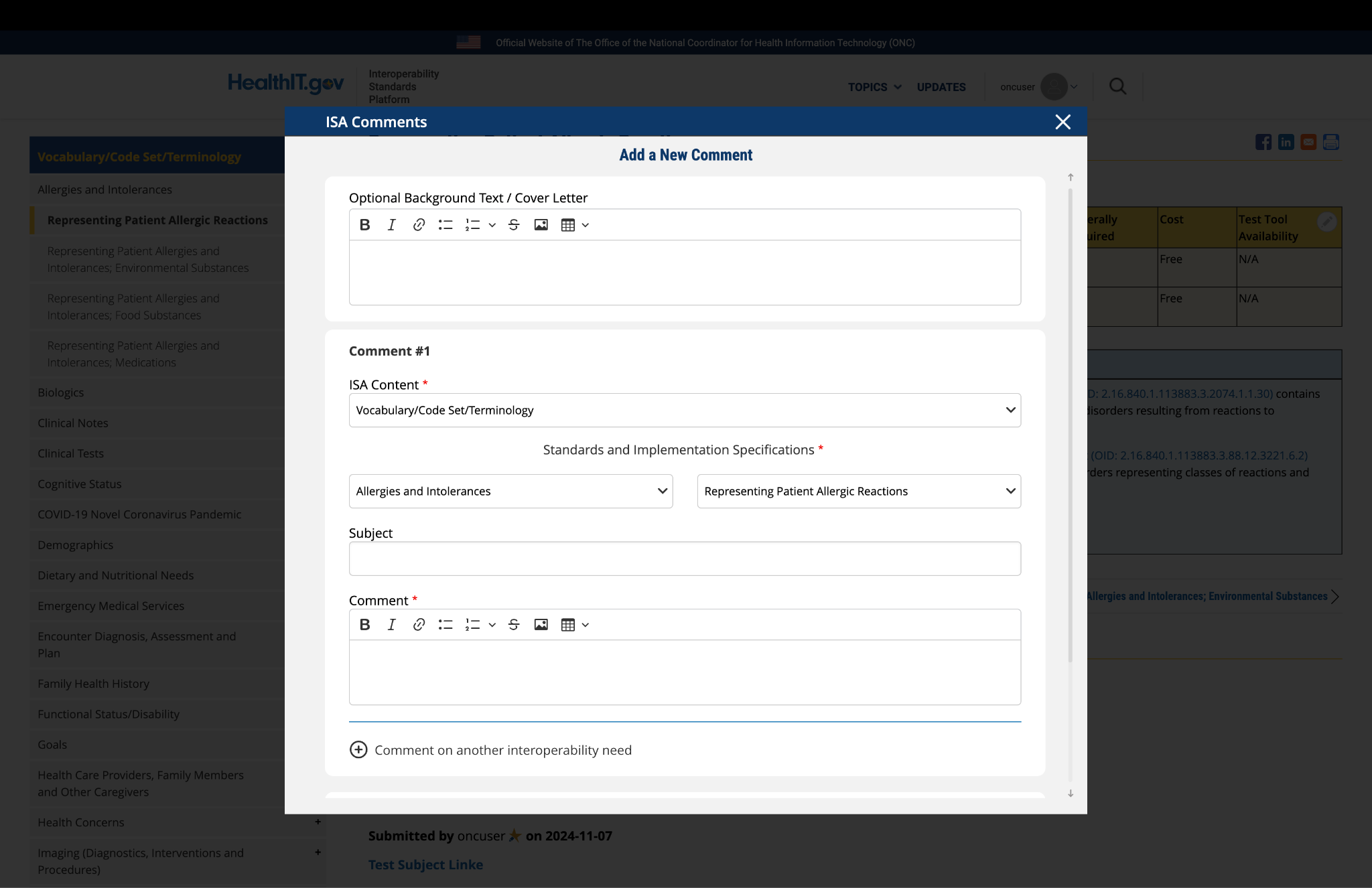
Fig 1 The "Optional Background Text / Cover Letter" field allows users to provide contextual information or introductory remarks for their comment submission.
2. Complete the Comment Form
The comment form contains several fields that require your input:
ISA Content: This field is automatically populated based on the page you are currently viewing. No action is required.
Standards and Implementation Specifications: This drop-down menu is pre-selected based on the topic you're commenting on. The selection reflects the relevant standard or implementation specification for your current page.
Subject: Enter a concise title that summarizes the focus of your comment. This helps reviewers quickly understand the nature of your feedback.
Comment: This is the main field where you provide your detailed feedback, concerns, or suggestions. The comment box includes a text editor with formatting options that allow you to:
- Format text as bold or italic
- Insert hyperlinks
- Create bullet points
- Create numbered lists
- Apply strike-through formatting
- Attach images
- Insert tables
Use these formatting options as needed to clearly present your information.

Fig 2 The comment text editor toolbar provides formatting options including bold, italic, links, lists, tables, and image insertion capabilities.
3. Optional: Add Additional Comments
If you need to provide feedback on multiple aspects of the ISA content, you can add additional comments:
- After completing your first comment, locate and click the link labeled "Comment on another interoperability need" at the bottom of the form.
- A new comment section will appear, allowing you to enter details for your additional comment.
- For this new comment section, the "ISA Content" and "Standards and Implementation Specifications" fields will not be automatically populated. You must select the appropriate content and specification from the drop-down menus for each additional comment.
- Complete all required fields for your additional comment.
- Repeat this process for each additional comment you wish to submit.
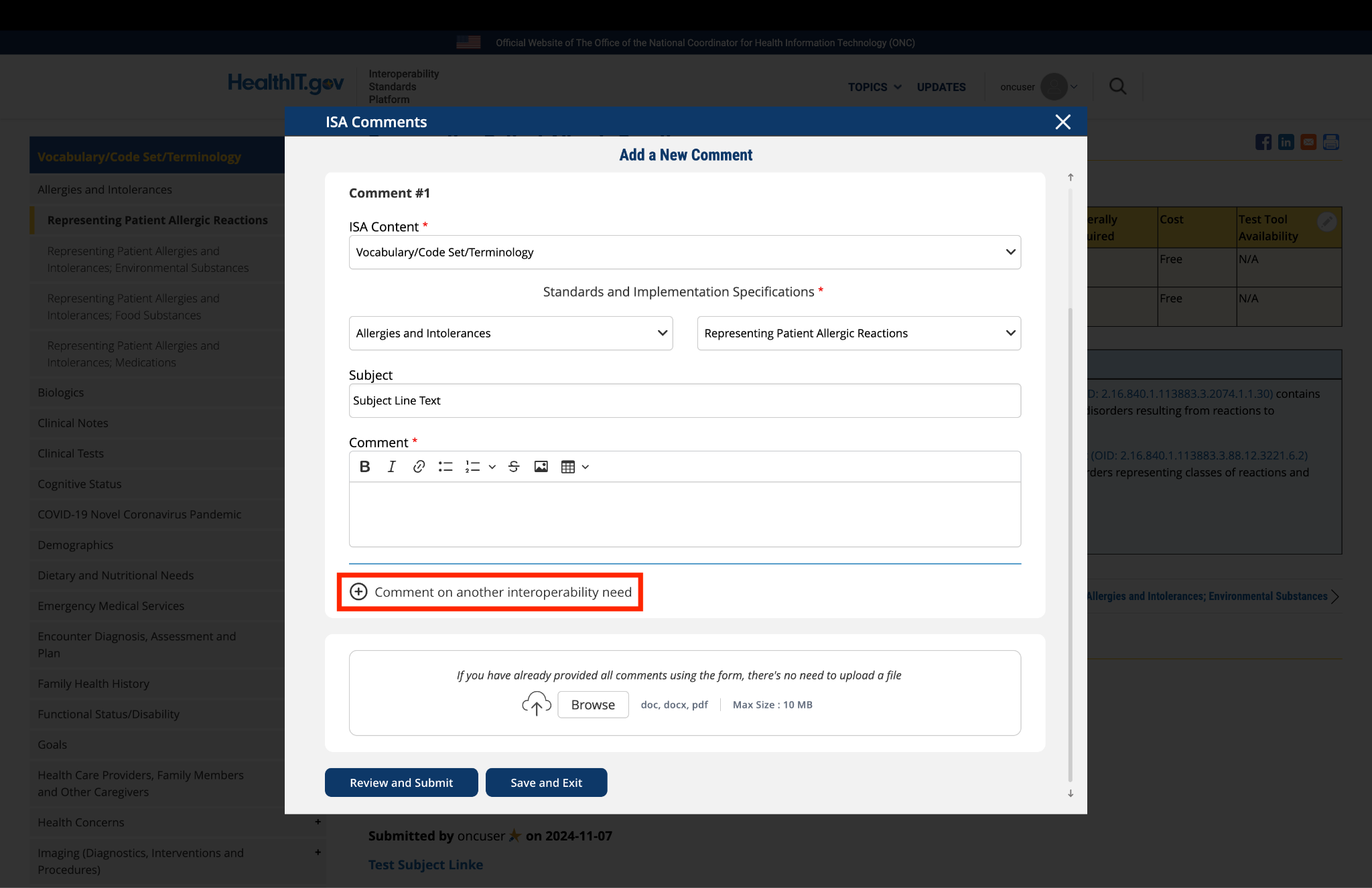
Fig 3 The "Comment on another interoperability need" link enables users to add multiple comments within a single submission.
4. Optional: Upload Supporting Files
The platform allows you to upload supporting documentation to enhance your comment:
- Locate the "File Upload" section at the bottom of the comment form.
- Click to upload any files (such as PDFs or documents) that provide additional context, evidence, or clarification for your comment.
Important: If you have already entered your comments using the form fields, there is no need to upload duplicate content in PDF format. The file upload feature is intended for supplementary materials only. Please avoid uploading files that contain the same information already provided in your comment text.
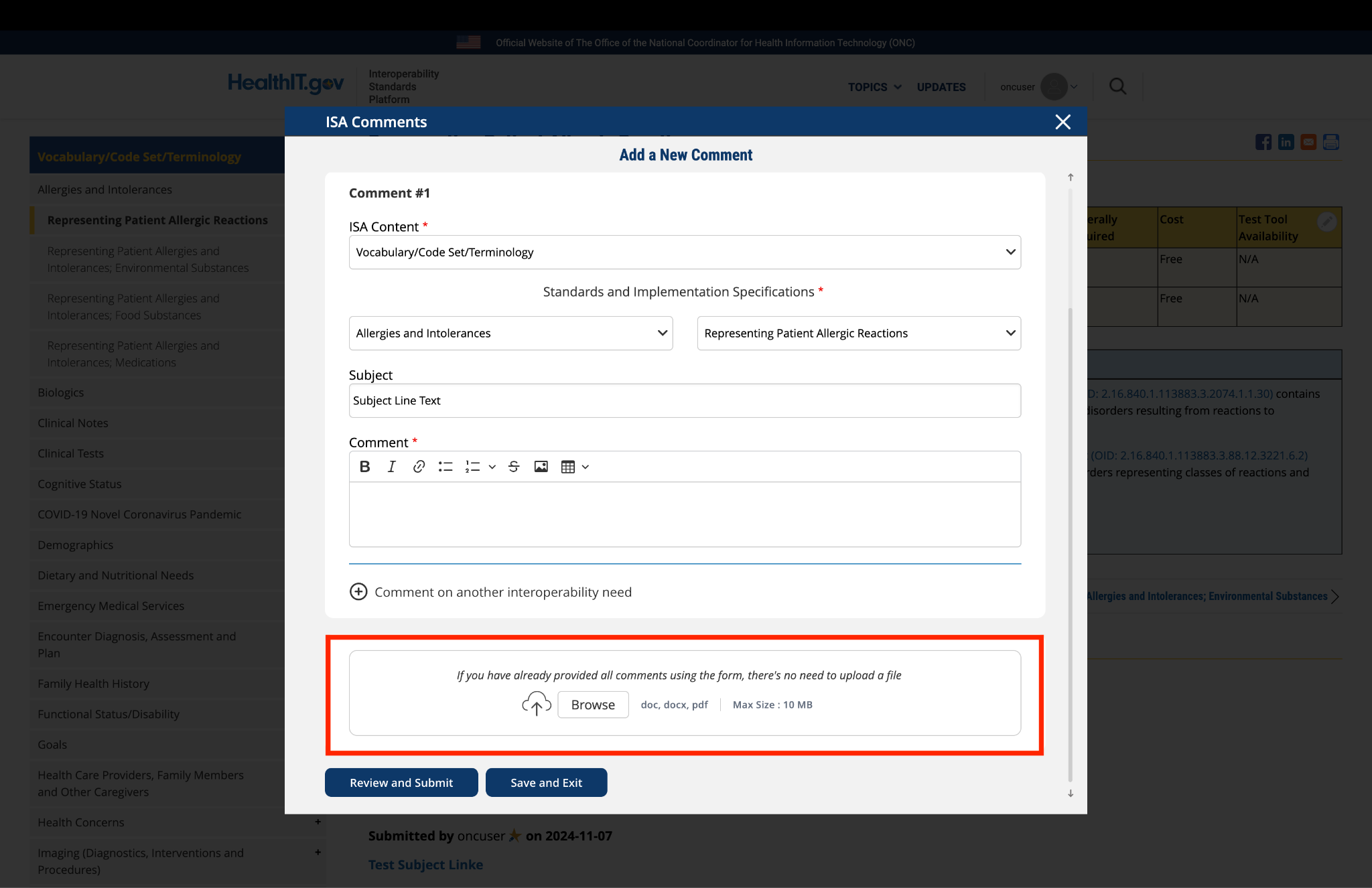
Fig 4 The "File Upload" section permits users to attach supporting documentation that supplements their written comments.
5. Optional: Save and Exit
If you need to pause your work and return to complete your comment later:
- Click the "Save and Exit" button at the bottom of the form.
- Your comment will be saved as a draft that you can access and complete later.
- When you return to the platform, you will see a red triangle with an exclamation mark next to the "Return to saved Comment" button, indicating that you have saved comments in draft status.
- Click the "Return to saved Comment " button to continue working on your draft.
- You will be taken to a review page where you can:
- Select "Submit Comment" to officially submit your feedback.
- Click "Edit" to return to the comment form and make changes
- Select "Discard Draft" to delete the saved draft and start fresh
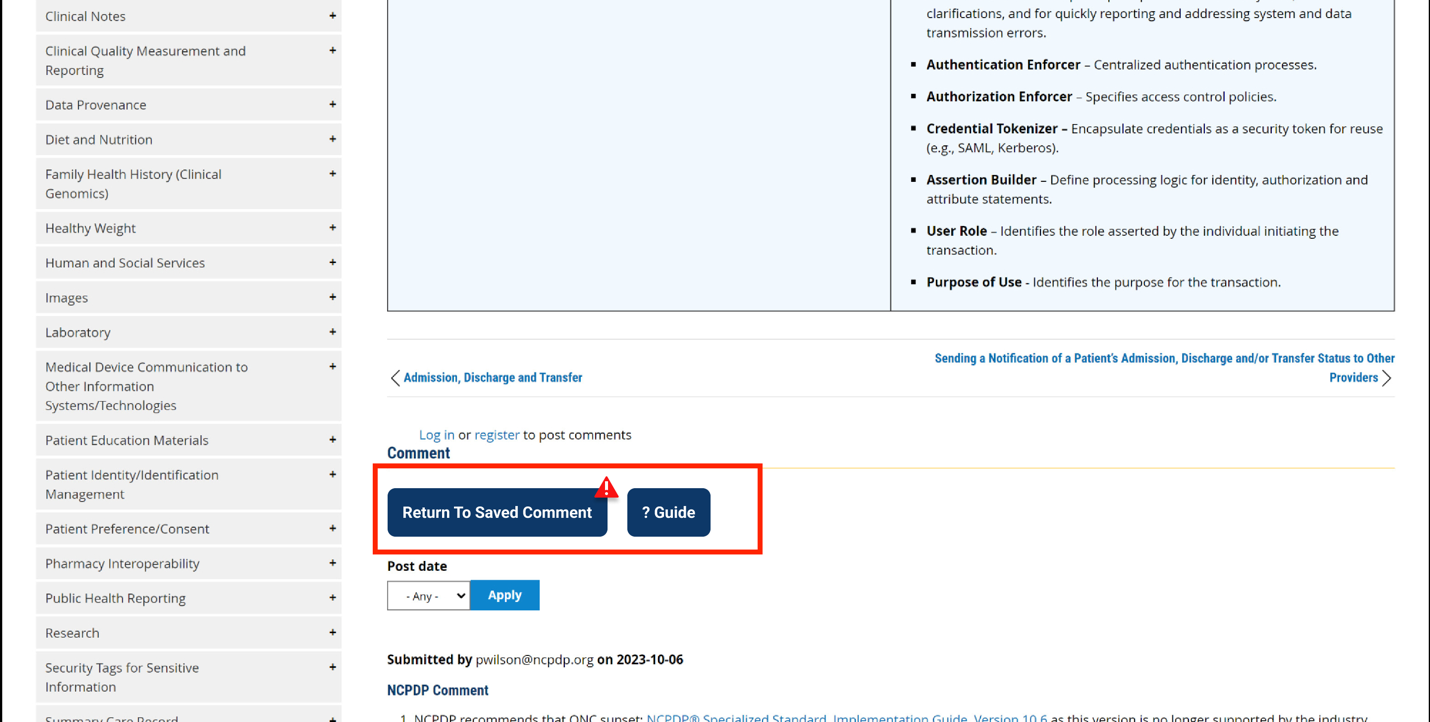
Fig 5 A red triangle with exclamation mark indicator appears next to the "Return to saved Comment" button when draft comments are saved in the system.
6. Review and Submit
Once you have completed your comment:
- Click the "Review and Submit" button at the bottom of the form.
- This will take you to a review screen displaying your comment(s) in full.
- Review all information for accuracy and completeness.
- On this review screen, you have three options:
- Click "Submit Comment" to officially submit your feedback
- Click "Edit" to return to the comment form and make changes
- Click "Discard Draft" to delete the comment and start fresh
- The review screen also includes a "Print" button that allows you to create a printed copy of your comments for your records.
- If you choose to submit, your comment will be recorded in the system and made available for review by the appropriate stakeholders.
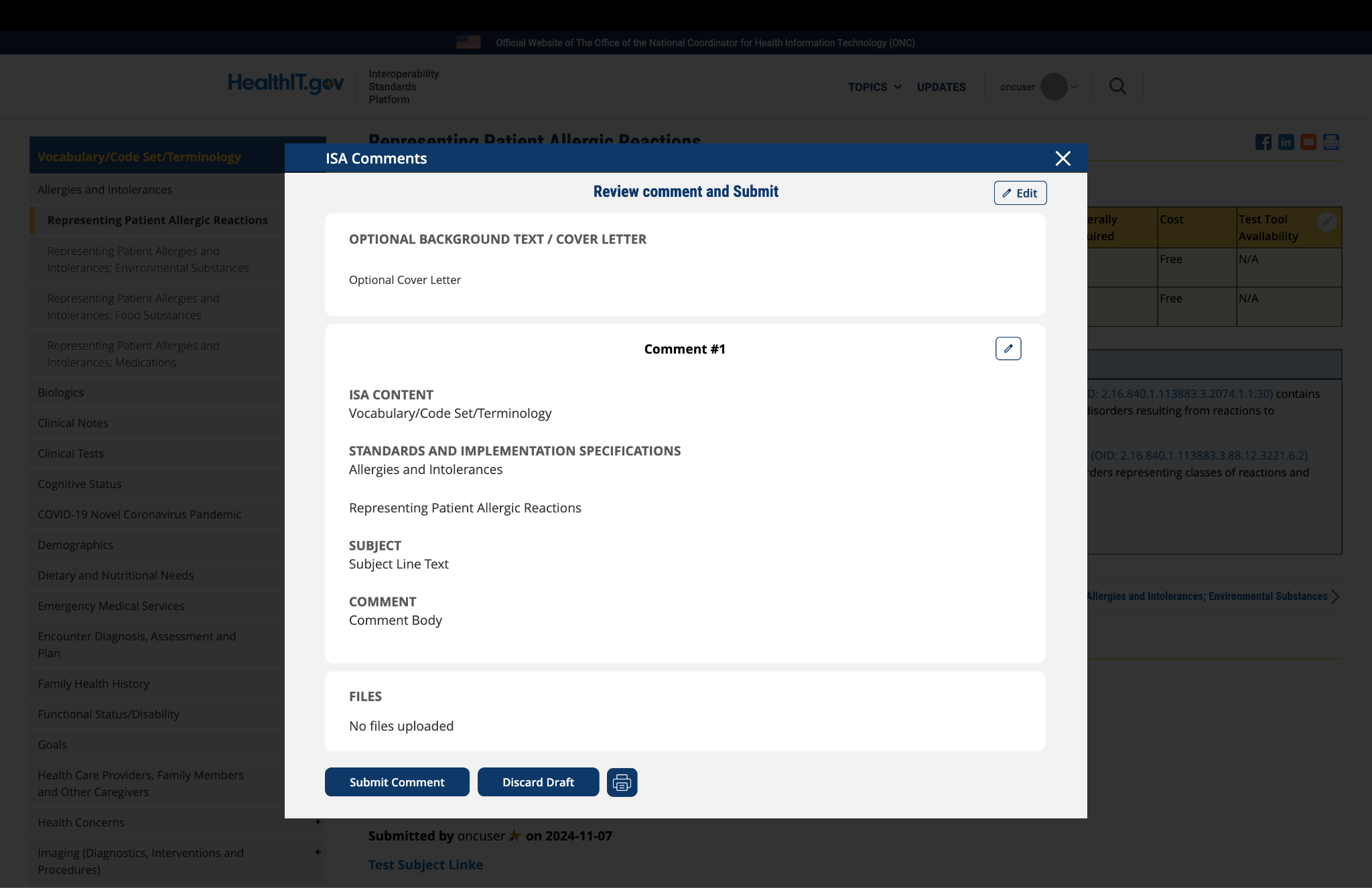
Fig 6 The review screen includes a "Print" button that allows users to create a record of their comment submission.
Submitted by John Moehrke on
IHE - Document Sharing
The Document Sharing exchange infrastructure is a family of implementation guides specifically designed to support this setting.
https://profiles.ihe.net/ITI/HIE-Whitepaper/index.html
This includes the FHIR based Mobile Health Document Sharing (MHDS) comprehensive community exchange.
Both XDS and MHDS enable the automation of discovery and retrieve of document content by more advanced health information systems.