

United States Core Data for Interoperability (USCDI)
The United States Core Data for Interoperability (USCDI) is a standardized set of health data classes and constituent data elements for nationwide, interoperable health information exchange.
A USCDI Data Class is an aggregation of Data Elements by a common theme or use case.
A USCDI Data Element is a piece of data defined in USCDI for access, exchange or use of electronic health information.
USCDI ONC New Data Element & Class (ONDEC) Submission System
USCDI V1
Please reference the USCDI version 1 document to the left for applicable standards versions associated with USCDI v1.
Harmful or undesired physiological responses associated with exposure to a substance.
Health professional’s conclusions and working assumptions that will guide treatment of the patient.
Information about a person who participates or is expected to participate in the care of a patient.
Narrative patient data relevant to the context identified by note types.
-
- Usage note: Clinical Notes data elements are content exchange standard agnostic. They should not be interpreted or associated with the structured document templates that may share the same name.
Desired state to be achieved by a patient.
Health related matter that is of interest, importance, or worry to someone who may be the patient, patient’s family or patient’s health care provider.
Record of vaccine administration.
Analysis of clinical specimens to obtain information about the health of a patient.
Pharmacologic agents used in the diagnosis, cure, mitigation, treatment, or prevention of disease.
Data used to categorize individuals for identification, records matching, and other purposes.
Activity performed for or on a patient as part of the provision of care.
The metadata, or extra information about data, regarding who created the data and when it was created.
Representing a patient’s smoking behavior.
Unique identifier(s) for a patient's implantable device(s).
Physiologic measurements of a patient that indicate the status of the body’s life sustaining functions.
USCDI V2
The USCDI v2 contains data classes and elements from USCDI v1 and new data classes and elements submitted through the ONDEC system. Please reference the USCDI Version 2 document to the left for applicable vocabulary standards versions associated with USCDI v2 and to the ONC Standards Bulletin 21-3 for more information about the process to develop USCDI v2 and future versions.
Harmful or undesired physiological responses associated with exposure to a substance.
Health professional’s conclusions and working assumptions that will guide treatment of the patient.
Information about a person who participates or is expected to participate in the care of a patient.
Narrative patient data relevant to the context identified by note types.
-
- Usage note: Clinical Notes data elements are content exchange standard agnostic. They should not be interpreted or associated with the structured document templates that may share the same name.
Non-imaging and non-laboratory tests performed that result in structured or unstructured findings specific to the patient to facilitate the diagnosis and management of conditions.
Tests that result in visual images requiring interpretation by a credentialed professional.
Information related to interactions between healthcare providers and patients.
Desired state to be achieved by a patient.
Health related matter that is of interest, importance, or worry to someone who may be the patient, patient’s family or patient’s health care provider.
Record of vaccine administration.
Analysis of clinical specimens to obtain information about the health of a patient.
Pharmacologic agents used in the diagnosis, cure, mitigation, treatment, or prevention of disease.
Data used to categorize individuals for identification, records matching, and other purposes.
Condition, diagnosis, or reason for seeking medical attention.
Activity performed for or on a patient as part of the provision of care.
The metadata, or extra information about data, regarding who created the data and when it was created.
Representing a patient’s smoking behavior.
Unique identifier(s) for a patient's implantable device(s).
Physiologic measurements of a patient that indicate the status of the body’s life sustaining functions.
USCDI V3
Please read the USCDI v3 standard document and the ONC Standards Bulletin 22-2 for details. Consistent with EO 14168 and OPM guidance, ASTP/ONC is exercising enforcement and issuing certification guidance for the ONC Health IT Certification Program with respect to certain data elements in USCDI v3. For more information see https://www.healthit.gov/topic/uscdi-v3-data-elements-enforcement-discretion.
Harmful or undesired physiological responses associated with exposure to a substance.
Health professional’s conclusions and working assumptions that will guide treatment of the patient.
Information about a person who participates or is expected to participate in the care of a patient.
Narrative patient data relevant to the context identified by note types.
-
- Usage note: Clinical Notes data elements are content exchange standard agnostic. They should not be interpreted or associated with the structured document templates that may share the same name.
Non-imaging and non-laboratory tests performed that result in structured or unstructured findings specific to the patient to facilitate the diagnosis and management of conditions.
Tests that result in visual images requiring interpretation by a credentialed professional.
Information related to interactions between healthcare providers and patients.
Desired state to be achieved by a patient.
Data related to an individual’s insurance coverage for healthcare.
Assessments of a health-related matter of interest, importance, or worry to a patient, patient’s authorized representative, or patient’s healthcare provider that could identify a need, problem, or condition.
Record of vaccine administration.
Analysis of clinical specimens to obtain information about the health of a patient.
Pharmacologic agents used in the diagnosis, cure, mitigation, treatment, or prevention of disease.
Data used to categorize individuals for identification, records matching, and other purposes.
Condition, diagnosis, or reason for seeking medical attention.
Activity performed for or on a patient as part of the provision of care.
The metadata, or extra information about data, regarding who created the data and when it was created.
Unique identifier(s) for a patient's implantable device(s).
Physiologic measurements of a patient that indicate the status of the body’s life sustaining functions.
USCDI V3.1
Please read the USCDI v3.1 standard document and the ONC Standards Bulletin 22-2 for details. USCDI version 3.1 updates USCDI version 3 with the following changes: consistent with Executive Order 14168, the Sex, Sexual Orientation, and Gender Identity data elements have been removed or updated in the Patient Demographics/Information Data Class.
Harmful or undesired physiological responses associated with exposure to a substance.
Health professional’s conclusions and working assumptions that will guide treatment of the patient.
Information about a person who participates or is expected to participate in the care of a patient.
Narrative patient data relevant to the context identified by note types.
-
- Usage note: Clinical Notes data elements are content exchange standard agnostic. They should not be interpreted or associated with the structured document templates that may share the same name.
Non-imaging and non-laboratory tests performed that result in structured or unstructured findings specific to the patient to facilitate the diagnosis and management of conditions.
Tests that result in visual images requiring interpretation by a credentialed professional.
Information related to interactions between healthcare providers and patients.
Desired state to be achieved by a patient.
Data related to an individual’s insurance coverage for healthcare.
Assessments of a health-related matter of interest, importance, or worry to a patient, patient’s authorized representative, or patient’s healthcare provider that could identify a need, problem, or condition.
Record of vaccine administration.
Analysis of clinical specimens to obtain information about the health of a patient.
Pharmacologic agents used in the diagnosis, cure, mitigation, treatment, or prevention of disease.
Data used to categorize individuals for identification, records matching, and other purposes.
Condition, diagnosis, or reason for seeking medical attention.
Activity performed for or on a patient as part of the provision of care.
The metadata, or extra information about data, regarding who created the data and when it was created.
Unique identifier(s) for a patient's implantable device(s).
Physiologic measurements of a patient that indicate the status of the body’s life sustaining functions.
USCDI V4
USCDI v4 added 20 data elements and one data class to USCDI v3. Please reference the USCDI v4 standard document and the ONC Standards Bulletin 23-2 for details. To review the prioritization criteria ONC used to select the USCDI v4 data elements, refer to the ONC Standards Bulletin 22-2.
Harmful or undesired physiological responses associated with exposure to a substance.
Information about a person who participates or is expected to participate in the care of a patient.
Narrative patient data relevant to the context identified by note types.
-
- Usage note: Clinical Notes data elements are content exchange standard agnostic. They should not be interpreted or associated with the structured document templates that may share the same name.
Non-imaging and non-laboratory tests performed that result in structured or unstructured findings specific to the patient to facilitate the diagnosis and management of conditions.
Tests that result in visual images requiring interpretation by a credentialed professional.
Information related to interactions between healthcare providers and patients.
Physical place of available services or resources.
Desired state to be achieved by a person or a person’s elections to guide care.
Data related to an individual’s insurance coverage for healthcare.
Assessments of a health-related matter of interest, importance, or worry to a patient, patient’s authorized representative, or patient’s healthcare provider that could identify a need, problem, or condition.
Record of vaccine administration.
Analysis of clinical specimens to obtain information about the health of a patient.
Instrument, apparatus, machine, equipment, implant, software, hardware, or related component or accessory intended to diagnose, treat, cure, mitigate, or prevent disease, or to affect the structure or function of the body.
Pharmacologic agents used in the diagnosis, cure, mitigation, treatment, or prevention of disease.
Data used to categorize individuals for identification, records matching, and other purposes.
Information that guides treatment of the patient and recommendations for future treatment.
Condition, diagnosis, or reason for seeking medical attention.
Activity performed for or on a patient as part of the provision of care.
The metadata, or extra information about data, regarding who created the data and when it was created.
Physiologic measurements of a patient that indicate the status of the body’s life sustaining functions.
USCDI V5
USCDI v5 was published on July 16, 2024, and includes 16 new data elements and two new data classes. Please read the USCDI v5 standard document and the ONC Standards Bulletin 24-2 for details.
Harmful or undesired physiological responses associated with exposure to a substance.
Information about a person who participates or is expected to participate in the care of a patient.
Narrative patient data relevant to the context identified by note types.
-
- Usage note: Clinical Notes data elements are content exchange standard agnostic. They should not be interpreted or associated with the structured document templates that may share the same name.
Non-imaging and non-laboratory tests performed that result in structured or unstructured findings specific to the patient to facilitate the diagnosis and management of conditions.
Tests that result in visual images requiring interpretation by a credentialed professional.
Information related to interactions between healthcare providers and patients.
Physical place of available services or resources.
Desired state to be achieved by a person or a person’s elections to guide care.
Data related to an individual’s insurance coverage for healthcare.
Assessments of a health-related matter of interest, importance, or worry to a patient, patient’s authorized representative, or patient’s healthcare provider that could identify a need, problem, or condition.
Record of vaccine administration.
Analysis of clinical specimens to obtain information about the health of a patient.
Instrument, apparatus, machine, equipment, implant, software, hardware, or related component or accessory intended to diagnose, treat, cure, mitigate, or prevent disease, or to affect the structure or function of the body.
Pharmacologic agents used in the diagnosis, cure, mitigation, treatment, or prevention of disease.
Findings or other clinical data collected about a patient during care.
Provider-authored request for the delivery of patient care services.
Usage notes: Orders convey a provider’s intent to have a service performed on or for a patient, or to give instructions on future care.
Data used to categorize individuals for identification, records matching, and other purposes.
Information that guides treatment of the patient and recommendations for future treatment.
Condition, diagnosis, or reason for seeking medical attention.
Activity performed for or on a patient as part of the provision of care.
The metadata, or extra information about data, regarding who created the data and when it was created.
Physiologic measurements of a patient that indicate the status of the body’s life sustaining functions.
USCDI V6
ASTP/ONC published USCDI v6 on July 24, 2025, which includes 6 new data elements. Please read the USCDI v6 Standard Document and the ASTP/ONC Standards Bulletin 25-2 for details.
Harmful or undesired physiological responses associated with exposure to a substance.
Information that guides treatment of the patient and recommendations for future treatment.
Information about a person who participates or is expected to participate in the care of a patient.
Narrative patient data relevant to the context identified by note types.
-
- Usage note: Clinical Notes data elements are content exchange standard agnostic. They should not be interpreted or associated with the structured document templates that may share the same name.
Non-imaging and non-laboratory tests performed that result in structured or unstructured findings specific to the patient to facilitate the diagnosis and management of conditions.
Tests that result in visual images requiring interpretation by a credentialed professional.
Information related to interactions between healthcare providers and patients.
Physical place of available services or resources.
Family member health condition(s) that are relevant to a patient's care.
Desired state to be achieved by a person or a person’s elections to guide care.
Data related to an individual’s insurance coverage for healthcare.
Assessments of a health-related matter of interest, importance, or worry to a patient, patient’s authorized representative, or patient’s healthcare provider that could identify a need, problem, or condition.
Record of vaccine administration.
Analysis of clinical specimens to obtain information about the health of a patient.
Instrument, apparatus, machine, equipment, implant, software, hardware, or related component or accessory intended to diagnose, treat, cure, mitigate, or prevent disease, or to affect the structure or function of the body.
Pharmacologic agents used in the diagnosis, cure, mitigation, treatment, or prevention of disease.
Provider-authored request for the delivery of patient care services.
Usage notes: Orders convey a provider’s intent to have a service performed on or for a patient, or to give instructions on future care.
Data used to categorize individuals for identification, records matching, and other purposes.
Condition, diagnosis, or reason for seeking medical attention.
Activity performed for or on a patient as part of the provision of care.
The metadata, or extra information about data, regarding who created the data and when it was created.
Physiologic measurements of a patient that indicate the status of the body’s life sustaining functions.
USCDI V7
ONC published USCDI v7 on July 23, 2026, which includes 31 new data elements. Please read the USCDI v7 Standard Document and the ONC Standards Bulletin 26-2 for details. ONC welcomes input on future versions during the USCDI feedback period, open through September 28, 2026, at 11:59 PM ET. During this time, ONC is accepting new data element submissions through ONDEC, and comments on existing data elements may be entered via the commenting feature on the USCDI data element pages.
Unintended effects associated with clinical interventions.
Exclusions: This data class does not include patient safety analyses, internal risk management documentation, or patient safety work product as defined under the Patient Safety and Quality Improvement Act of 2005 (42 U.S.C. 299b 21 et seq.) and implementing regulations (42 CFR part 3). It is not intended to define data elements for the exchange of Patient Safety Organization (PSO) investigations, safety reviews, or facility level reporting activities.
Unintended effects associated with clinical interventions.
Exclusions: This data class does not include patient safety analyses, internal risk management documentation, or patient safety work product as defined under the Patient Safety and Quality Improvement Act of 2005 (42 U.S.C. 299b 21 et seq.) and implementing regulations (42 CFR part 3). It is not intended to define data elements for the exchange of Patient Safety Organization (PSO) investigations, safety reviews, or facility level reporting activities.
Harmful or undesired physiological responses associated with exposure to a substance.
Information that guides treatment of the patient and recommendations for future treatment.
Information about a person who participates or is expected to participate in the care of a patient.
Narrative patient data relevant to the context identified by note types.
-
- Usage note: Clinical Notes data elements are content exchange standard agnostic. They should not be interpreted or associated with the structured document templates that may share the same name.
Non-imaging and non-laboratory tests performed that result in structured or unstructured findings specific to the patient to facilitate the diagnosis and management of conditions.
Tests that result in visual images requiring interpretation by a credentialed professional.
Information related to interactions between healthcare providers and patients.
Physical place of available services or resources.
Family member health condition(s) that are relevant to a patient's care.
Desired state to be achieved by a person or a person’s elections to guide care.
Data related to an individual’s insurance coverage for healthcare.
Assessments of a health-related matter of interest, importance, or worry to a patient, patient’s authorized representative, or patient’s healthcare provider that could identify a need, problem, or condition.
Contextual information that provides supporting details for healthcare data.
Record of vaccine administration.
Analysis of clinical specimens to obtain information about the health of a patient.
Instrument, apparatus, machine, equipment, implant, software, hardware, or related component or accessory intended to diagnose, treat, cure, mitigate, or prevent disease, or to affect the structure or function of the body.
Pharmacologic agents used in the diagnosis, cure, mitigation, treatment, or prevention of disease.
Provider-authored request for the delivery of patient care services.
Usage notes: Orders convey a provider’s intent to have a service performed on or for a patient, or to give instructions on future care.
Data used to categorize individuals for identification, records matching, and other purposes.
Condition, diagnosis, or reason for seeking medical attention.
Activity performed for or on a patient as part of the provision of care.
The metadata, or extra information about data, regarding who created the data and when it was created.
Physiologic measurements of a patient that indicate the status of the body’s life sustaining functions.
- Represented by a terminology standard or SDO-balloted technical specification or implementation guide.
- Data element is captured, stored, or accessed in multiple production EHRs or other HIT modules from more than one developer.
- Data element is electronically exchanged between more than two production EHRs or other HIT modules of different developers using available interoperability standards.
- Use cases apply to most care settings or specialties.
Level 2
Unintended effects associated with clinical interventions.
Exclusions: This data class does not include patient safety analyses, internal risk management documentation, or patient safety work product as defined under the Patient Safety and Quality Improvement Act of 2005 (42 U.S.C. 299b 21 et seq.) and implementing regulations (42 CFR part 3). It is not intended to define data elements for the exchange of Patient Safety Organization (PSO) investigations, safety reviews, or facility level reporting activities.
Unintended effects associated with clinical interventions.
Exclusions: This data class does not include patient safety analyses, internal risk management documentation, or patient safety work product as defined under the Patient Safety and Quality Improvement Act of 2005 (42 U.S.C. 299b 21 et seq.) and implementing regulations (42 CFR part 3). It is not intended to define data elements for the exchange of Patient Safety Organization (PSO) investigations, safety reviews, or facility level reporting activities.
Harmful or undesired physiological responses associated with exposure to a substance.
Material substance originating from a biological entity intended to be transplanted or infused into another (possibly the same) biological entity.
Tests that result in visual images requiring interpretation by a credentialed professional.
Physical place of available services or resources.
Data related to an individual’s insurance coverage for healthcare.
Instrument, apparatus, machine, equipment, implant, software, hardware, or related component or accessory intended to diagnose, treat, cure, mitigate, or prevent disease, or to affect the structure or function of the body.
Data used to categorize individuals for identification, records matching, and other purposes.
Physiologic measurements of a patient that indicate the status of the body’s life sustaining functions.
- Represented by a terminology standard or SDO-balloted technical specification or implementation guide.
- Data element is captured, stored, or accessed in at least one production EHR or HIT module.
- Data element is electronically exchanged between two production EHRs or other HIT modules using available interoperability standards.
- Use cases apply to several care settings or specialties.
Level 1
Material substance originating from a biological entity intended to be transplanted or infused into another (possibly the same) biological entity.
Narrative patient data relevant to the context identified by note types.
-
- Usage note: Clinical Notes data elements are content exchange standard agnostic. They should not be interpreted or associated with the structured document templates that may share the same name.
Physical place of available services or resources.
Assessments of a health-related matter of interest, importance, or worry to a patient, patient’s authorized representative, or patient’s healthcare provider that could identify a need, problem, or condition.
Analysis of clinical specimens to obtain information about the health of a patient.
Pharmacologic agents used in the diagnosis, cure, mitigation, treatment, or prevention of disease.
Data used to categorize individuals for identification, records matching, and other purposes.
The metadata, or extra information about data, regarding who created the data and when it was created.
Physiologic measurements of a patient that indicate the status of the body’s life sustaining functions.
- Not represented by a terminology standard or SDO-balloted technical specification or implementation guide.
- Data element is captured, stored, or accessed in limited settings such as a pilot or proof of concept demonstration.
- Data element is electronically exchanged in limited environments, such as connectathons or pilots.
- Use cases apply to a limited number of care settings or specialties, or data element represents a specialization of other, more general data elements.
Level 0
Unintended effects associated with clinical interventions.
Exclusions: This data class does not include patient safety analyses, internal risk management documentation, or patient safety work product as defined under the Patient Safety and Quality Improvement Act of 2005 (42 U.S.C. 299b 21 et seq.) and implementing regulations (42 CFR part 3). It is not intended to define data elements for the exchange of Patient Safety Organization (PSO) investigations, safety reviews, or facility level reporting activities.
Unintended effects associated with clinical interventions.
Exclusions: This data class does not include patient safety analyses, internal risk management documentation, or patient safety work product as defined under the Patient Safety and Quality Improvement Act of 2005 (42 U.S.C. 299b 21 et seq.) and implementing regulations (42 CFR part 3). It is not intended to define data elements for the exchange of Patient Safety Organization (PSO) investigations, safety reviews, or facility level reporting activities.
Harmful or undesired physiological responses associated with exposure to a substance.
Material substance originating from a biological entity intended to be transplanted or infused into another (possibly the same) biological entity.
Information about a person who participates or is expected to participate in the care of a patient.
Narrative patient data relevant to the context identified by note types.
-
- Usage note: Clinical Notes data elements are content exchange standard agnostic. They should not be interpreted or associated with the structured document templates that may share the same name.
Non-imaging and non-laboratory tests performed that result in structured or unstructured findings specific to the patient to facilitate the diagnosis and management of conditions.
Tests that result in visual images requiring interpretation by a credentialed professional.
Information related to interactions between healthcare providers and patients.
Health data as reflected in a patient's Explanation of Benefits (EOB) statements, typically derived from claims and other administrative data.
Physical place of available services or resources.
Desired state to be achieved by a patient.
Desired state to be achieved by a person or a person’s elections to guide care.
Data related to an individual’s insurance coverage for healthcare.
Assessments of a health-related matter of interest, importance, or worry to a patient, patient’s authorized representative, or patient’s healthcare provider that could identify a need, problem, or condition.
Contextual information that provides supporting details for healthcare data.
Record of vaccine administration.
Analysis of clinical specimens to obtain information about the health of a patient.
Instrument, apparatus, machine, equipment, implant, software, hardware, or related component or accessory intended to diagnose, treat, cure, mitigate, or prevent disease, or to affect the structure or function of the body.
Pharmacologic agents used in the diagnosis, cure, mitigation, treatment, or prevention of disease.
Findings or other clinical data collected about a patient during care.
Provider-authored request for the delivery of patient care services.
Usage notes: Orders convey a provider’s intent to have a service performed on or for a patient, or to give instructions on future care.
Data used to categorize individuals for identification, records matching, and other purposes.
Information that guides treatment of the patient and recommendations for future treatment.
Condition, diagnosis, or reason for seeking medical attention.
Activity performed for or on a patient as part of the provision of care.
The metadata, or extra information about data, regarding who created the data and when it was created.
Physiologic measurements of a patient that indicate the status of the body’s life sustaining functions.





The USCDI ONC New Data Element and Class (ONDEC) Submission System supports a predictable, transparent, and collaborative process, allowing health IT stakeholders to submit new data elements and classes for future versions of USCDI. Click here for more information and to submit new data elements.
The USCDI standard will follow the Standards Version Advancement Process described in the Cures rule to allow health IT developers to update their systems to newer version of USCDI and provide these updates to their customers.
- Log in to post comments
Comment
Submitted by heather.crosby on
b.well Connected Health Comments on USCDIv8
Dear National Coordinator Keane:
b.well Connected Health is grateful for the opportunity to offer recommendations toward Version 8 of the United States Core Data for Interoperability, and we recognize the sustained effort that you and your staff have devoted to this work. We hold ONC’s pursuit of interoperability across the many stakeholders in healthcare in high regard, and we see USCDI as central to that pursuit. We remain committed to working alongside ONC and the broader industry as this progress continues.
This letter offers our comments on the final release of United States Core Data for Interoperability Version 7 (USCDI v7) and our recommendations for Version 8 (USCDI v8).
Submitted by mattreid on
AMA comments on USCDI v8
The American Medical Association (AMA) appreciates the opportunity to comment on USCDI v8. Our recommendations address one gap: exchanged data rarely tells a receiving system what service was ordered, by whom, and who performed it. Closing that gap creates a computable chain from clinical intent to ordered service, prior authorization, performed service, and claim, and removes manual rework that burdens physicians today, particularly in electronic prior authorization (ePA).
- Procedure Order: revise the definition and add vocabularies.
Recommendation: Revise the USCDI v7 definition to "Provider request for the performance of a diagnostic, therapeutic, preventive, or other healthcare procedure or service." List CPT, HCPCS, and SNOMED CT as applicable vocabulary standards, used according to the nature and intended use of the ordered service. The element currently lists no vocabulary. Payers evaluate prior authorization and claims using CPT and HCPCS, so orders coded in them can move through ePA without rekeying. NCPDP made a parallel recommendation for Referral Order in April 2026, noting that SNOMED CT, HCPCS, and CPT are all used in the NCPDP SCRIPT standard. - Add Requested Procedure or Service.
Recommendation: Add "Coded identification of the procedure or service requested by an ordering practitioner," with CPT, HCPCS, and SNOMED CT as applicable vocabularies and other systems where appropriate. Align it with FHIR ServiceRequest.code. Without a coded service, an order cannot be reliably matched to a prior authorization request or a claim. - Add Ordering/Referring Practitioner Identifier and Performing Practitioner Identifier.
Recommendation: Add "Identifier of the practitioner responsible for ordering or referring the patient for a health care service" and "Identifier of the practitioner who performed or was principally responsible for performing a procedure or service," with NPI as an example. Care Team Member Identifier and Provenance Author do not tie a practitioner to a specific order or procedure. Accountability for a service should be explicit in the data, not inferred. - Add Provider Specialty/Taxonomy.
Recommendation: Add "Standardized classification representing the specialty, subspecialty, classification, or area of practice of a health care practitioner associated with a care activity," with the NUCC Health Care Provider Taxonomy Code Set as the applicable vocabulary. Care Team Member Role describes a function on the care team, not specialty, which referral routing and coverage rules depend on. - Add Practitioner Practice Affiliation.
Recommendation: Add "Health care organization or practice with which the practitioner is professionally affiliated in the context of the patient's care," including organization name, organization identifier (NPI where applicable), relationship or role, and effective period, aligned with FHIR PractitionerRole. - Strengthen existing location and telecom elements rather than duplicate them.
Recommendation: Add usage notes allowing Care Team Member Location, Care Team Member Telecom, and Facility Information elements to be associated with the practice affiliation in item 5. Reusing existing elements limits implementation burden. - Procedure: require code system and version context.
Recommendation: Add a usage note to Procedure stating that exchanged codes should carry the code system, code, and applicable version or release. "CPT | 99214 | 2026" is highly interoperable. Apply the same expectation to all coded USCDI elements. Version context grows more important as terminology services update content dynamically. The AMA raised versioning in its Draft USCDI v7 comments, and it remains unaddressed. - Build a provider professional information roadmap in USCDI+ and ONDEC.
Recommendation: Develop Professional License (type, jurisdiction, identifier, status, effective and expiration dates), Professional Certification (type, issuing body, status, effective and expiration dates), and Credential Verification/Provenance as a coordinated USCDI+ effort. Systems exchanging orders, referrals, prescriptions, and procedures need a standard way to represent the professional attributes of the practitioner responsible for the activity.
Submitted by mashafa on
Academy of Nutrition and Dietetics: Comments on USCDI v8
Attached is the Academy of Nutrition and Dietetics' comment letter offering feedback and recommendations on USCDI v8.
Submitted by AMIA_Policy on
AMIA USCDI v7 Final Comments and v8 Recommendations
Comments on behalf of the American Medical Informatics Association (AMIA)
Submitted by NCQA on
NCQA USCDI v8 Recommendations
The National Committee for Quality Assurance (NCQA) thanks ONC for the opportunity to provide recommendation for version 8 of the US Core Data for Interoperability (USCDI).
NCQA is a private, 501(c)(3) not-for-profit, independent organization dedicated to improving health care quality through our Accreditation and measurement programs. We are a national leader in quality oversight and a pioneer in quality measurement. Leveraging our strengths as a trusted third party, we are committed to helping organizations navigate the challenges associated with improving the health care system. Our mission to improve the quality of health for all Americans propels our daily work.
NCQA is pleased to provide the following recommendations, summarized below and detailed on the Data Class pages, for USCDI v8.
- Performance Time data element: Broaden stated examples to include care plans, notes and health status assessments.
- Indication data element: Revise definition to be inclusive of additional indications for care activities (e.g., screenings).
- Race and Ethnicity: Align the data elements to the updated OMB SPD 15 standard to support clear, aligned standards requirements across the industry.
- Health Status Assessment data class: Clarify scope to include both the assessment (LOINC) and the result of that assessment (LOINC, SNOMED, quantitative).
Submitted by sheelav on
Predoc v7 Comment
Predoc is an AI-native medical record platform that aggregates, normalizes, and curates clinical data from EHRs, health information exchanges, payer feeds, and laboratory networks for use in clinical care and research. We serve care providers, health systems, and clinical research organizations across the United States. The clinical utility of the medical record data we provide depends directly on the structure and completeness of what arrives through standardized exchange frameworks.
We are strong supporters of ONC's USCDI program and the evidence-driven approach it takes to expanding what health IT systems must share. Each version has made exchanged clinical data more clinically useful, and USCDI v7, continues that trajectory with meaningful additions across multiple data classes.
Within v7, we support the addition of Condition Status to the Problems data class. This element provides essential context for interpreting a problem: knowing that a patient has at some point had a condition is materially different from knowing whether that condition is active, inactive, resolved, or in remission.
We see firsthand that a diagnosis alone is insufficient when its current clinical state does not travel with it. In Predoc's production analysis covering millions of medical records, 94% of digitally sourced condition entries included a status value, compared with only 47.6% of condition entries curated from PDF-derived records, evidence that Condition Status is already widely captured in structured systems, while significant gaps remain in document-based exchange.
Just as importantly, availability does not guarantee interoperability. We observe standardized values such as active, inactive, resolved, and remission alongside local labels and free-text phrases such as stable, under treatment, and history of, creating substantial normalization challenges for receiving systems. We therefore support USCDI v7 establishing Condition Status as a code exchange expectation and recommend that ONC align the definition and usage guidance explicitly with FHIR R4 Condition.clinicalStatus to promote consistent clinical meaning across implementations.
For the full production data analysis, clinical evidence base, and use-cases,
see our detailed blog: Condition Status in USCDI v7: What It Unlocks for Problem List Exchange
Submitted by markaroberts85 on
CARIN Alliance Comments on USCDI V7
The CARIN Alliance thanks you for the opportunity to provide feedback on USCDI draft version 7. As you are aware, the CARIN Alliance is a multi-sector group of stakeholders representing numerous hospitals, thousands of physicians, and millions of consumers and caregivers. We are committed to ensuring that consumers and their authorized caregivers can securely access their health information, including electronic health information, through modern technology protocols, the use of digital identity, and the advancement of open, industry‑adopted standards.
The CARIN Alliance has consistently advocated for the inclusion of the data elements from the Common Payer Consumer Data Set (CPCDS), which is core to the FHIR®-based CARIN IG for Blue Button®, to be included in USCDI versions 2, 3, 4, 5, and 6. These elements, which are not all included in USCDI, are essential to advancing the Office of the National Coordinator for Health IT’s (ONC) mission of establishing “a standardized set of health data classes and constituent data elements for nationwide, interoperable health information exchange.”
Please find our comments attached.
Submitted by AMIA_Policy on
AMIA USCDI v7 Draft Comments
Please find attached comments on behalf of the American Medical Informatics Association
Submitted by gregthole on
Oracle Health Draft USCDI v7 Comments
Please find attached Oracle Health's comment letter on the draft USCDI v7.
Help
1. Optional: Background Text / Cover Letter
The "Optional Background Text / Cover Letter" field provides space for additional context or introductory information related to your comment.
If you wish to provide context, explanation, or an introduction to your comment, enter this information in the field labeled "Optional Background Text / Cover Letter." This is entirely optional and is most useful when submitting multiple related comments or when additional background would help reviewers understand your feedback.
If you are only commenting on a single data class or element, you may leave this field blank.
2. Select the Data Class
To specify which data class your comment addresses:
- In the "Data Class" drop-down menu, select the appropriate data class you want to comment on.
- If you are providing a general comment that is not specific to a data element, select "General" from the options. Comments with this designation will be displayed on the USCDI landing page.
- Note that the Data Class field will automatically populate based on your current location in the platform:
- If you are on a data class page, the field will be set to that specific data class
- If you are on a data element page, the corresponding data class will be pre-selected
3. Select the Data Element
To specify which data element your comment addresses:
- In the "Data Element" drop-down menu, select the specific data element you want to comment on.
- The drop-down menu will display only the elements available under the data class you selected in the previous step.
- You can use the search function within the drop-down to quickly locate a specific data element.
- If you are commenting on the data class itself rather than a specific element, you may leave this field blank.
Note: Comments on a specific data element will appear on the respective data element page, while comments on a data class (without a specific element selected) will appear on the landing page for that data class.
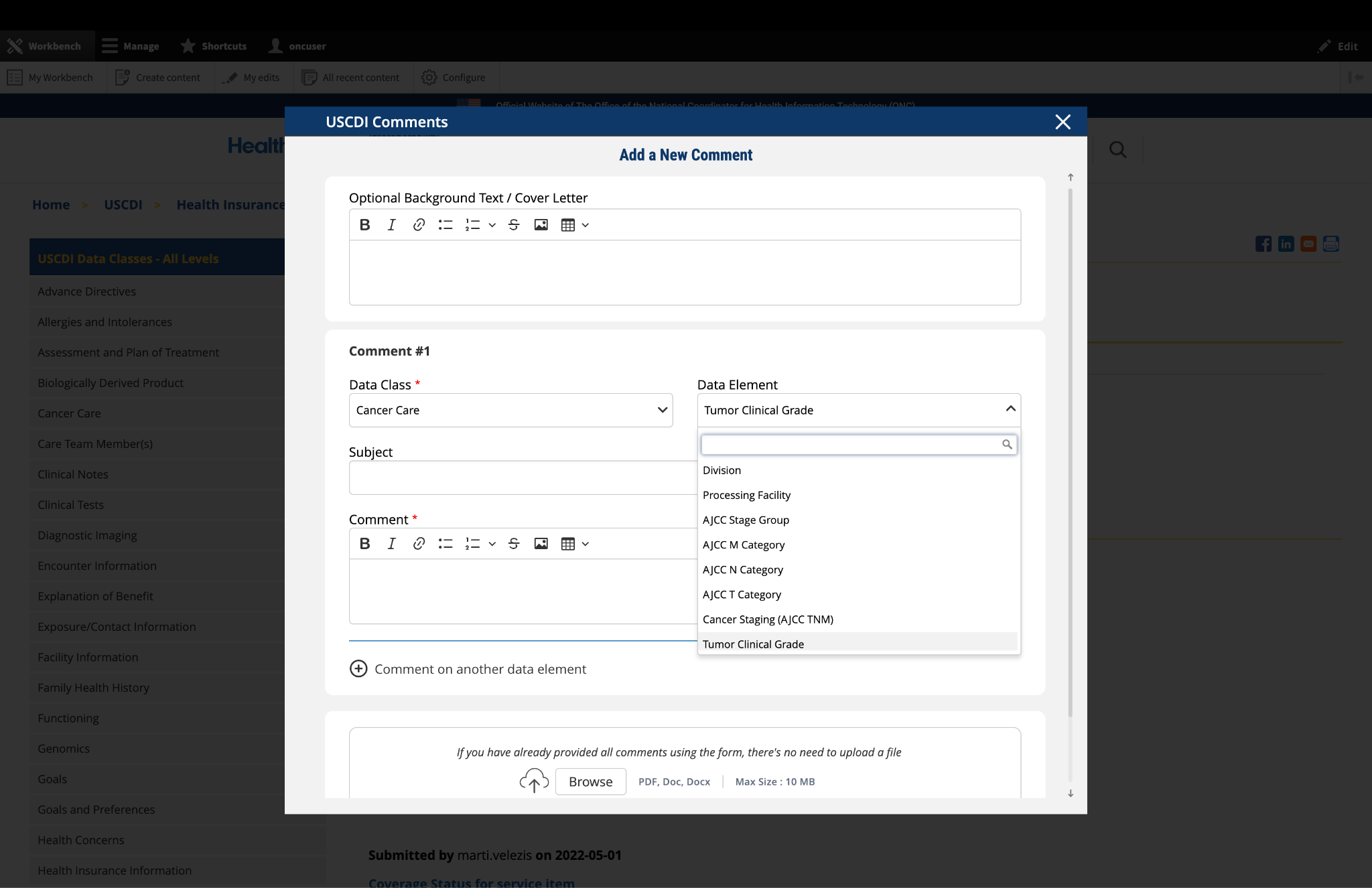
Fig 1 The "Data Class" and "Data Element" dropdown menus allow users to specify the exact content they wish to comment on.
4. Optional: Propose New Data Class or Element
If you cannot find the appropriate data class or element for your comment:
- Instead of clicking the "Comment On An Existing Data Class Or Element" button, click the adjacent button labeled "Propose a New Data Class or Data Element."
- This will redirect you to the ONDEC (ONC New Data Element and Class) Submission System.
- In the ONDEC system, follow the provided instructions to submit your proposal for a new data class or element.
- Once your proposal is submitted through ONDEC, it will be reviewed separately from the commenting process.
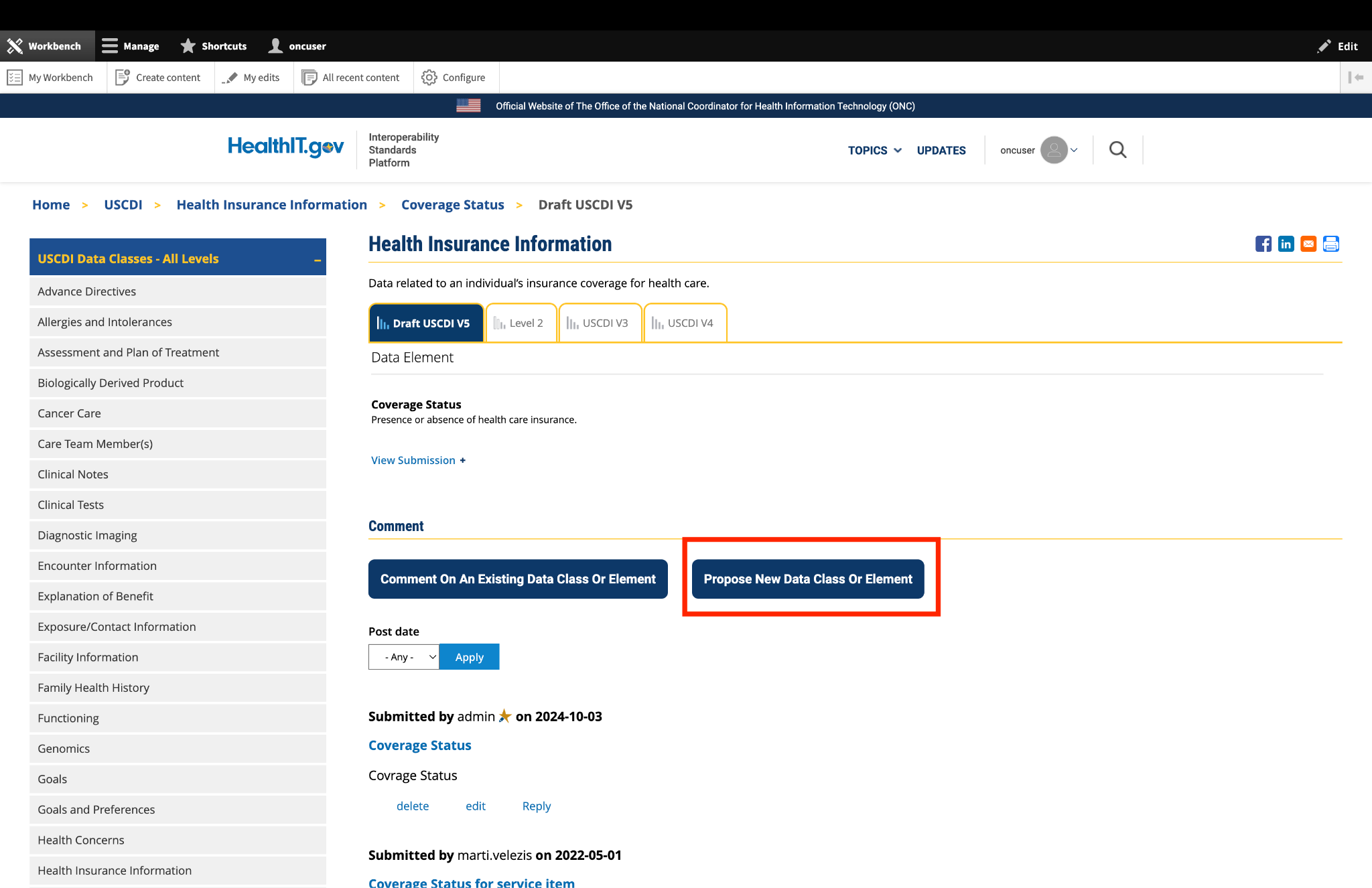
Fig 2 The "Propose a New Data Class or Data Element" button redirects users to the ONDEC Submission System for proposing new data elements not currently available in the system.
5. Complete the Comment Form
Fill out the required fields in the comment form:
Subject: Enter a brief, descriptive title that summarizes your comment. This helps reviewers quickly understand the nature of your feedback.
Comment: In this field, provide the full details of your comment or feedback. Be as clear and specific as possible about your suggestions, concerns, or observations. Include any relevant details that support your position.
6. Optional: Add Additional Comments
If you need to comment on multiple data classes or elements:
- After completing your first comment, click the link labeled "Comment on another data element" at the bottom of the form.
- A new comment section will appear, allowing you to enter details for your additional comment.
- For each additional comment, you must select the appropriate data class and data element from the drop-down menus.
- Complete the Subject and Comment fields for your additional comment.
- Repeat this process for each additional comment you wish to submit.
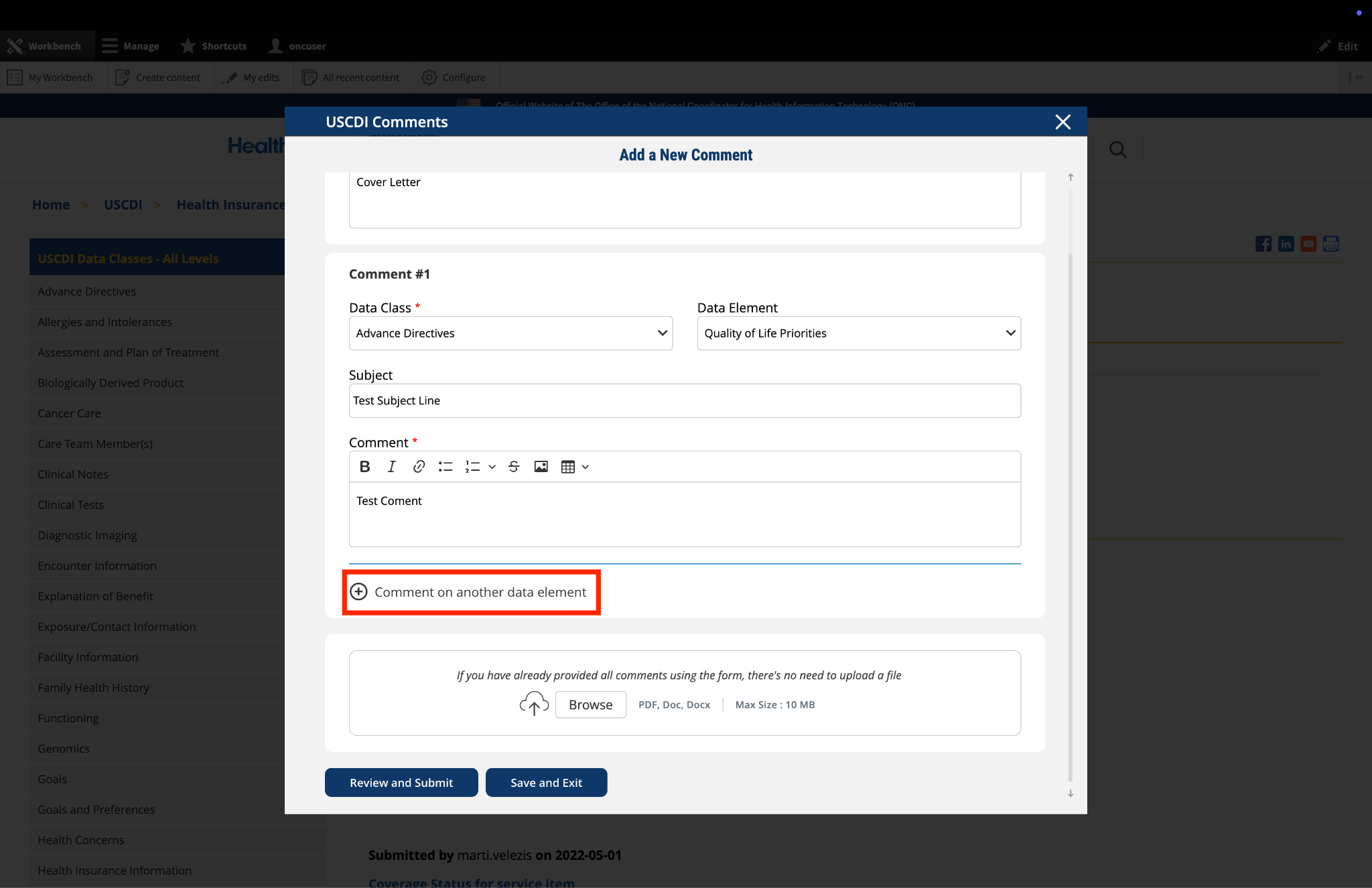
Fig 3 The "Comment on another data element" link enables users to create multiple comments addressing different elements within a single submission.
7. Optional: Upload Supporting Files
The platform allows you to upload supporting documentation to enhance your comment:
- Locate the "File Upload" section at the bottom of the comment form.
- Click to upload any files (such as PDFs or documents) that provide additional context, evidence, or clarification for your comment.
Important: If you have already entered your comments using the form fields, there is no need to upload duplicate content in PDF format. The file upload feature is intended for supplementary materials only. Please avoid uploading files that contain the same information already provided in your comment text.
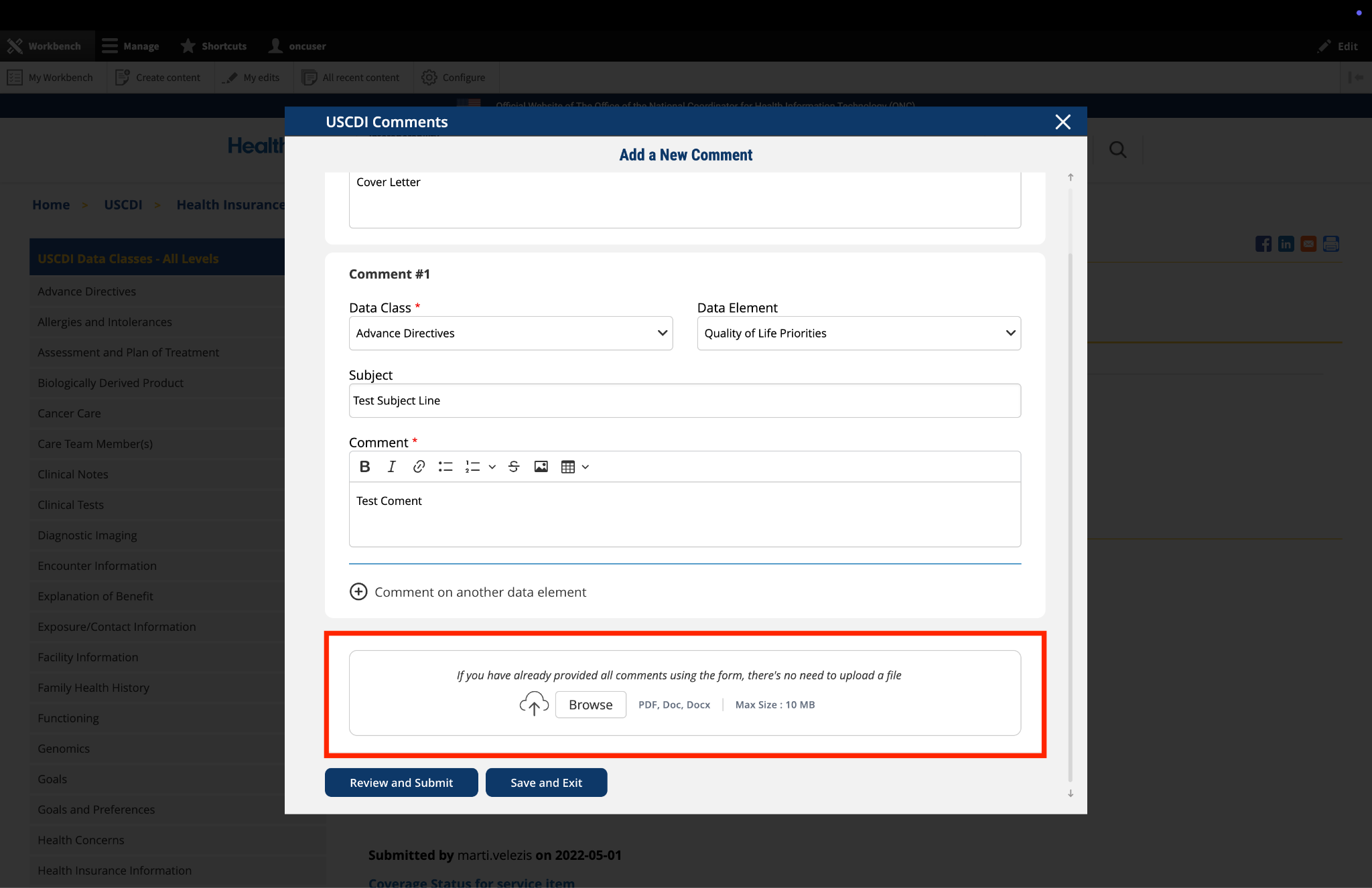
Fig 4 The "File Upload" section permits users to attach supporting documentation that supplements their written comments.
8. Optional: Save and Exit
If you need to pause your work and return to complete your comment later:
- Click the "Save and Exit" button at the bottom of the form.
- Your comment will be saved as a draft that you can access and complete later.
- When you return to the platform, you will see a red triangle with an exclamation mark next to the “Return to saved Comment” button, indicating that you have saved comments in draft status.
- Click this button to continue working on your draft.
- You will be taken to a review page where you can:
- Select "Submit Comment" to officially submit your feedback.
- Click "Edit" to return to the comment form and make changes
- Select "Discard Draft" to delete the saved draft and start fresh
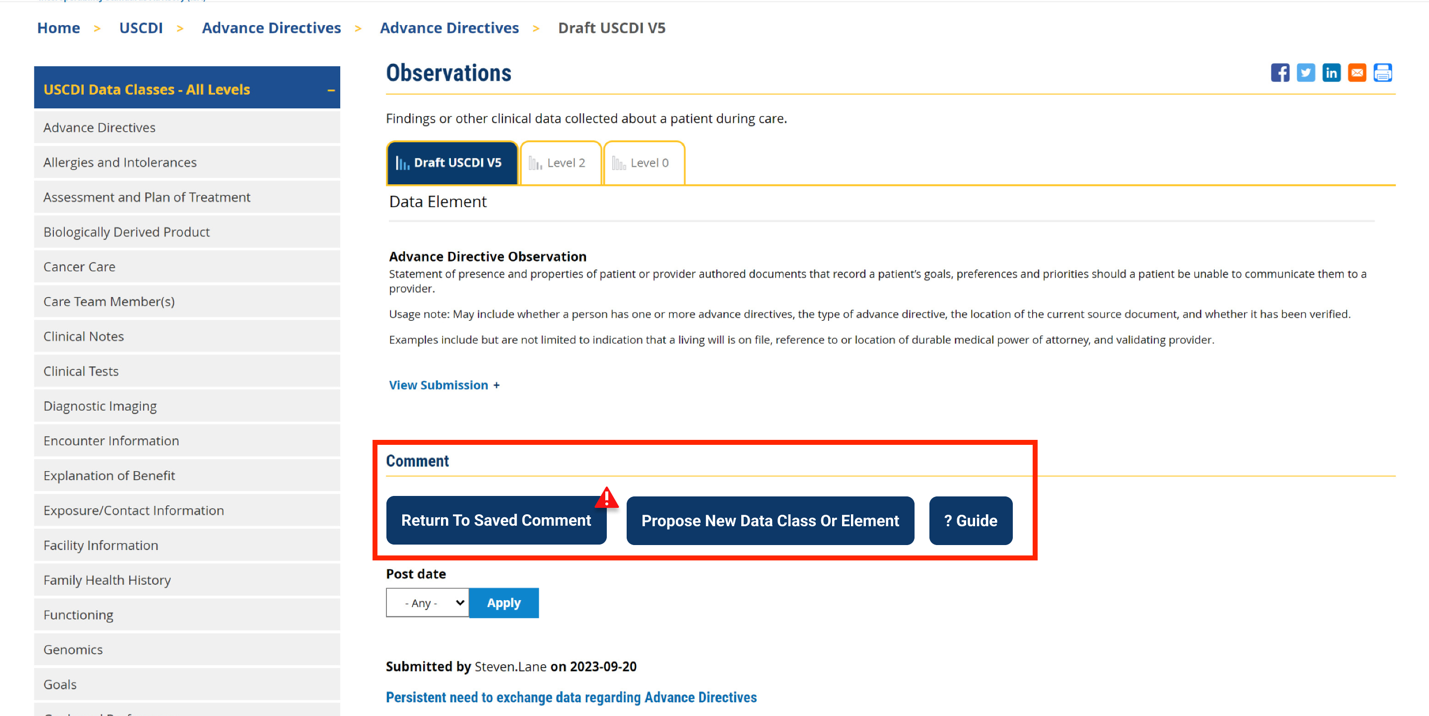
Fig 5 A red triangle with exclamation mark indicator appears next to the “Return to saved Comment” button when draft comments are saved in the system.
9. Review and Submit
Once you have completed your comment:
- Click the "Review and Submit" button at the bottom of the form.
- This will take you to a review screen displaying your comment(s) in full.
- Review all information for accuracy and completeness.
- On this review screen, you have three options:
- Click "Submit Comment" to officially submit your feedback
- Click "Edit" to return to the comment form and make changes
- Click "Discard Draft" to delete the comment and start fresh
- The review screen also includes a "Print" button that allows you to create a printed copy of your comments for your records.
- If you choose to submit, your comment will be recorded in the system and made available for review by the appropriate stakeholders.
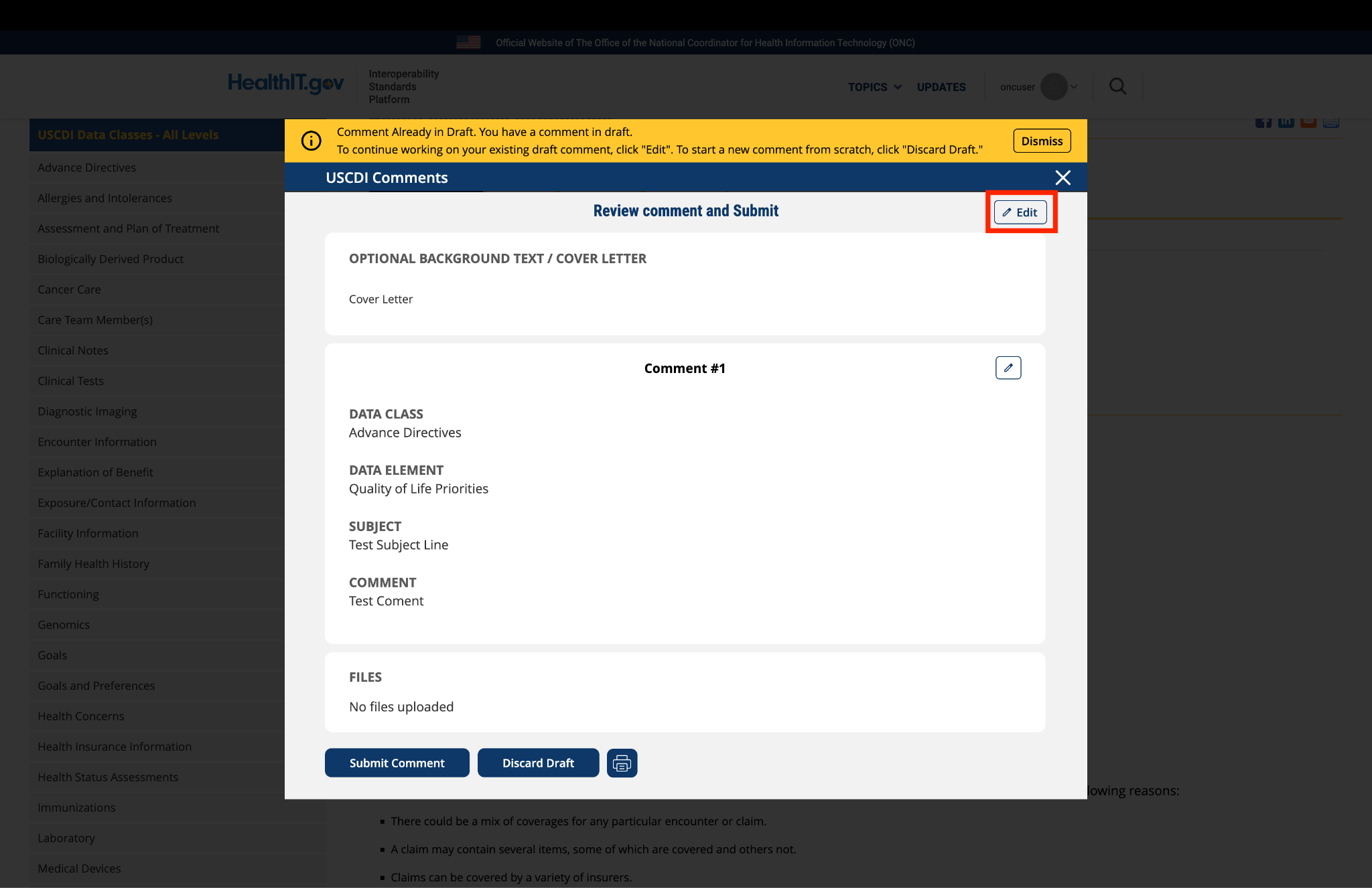
Fig 6 The review screen allows users to verify comment content and make any necessary modifications before final submission.
Submitted by CDC_DSMH_WG on
CDC comments for draft USCDI v8 (Overarching Comments).
Please review the attached document. CDC's National Health Care Surveys (NHCS) has submitted these overarching comments for draft USCDI v8 in addition to the specific comments submitted for data elements mentioned below-
USCDI V8_Proposed_Data_Elements _Overarching_Comments.docx