Reference to the condition or observation that supports why the prescription is being written.
Use Case Description(s)
Use Case Description
Actively monitoring diseases, making decisions about public health threats, identifying trends in healthcare services utilization and other public health matters depend on accessible and accurate data. EHRs are a data source that can provide timely and relevant data beyond its use by health care providers. EHR data, if made more available for public health professionals and researchers, can lead to more rapid disease detection, tracking, and treatment and innovation in healthcare delivery.
Medication information, including the date the medication is prescribed or administered, coded identification, and dosage of the medication prescribed or administered are important to multiple public health reporting and research use cases to track and analyze information about treatment for various health conditions. The reason code for the medication provides information to identify which particular condition the medication was used to treat.
The Making EHR Data More Available for Research and Public Health (MedMorph) project's goal is to create a reliable, scalable, and interoperable method to get electronic health record data for multiple public health and research scenarios (use cases). MedMorph has identified Cancer Registry Reporting, Healthcare Surveys, Electronic Initial Case Reporting (eCR), Hepatitis C Reporting, and Research (PCORnet) use cases that support the adoption of some or all of these data elements. These specific use cases are described in more depth on their respective web pages.
Estimate the breadth of applicability of the use case(s) for this data element
All 50 states participate in one or more of the public health use cases that exchange these data elements. Up to 14 territorial or city jurisdictions also participate in one of these public health use cases and use these data elements.
All hospitals and physicians who diagnose or treat cancer are required to provide cancer related medication (treatment) information to state cancer registries.
Approximately 620,000 physicians in the US are active and have at least some component of ambulatory practice and thus are annually eligible to sampling and recruitment into the National Ambulatory Medical Care Survey (NAMCS), which samples from between 3,500 to 20,000 of these physicians annually. Presently each sampled physician submits one weeks' worth of patient encounters to NAMCS. Approximately 600 hospitals are in the National Hospital Care Survey (NHCS). 1/3 of that number are either in, or actively being recruited into, the EHR data submission mode for NHCS. NHCS is already receiving electronic CDA documents. When they reach their target of 200 hospitals submitting by this mode annually they will be receiving >1.2 million documents and sets including multiple sets of medication data annually.
There were approximately 1,000,000 practicing physicians (as of 2020), approximately 120,000 certified physician assistants (as of 2019), and 290,000 licensed nurse practitioners (as of 2019). Most of these licensed clinicians interact with one of these public health use cases intermittently, annually. As of 2018, AHA reported 6,146 hospitals in the US experiencing 36,353,946 admissions. Almost all of those hospitals and at least half of the admissions interact with one or more of the public health use cases. The vast majority of these exchanges include full sets of medication data, including the data elements requested for USCDI consideration here.
A foundational goal of MedMorph is generalizability beyond the 10 use cases that are actively informing the MedMorph project, in order to support many more public health and research use cases. Therefore, other public health and research use cases that use the MedMorph architecture will also benefit from adoption of these data elements.
Estimate the breadth of applicability of the use case(s) for this data element
All 50 states participate in one or more of the public health use cases that exchange these data elements. Up to 14 territorial or city jurisdictions also participate in one of these public health use cases and use these data elements.
All hospitals and physicians who diagnose or treat cancer are required to provide cancer related medication (treatment) information to state cancer registries.
Approximately 620,000 physicians in the US are active and have at least some component of ambulatory practice and thus are annually eligible to sampling and recruitment into the National Ambulatory Medical Care Survey (NAMCS), which samples from between 3,500 to 20,000 of these physicians annually. Presently each sampled physician submits one weeks' worth of patient encounters to NAMCS. Approximately 600 hospitals are in the National Hospital Care Survey (NHCS). 1/3 of that number are either in, or actively being recruited into, the EHR data submission mode for NHCS. NHCS is already receiving electronic CDA documents. When they reach their target of 200 hospitals submitting by this mode annually they will be receiving >1.2 million documents and sets including multiple sets of medication data annually.
There were approximately 1,000,000 practicing physicians (as of 2020), approximately 120,000 certified physician assistants (as of 2019), and 290,000 licensed nurse practitioners (as of 2019). Most of these licensed clinicians interact with one of these public health use cases intermittently, annually. As of 2018, AHA reported 6,146 hospitals in the US experiencing 36,353,946 admissions. Almost all of those hospitals and at least half of the admissions interact with one or more of the public health use cases. The vast majority of these exchanges include full sets of medication data, including the data elements requested for USCDI consideration here.
Use Case Description
CDC requested this use case be added in support:
"Medication Opioids": Unintentional injuries are the leading cause of death for Americans aged 1–44 years. The leading cause of death for unintentional injury is poisoning, specifically drug overdose. Overdose deaths continue to climb each year and accelerated during the COVID-19 pandemic. The majority of national overdose deaths involve opioids. Many patients receive their first exposure to opioids following surgery, and dentists are the leading prescriber of opioids among adolescents aged 10-19 and second-leading prescriber among young adults aged 20–29. In 2004, an estimated 3.5 million patients had wisdom teeth extracted. Filled opioid prescriptions after wisdom tooth extraction is associated with higher odds of persistent opioid use among opioid-naïve patients. Better understanding prescribing habits can help identify risk factors and particularly vulnerable populations.
"Medications Antibiotics": More than 2.8 million antimicrobial-resistant infections occur in the United States each year, and more than 35,000 people die as a result. When Clostridioides difficile is added to these, the US toll exceeds 3 million infections and 48,000 deaths. The threat of antibiotic resistance undermines progress in health care, food production, and life expectancy. Addressing this threat requires preventing infections in the first place, slowing the development of resistance through better antibiotic use, and stopping the spread of resistance when it develops. Research shows that dentists overuse antibiotics, particularly for patients who are underinsured. Dentists prescribe 10% of all outpatient antibiotics, although there is significant geographical variability. Better understanding prescribing practices, knowledge, and beliefs can aid in the development of meaningful antimicrobial stewardship efforts addressing case selection and areas of practice.
Healthcare Aims
Improving patient experience of care (quality and/or satisfaction)
Improving the health of populations
Maturity of Use and Technical Specifications for Data Element
HL7 CDA ® Release 2 Implementation Guide: Reporting to Public Health Cancer Registries from Ambulatory Healthcare Providers, Release 1, DSTU Release 1.1 – US Realm: https://www.hl7.org/implement/standards/product_brief.cfm?product_id=398. SHALL for the following elements: Date Medication Administered, Medication Administered Code, Medication Administered Reason Reference, Medication Administration Dose.
SHOULD for the following elements: Medication Administration Dose Units
HL7 CDA® R2 Implementation Guide: Consolidated CDA Templates for Clinical Notes - US Realm (http://www.hl7.org/implement/standards/product_brief.cfm?product_id=492). SHALL for the following elements: Date Medication Administered, Medication Administered Code, Medication Administered Reason Reference, Medication Administration Dose. SHOULD for the following elements: Medication Administration Dose Units
Part of Core EHR Certification since at least 2014.
Specified in Meaningful Use/Promoting Interoperability since Stage 1.
Part of EHR Certification for Transmission to Cancer Registries (2015 and 2014 Editions).
Promoting Interoperability Programs Eligible Hospitals and Critical Access Hospitals are required to, and Merit-based Incentive Payment System (MIPS) participants may optionally, report on any two measures under the Public Health and Clinical Data Exchange objective of these programs. The § 170.315(f)(5) – Transmission to public health agencies – electronic case reporting certification criteria in the 2015 Edition Final Rule and the ONC Cures Act Final Rule, the § 170.315(f)(7) – Transmission to public health agencies – health care surveys, and the § 170.315 (f)(4) – Transmission to Cancer Registries are three such options to meet these measures.
The current standard for § 170.315(f)(5), as listed in ONC’s 2020 Interoperability Standards Advisory Reference Edition, is HL7® CDA® R2 Implementation Guide: Public Health Case Report, Release 2: the Electronic Initial Case Report (eICR), Release 1, STU Release 1.1. ONC’s Certified Health IT Product List (CHPL) lists 73 EHR or HIT Module products certified to (f)(5) using this standard. eCR IG: https://www.hl7.org/implement/standards/product_brief.cfm?product_id=436.
The current standard for § 170.315(f)(7), as listed in ONC’s 2020 Interoperability Standards Advisory Reference Edition, is HL7® CDA® R2 Implementation Guide: National Health Care Surveys (NHCS), R1 DSTU Release 1.2 - US Realm. ONC’s Certified Health IT Product List (CHPL) lists 116 EHR or HIT Module products certified to (f)(5) using this standard. NHCS IG: https://www.hl7.org/implement/standards/product_brief.cfm?product_id=385.
The current standard for § 170.315 (f)(4), as listed in ONC’s 2020 Interoperability Standards Advisory Reference Edition, is HL7 CDA® R2 IG: Reporting to Public Health Cancer Registries from Ambulatory Healthcare Providers, R1, DSTU Release 1.1 - US Realm. ONC’s Certified Health IT Product List (CHPL) lists 288 EHR or HIT Module products certified to (f)(4) using this standard. Cancer Reporting IG: https://www.hl7.org/implement/standards/product_brief.cfm?product_id=398.
These three widely adopted CDA standards have many of the Medication data elements contained on this form as Shall (required) or Should (best practice to include if available) conformance criteria, which demonstrates the maturity of these commonly exchanged data elements.
5 or more. This data element has been tested at scale between multiple different production environments to support the majority of anticipated stakeholders.
Supporting Artifacts
Level 2 – exchanged between 4 or more different EHR/HIT systems. More routinely exchanged between multiple different systems can justify adding to the next draft version.
At least 38 state cancer registries have received cancer reports from at least one provider (per internal technical and programmatic documentation) that include these data elements: Date Medication Prescribed, Medication Prescribed Code, Medication Prescribed Dose, Medication Prescribed Dose Units, Date Medication Administered, Medication Administered Code, Medication Administration Dose, and Medication Administration Dose Units.
HL7 CDA® R2 Implementation Guide: Public Health Case Report, Release 2 - US Realm (https://www.hl7.org/implement/standards/product_brief.cfm?product_id=436) - the Electronic Initial Case Report (eICR) is currently implemented in 5,400+ reporting sites nationally and exchanges all the Medication described in this submission.
As part of Cancer Reporting CDA IGs:
IHE Connectathons 2010-2020
HIMSS Interoperability Showcase 2010-19
Public Health Informatics Conference Interoperability Showcase 2014, 2016, 2018
NACCHO 360X Interoperability Demonstrations, 2020
As part of National Health Care Surveys CDA IGs:
IHE Connectathons 2019-2020
Supporting Links: https://chpl.healthit.gov/#/search: 170.315 (f)(4): Transmission to Cancer Registries
Retired | 170.314 (f)(5): Optional - ambulatory setting only - cancer case information
Retired | 170.314 (f)(6): Optional - ambulatory setting only - transmission to cancer registries)
Restrictions on Standardization (e.g. proprietary code)
None
Restrictions on Use (e.g. licensing, user fees)
None
Privacy and Security Concerns
None
Estimate of Overall Burden
Low.
All providers need to capture medication prescription and administration information as a basic component of patient care.
Several existing IGs, as listed, require the exchange of this data element. The Promoting Interoperability Programs Objective 8 - Public Health and Clinical Data Registry Reporting, Measures 1: Immunization Registry Reporting, 2: Syndromic Surveillance Reporting, 3: Electronic Case Reporting and 4: Public Health Registry Reporting all require these data elements.
This information is routinely communicated in HL7 CDA Documents and some FHIR API transactions.
Other Implementation Challenges
None
ASTP Evaluation Details Each submitted Data Element has been evaluated based on the following criteria. The overall Level classification is a composite of the maturity based on these individual criteria. This information can be used to identify areas that require additional work to raise the overall classification level and consideration for inclusion in future versions of USCDI
Criterion #1 Maturity - Current Standards
Level 2 - Data element is represented by a terminology standard or SDO-balloted technical specification or implementation guide.
Criterion #2 Maturity - Current Use
Level 0 - Data element is captured, stored, or accessed in limited settings such as a pilot or proof of concept demonstration.
Criterion #3 Maturity - Current Exchange
Level 1 - Data element is electronically exchanged between two production EHRs or other HIT modules using available interoperability standards.
Criterion #4 Use Case(s) - Breadth of Applicability
Level 0 - Use cases apply to a limited number of care settings or specialties, or data element represents a specialization of other, more general data elements.
Evaluation Comment
This data element is a specialized use of the data element Medication Indication, part of USCDI v4.
SNOMED International commends ONC for naming SNOMED CT U.S. Edition as an applicable vocabulary standard for Indication alongside ICD-10-CM, and recommends that ONC explicitly designate SNOMED CT as the preferred standard for clinical documentation use cases, with ICD-10-CM retained for administrative and billing contexts.
SNOMED CT clinical finding and disorder hierarchy provides semantically richer representation of clinical indications than ICD-10-CM, enabling computable queries across entire clinical concept hierarchies through subsumption, a capability that ICD-10-CM, as a classification system, does not provide. This distinction is critical for clinical decision support and prior authorisation applications.
The designation of SNOMED CT for Indication directly enables the ONC CDS Hooks and SMART on FHIR standards, which allow clinical decision support applications to query patient data using SNOMED CT-coded clinical conditions. SNOMED International notes that the ONC Medication Prescribed Reason Reference page directs implementers to the Indication element for medication-related indications, making consistent, computable vocabulary across medication and procedure workflows essential for the cross-domain data exchange envisaged under TEFCA. SNOMED International recommends ONC provide explicit guidance that SNOMED CT be prioritised for clinical EHR implementations to prevent a bifurcated ecosystem where ICD-10-CM codes serve as de facto clinical indicators.
Recommendation: Revise the definition of the element to ‘Sign, symptom, medical condition, or reason (i.e. screening) for a care activity.’
Rationale: NCQA recommends clarifying the definition of Indication to be more explicit for the reasons a care activity (procedure, medication, order) may occur. Specifically, when referencing indications for an order, the indication can help distinguish orders for diagnostic purposes verse routine screening, which is important for care context and quality measurement. For example, a laboratory test order may be placed for routine screening purposes based on age or other risk assessment and not because of a specific symptom or diagnosis. This indication can still be coded with ICD and SNOMED, similar to a medical condition indication, but the distinction is important. Further clarification of the definition will better align to current practice and workflows.
CDC supports the inclusion of this data element in USCDI v5 as it is an element that may be necessary for calculation of our digital quality metrics from FHIR data.
CSTE also strongly agrees that the ability to exchange data on prescribing of opioid medications in particular is of great importance to public health programs which aim to reduce opioid overdoses and deaths.
"Medication Opioids": Unintentional injuries are the leading cause of death for Americans aged 1–44 years. The leading cause of death for unintentional injury is poisoning, specifically drug overdose. Overdose deaths continue to climb each year and accelerated during the COVID-19 pandemic. The majority of national overdose deaths involve opioids. Many patients receive their first exposure to opioids following surgery, and dentists are the leading prescriber of opioids among adolescents aged 10-19 and second-leading prescriber among young adults aged 20–29. In 2004, an estimated 3.5 million patients had wisdom teeth extracted. Filled opioid prescriptions after wisdom tooth extraction is associated with higher odds of persistent opioid use among opioid-naïve patients. Better understanding prescribing habits can help identify risk factors and particularly vulnerable populations.
"Medications Antibiotics": More than 2.8 million antimicrobial-resistant infections occur in the United States each year, and more than 35,000 people die as a result. When Clostridioides difficile is added to these, the US toll exceeds 3 million infections and 48,000 deaths. The threat of antibiotic resistance undermines progress in health care, food production, and life expectancy. Addressing this threat requires preventing infections in the first place, slowing the development of resistance through better antibiotic use, and stopping the spread of resistance when it develops. Research shows that dentists overuse antibiotics, particularly for patients who are underinsured. Dentists prescribe 10% of all outpatient antibiotics, although there is significant geographical variability. Better understanding prescribing practices, knowledge, and beliefs can aid in the development of meaningful antimicrobial stewardship efforts addressing case selection and areas of practice.
NCPDP recommends adding SNOMED CT and ICD-10 as data elements/code sets to further adhere to the standardized code lists that have been created to identify services or products provided to the patient. NCPDP SCRIPT Standard v2017071 data element “indication” uses SNOMED CT codes in the “SIG” directions for use and uses SNOMED CT codes and ICD-10 codes in the NCPDP SCRIPT Standard v2017071“Diagnosis” field.
NCPDP recommends adding SNOMED CT and ICD10 as data elements/code sets to further adhere to the standardized code lists that have been created to identify services or products provided to the patient. NCPDP SCRIPT standard data element “indication” uses SNOMED CT in the “SIG” directions for use and ICD10 in the NCPDP SCRIPT “Diagnosis” field.
"Currently, most prescriptions lack a key piece of information needed for safe medication use: the patient-specific drug indication. Integrating indications could pave the way for safer prescribing in multiple ways, including avoiding look-alike/sound-alike errors, facilitating selection of drugs of choice, aiding in communication among the healthcare team, bolstering patient understanding and adherence, and organizing medication lists to facilitate medication reconciliation. Although strongly supported by pharmacists, multiple prior attempts to encourage prescribers to include the indication on prescriptions have not been successful.” https://pubmed.ncbi.nlm.nih.gov/29674327/
This field is for general comments on this specific data element. To submit new USCDI data classes and/or data elements, please use the USCDI ONDEC system: https://healthit.gov/ONDEC
Recommend adding SNOMED CT and ICD-10 as the terminology standards to be used for Indication data element of Medications Data Class.
The "Optional Background Text / Cover Letter" field provides space for additional context or introductory information related to your comment.
If you wish to provide context, explanation, or an introduction to your comment, enter this information in the field labeled "Optional Background Text / Cover Letter." This is entirely optional and is most useful when submitting multiple related comments or when additional background would help reviewers understand your feedback.
If you are only commenting on a single data class or element, you may leave this field blank.
2. Select the Data Class
To specify which data class your comment addresses:
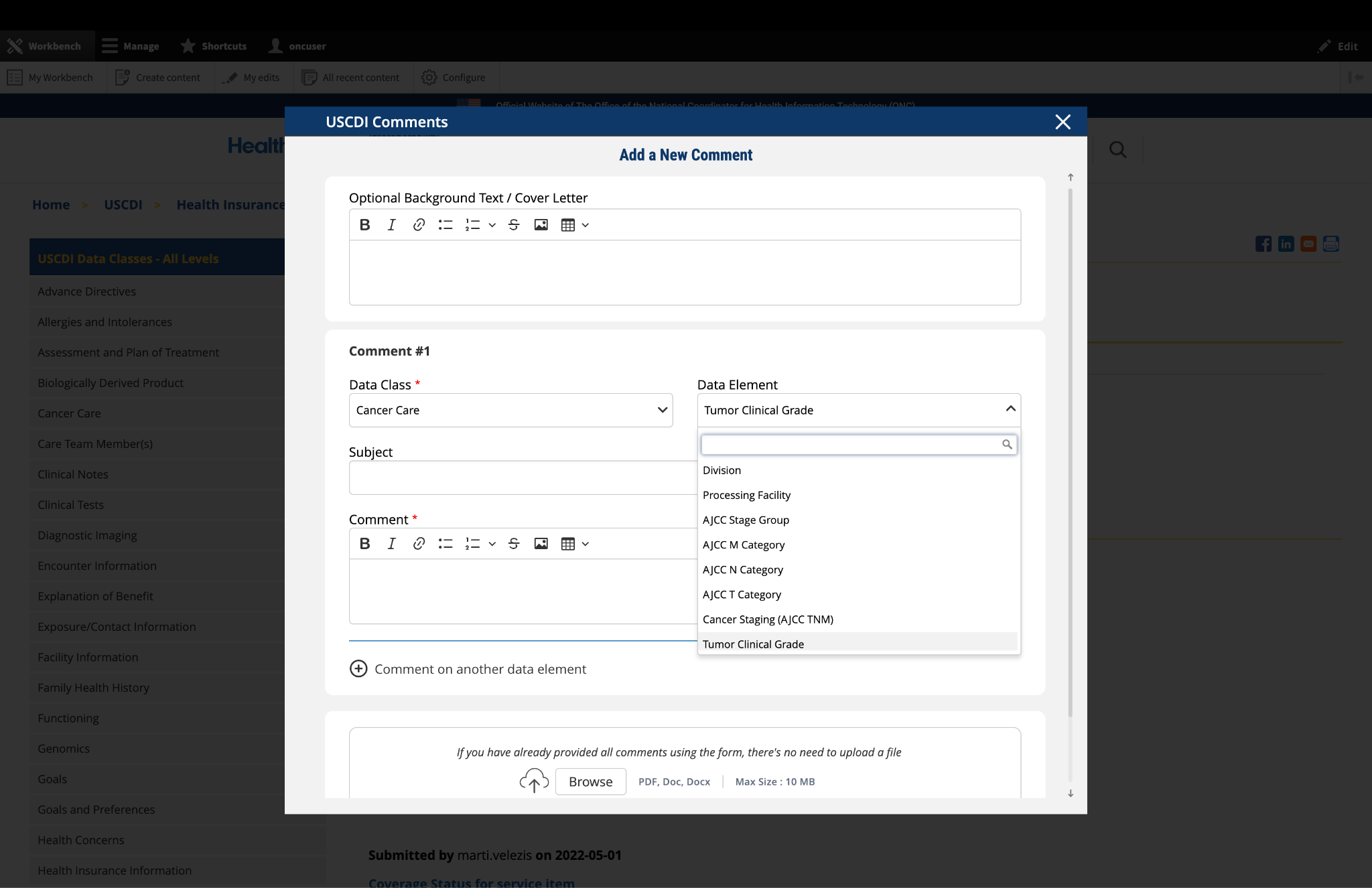
In the "Data Class" drop-down menu, select the appropriate data class you want to comment on.
If you are providing a general comment that is not specific to a data element, select "General" from the options. Comments with this designation will be displayed on the USCDI landing page.
Note that the Data Class field will automatically populate based on your current location in the platform:
If you are on a data class page, the field will be set to that specific data class
If you are on a data element page, the corresponding data class will be pre-selected
3. Select the Data Element
To specify which data element your comment addresses:
In the "Data Element" drop-down menu, select the specific data element you want to comment on.
The drop-down menu will display only the elements available under the data class you selected in the previous step.
You can use the search function within the drop-down to quickly locate a specific data element.
If you are commenting on the data class itself rather than a specific element, you may leave this field blank.
Note: Comments on a specific data element will appear on the respective data element page, while comments on a data class (without a specific element selected) will appear on the landing page for that data class.
Fig 1 The "Data Class" and "Data Element" dropdown menus allow users to specify the exact content they wish to comment on.
4. Optional: Propose New Data Class or Element
If you cannot find the appropriate data class or element for your comment:
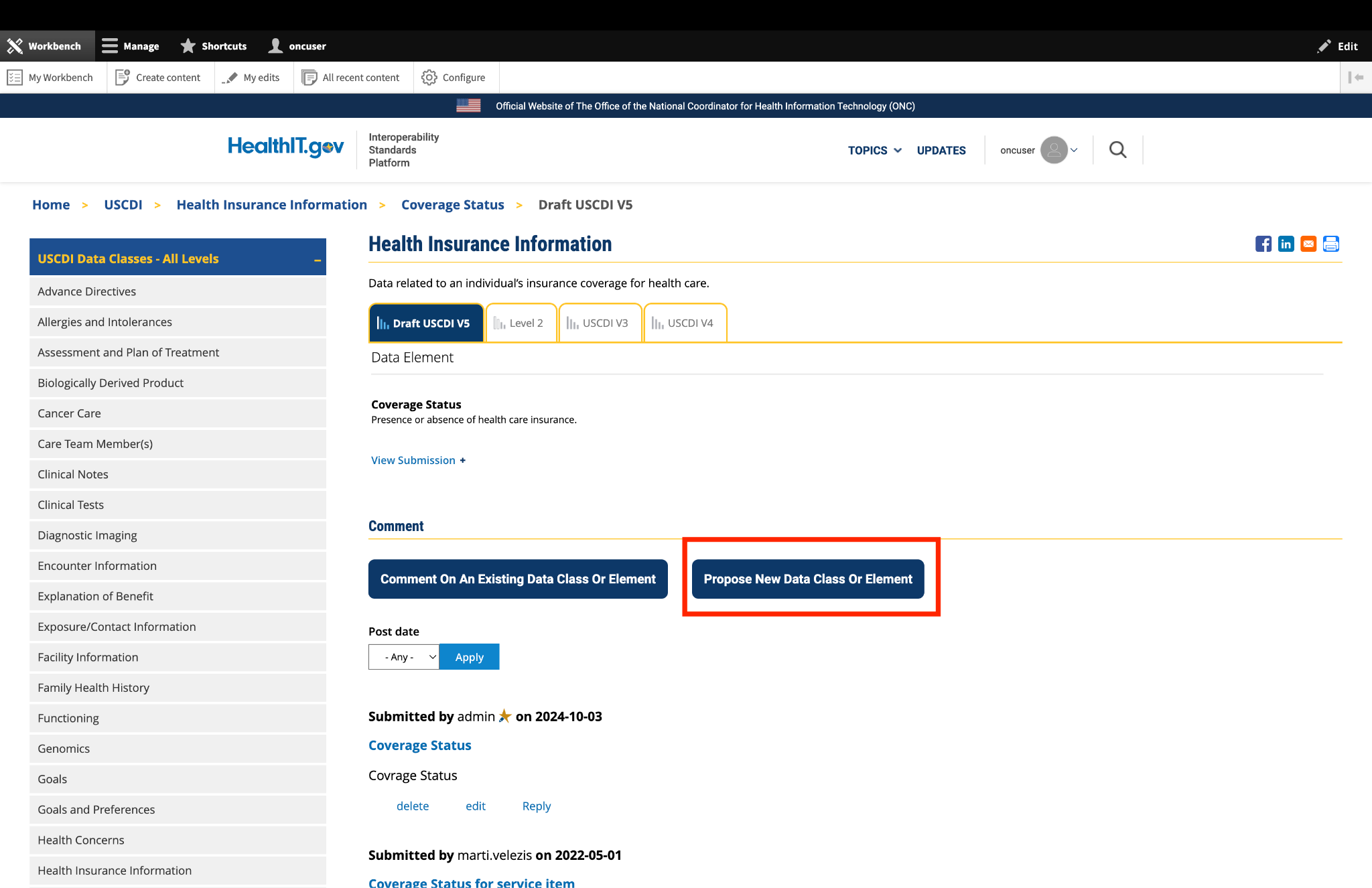
Instead of clicking the "Comment On An Existing Data Class Or Element" button, click the adjacent button labeled "Propose a New Data Class or Data Element."
This will redirect you to the ONDEC (ONC New Data Element and Class) Submission System.
In the ONDEC system, follow the provided instructions to submit your proposal for a new data class or element.
Once your proposal is submitted through ONDEC, it will be reviewed separately from the commenting process.
Fig 2 The "Propose a New Data Class or Data Element" button redirects users to the ONDEC Submission System for proposing new data elements not currently available in the system.
5. Complete the Comment Form
Fill out the required fields in the comment form:
Subject: Enter a brief, descriptive title that summarizes your comment. This helps reviewers quickly understand the nature of your feedback.
Comment: In this field, provide the full details of your comment or feedback. Be as clear and specific as possible about your suggestions, concerns, or observations. Include any relevant details that support your position.
6. Optional: Add Additional Comments
If you need to comment on multiple data classes or elements:
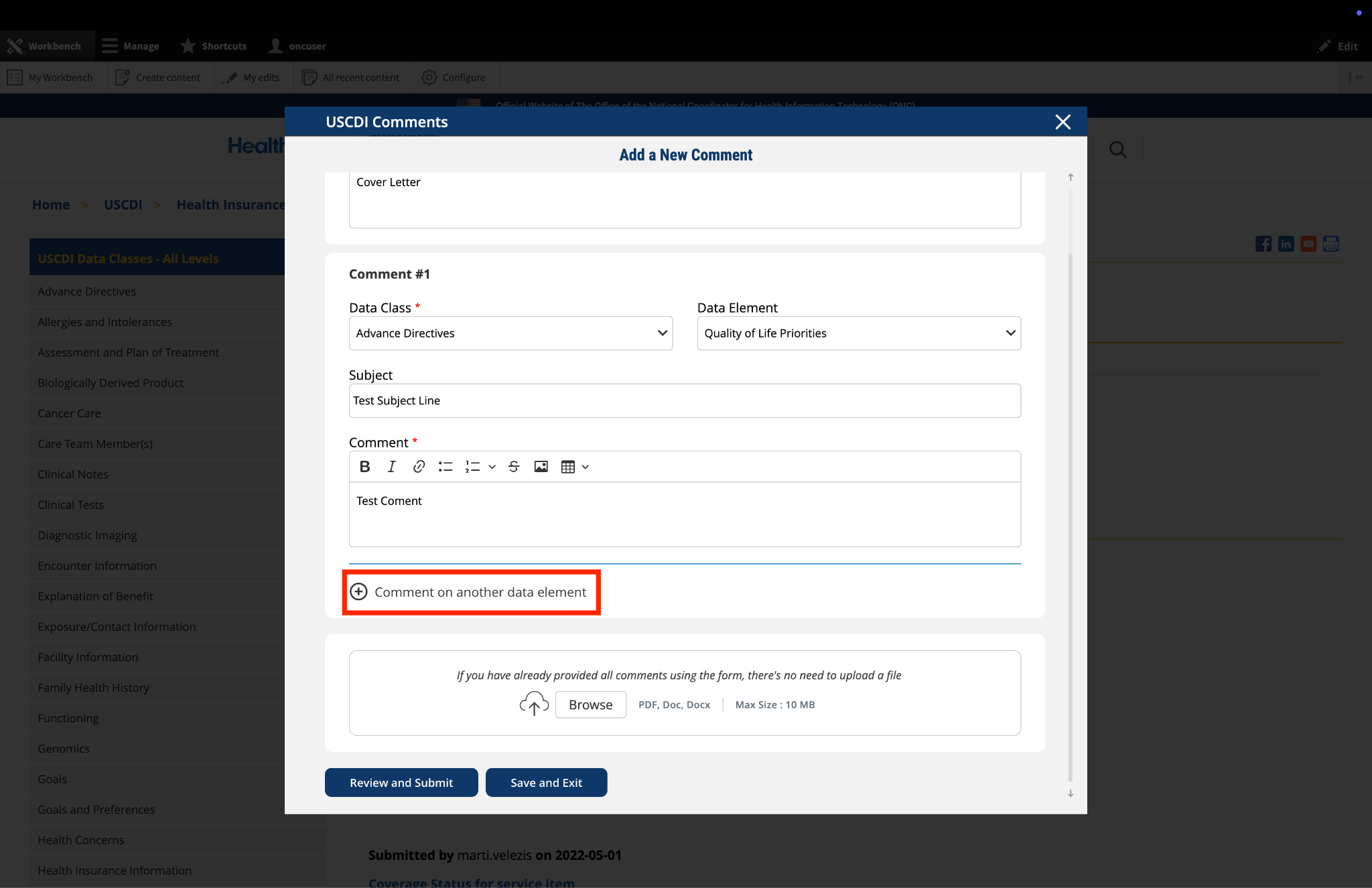
After completing your first comment, click the link labeled "Comment on another data element" at the bottom of the form.
A new comment section will appear, allowing you to enter details for your additional comment.
For each additional comment, you must select the appropriate data class and data element from the drop-down menus.
Complete the Subject and Comment fields for your additional comment.
Repeat this process for each additional comment you wish to submit.
Fig 3 The "Comment on another data element" link enables users to create multiple comments addressing different elements within a single submission.
7. Optional: Upload Supporting Files
The platform allows you to upload supporting documentation to enhance your comment:
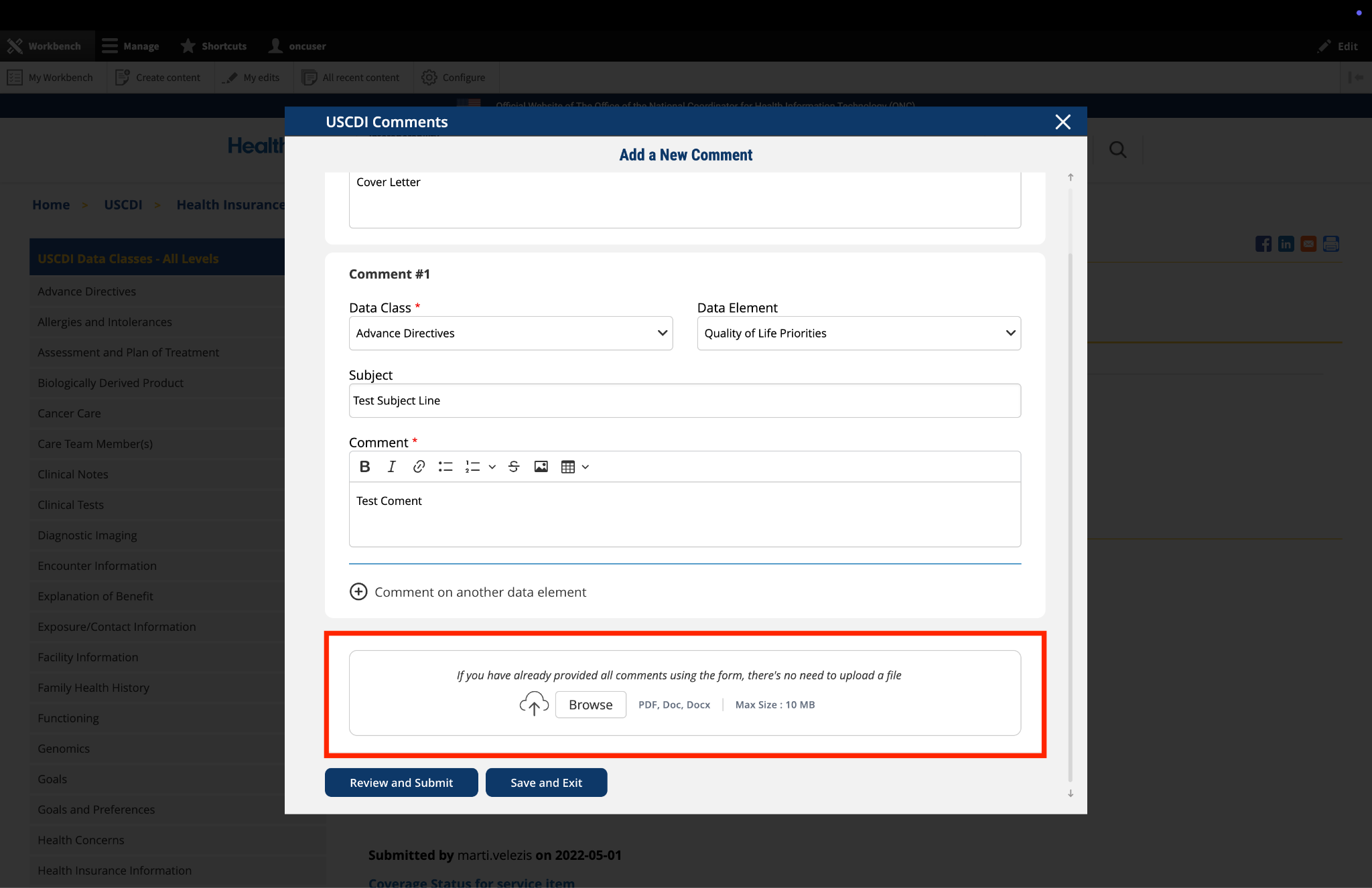
Locate the "File Upload" section at the bottom of the comment form.
Click to upload any files (such as PDFs or documents) that provide additional context, evidence, or clarification for your comment.
Important: If you have already entered your comments using the form fields, there is no need to upload duplicate content in PDF format. The file upload feature is intended for supplementary materials only. Please avoid uploading files that contain the same information already provided in your comment text.
Fig 4 The "File Upload" section permits users to attach supporting documentation that supplements their written comments.
8. Optional: Save and Exit
If you need to pause your work and return to complete your comment later:
Click the "Save and Exit" button at the bottom of the form.
Your comment will be saved as a draft that you can access and complete later.
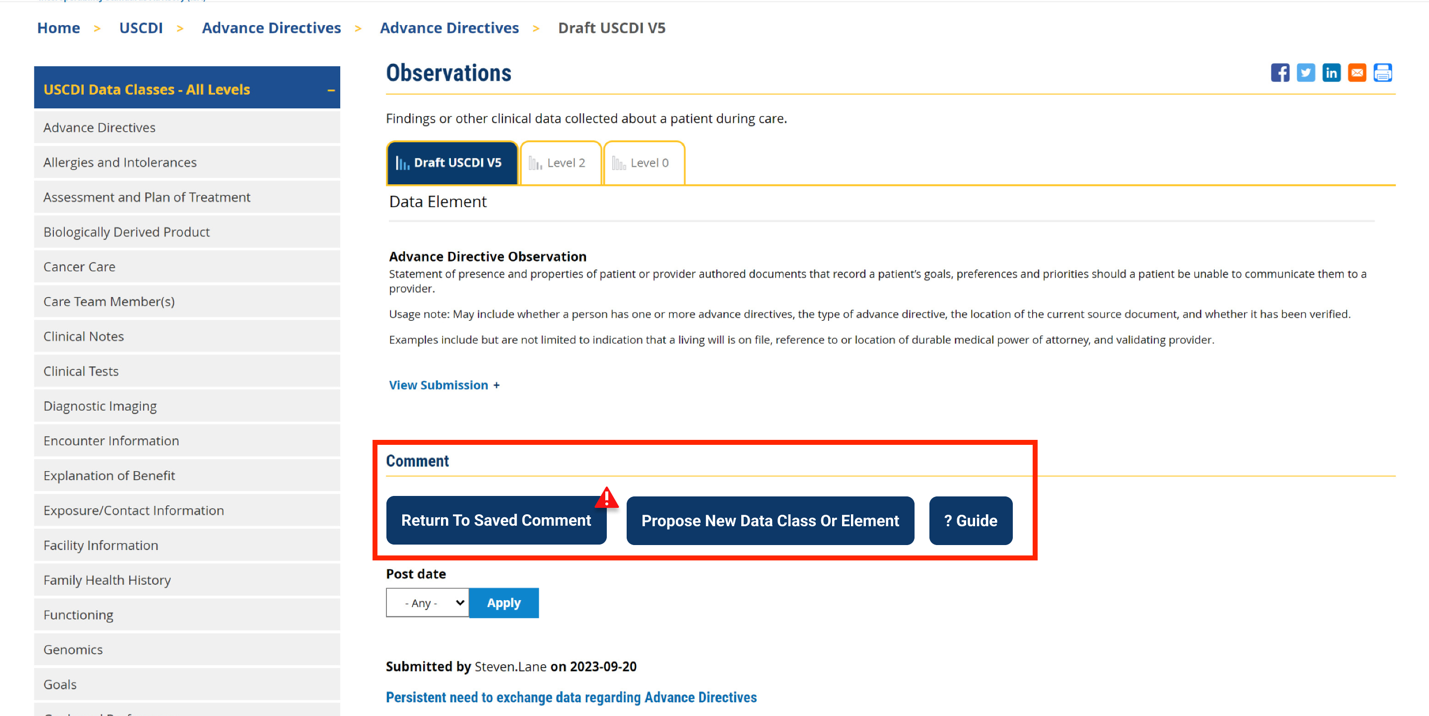
When you return to the platform, you will see a red triangle with an exclamation mark next to the “Return to saved Comment” button, indicating that you have saved comments in draft status.
Click this button to continue working on your draft.
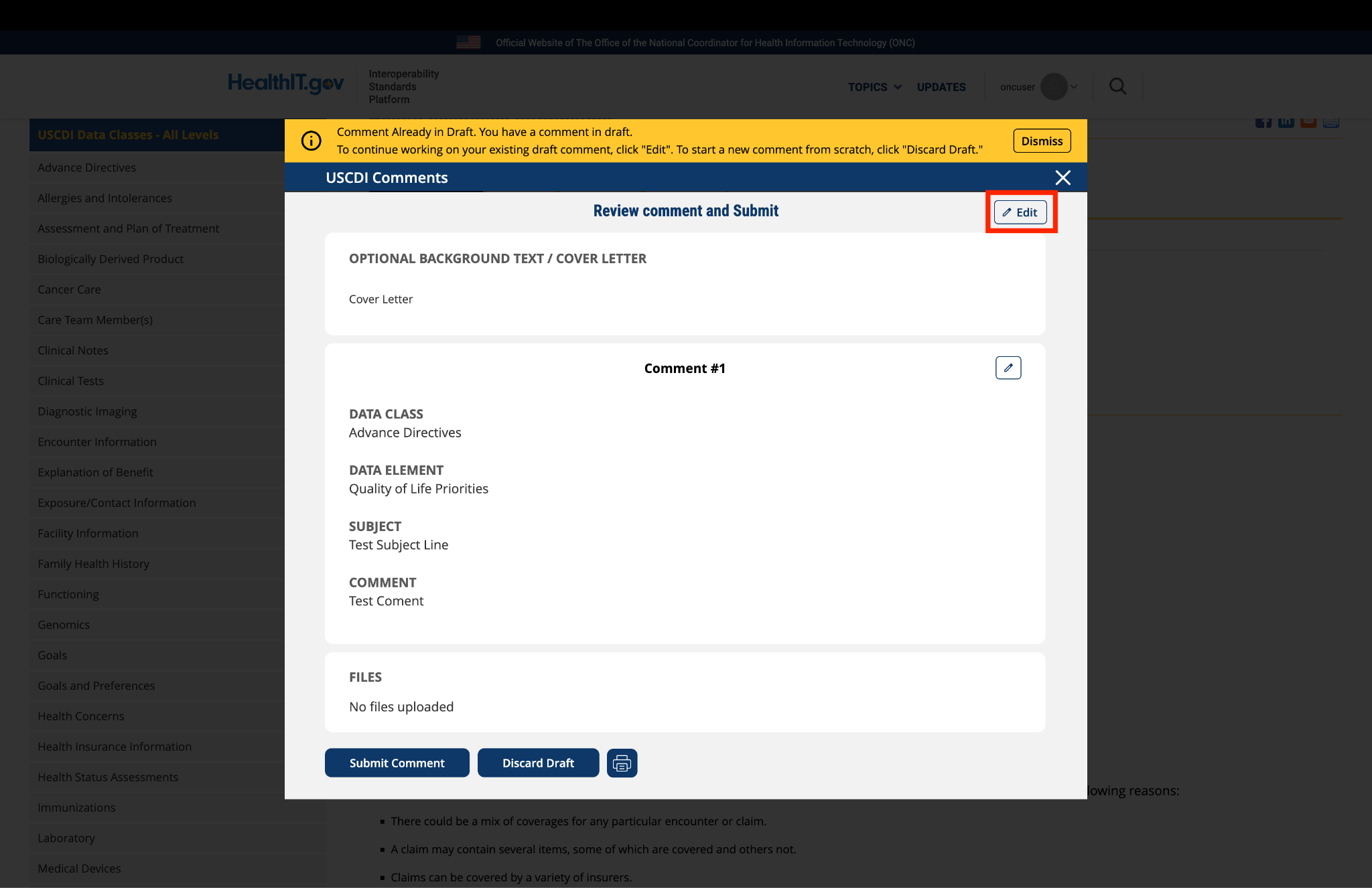
You will be taken to a review page where you can:
Select "Submit Comment" to officially submit your feedback.
Click "Edit" to return to the comment form and make changes
Select "Discard Draft" to delete the saved draft and start fresh
Fig 5 A red triangle with exclamation mark indicator appears next to the “Return to saved Comment” button when draft comments are saved in the system.
9. Review and Submit
Once you have completed your comment:
Click the "Review and Submit" button at the bottom of the form.
This will take you to a review screen displaying your comment(s) in full.
Review all information for accuracy and completeness.
On this review screen, you have three options:
Click "Submit Comment" to officially submit your feedback
Click "Edit" to return to the comment form and make changes
Click "Discard Draft" to delete the comment and start fresh
The review screen also includes a "Print" button that allows you to create a printed copy of your comments for your records.
If you choose to submit, your comment will be recorded in the system and made available for review by the appropriate stakeholders.
Fig 6 The review screen allows users to verify comment content and make any necessary modifications before final submission.


Submitted by SuzyRoy on
Recommendation for required terminology standard designation
SNOMED International commends ONC for naming SNOMED CT U.S. Edition as an applicable vocabulary standard for Indication alongside ICD-10-CM, and recommends that ONC explicitly designate SNOMED CT as the preferred standard for clinical documentation use cases, with ICD-10-CM retained for administrative and billing contexts.
SNOMED CT clinical finding and disorder hierarchy provides semantically richer representation of clinical indications than ICD-10-CM, enabling computable queries across entire clinical concept hierarchies through subsumption, a capability that ICD-10-CM, as a classification system, does not provide. This distinction is critical for clinical decision support and prior authorisation applications.
The designation of SNOMED CT for Indication directly enables the ONC CDS Hooks and SMART on FHIR standards, which allow clinical decision support applications to query patient data using SNOMED CT-coded clinical conditions. SNOMED International notes that the ONC Medication Prescribed Reason Reference page directs implementers to the Indication element for medication-related indications, making consistent, computable vocabulary across medication and procedure workflows essential for the cross-domain data exchange envisaged under TEFCA. SNOMED International recommends ONC provide explicit guidance that SNOMED CT be prioritised for clinical EHR implementations to prevent a bifurcated ecosystem where ICD-10-CM codes serve as de facto clinical indicators.