
Submitted by ubackonja@mitre.org on
PACIO Supports Advancing Pain Assessment to USCDI
The Post-Acute Care InterOperability (PACIO) Project supports this comment submitted by CMS-CCSQ.
 Official Website of the Office of the National Coordinator for Health Information Technology
Assessments of a health-related matter of interest, importance, or worry to a patient, patient’s authorized representative, or patient’s healthcare provider that could identify a need, problem, or condition.
Data Element |
||||||||||||||||||||||||||||||||||||||||||||||||||||||||
|---|---|---|---|---|---|---|---|---|---|---|---|---|---|---|---|---|---|---|---|---|---|---|---|---|---|---|---|---|---|---|---|---|---|---|---|---|---|---|---|---|---|---|---|---|---|---|---|---|---|---|---|---|---|---|---|---|
|
Pain Assessment
|
||||||||||||||||||||||||||||||||||||||||||||||||||||||||
|
||||||||||||||||||||||||||||||||||||||||||||||||||||||||
Submitted by ubackonja@mitre.org on
The Post-Acute Care InterOperability (PACIO) Project supports this comment submitted by CMS-CCSQ.
Submitted by rdillaire on
Recommendation: CMS CCSQ recommends the Pain Assessment element be advanced to Level 2.
Rationale: Upgrading the Pain Assessment data element to Level 2 in the USCDI is crucial for improving care and captured in the International Classification of Functioning, Disability and Health (ICF) where effective pain management is essential for enhancing patient outcomes and quality of life. Additionally, this data is required by CMS for PAC setting quality reporting programs. Comprehensive pain assessment is necessary to ensure tailored and effective care for both acute and chronic pain management. These assessments which include evaluating pain severity, its impact on daily activities, and its effects on sleep and mood, play a critical role in developing individualized care plans. Data elements such as Pain effect on sleep (J0510), Pain interference with therapy activities (J0520), and Pain interference with daily activities (J0350) are already captured and standardized in assessments like the IRF-PAI, MDS, and LCDS, and provide valuable insights into how pain impacts patient functioning and recovery. Elevating Pain Assessment to Level 2 will signal to vendors the importance of capturing this data element in healthcare IT systems and may increase its adoption, thus facilitating better pain management strategies that improve quality of care.
Submitted by CDC_DSMH_WG on
CDC supports CMS CCSQ recommendation for the Pain Assessment data element be advanced to Level 2.
Submitted by rdillaire on
Recommendation: CMS CCSQ recommends the Pain Assessment element be advanced to Level 2.
Rationale: Upgrading the Pain Assessment data element to Level 2 in the USCDI is crucial for improving care and captured in the International Classification of Functioning, Disability and Health (ICF) where effective pain management is essential for enhancing patient outcomes and quality of life. Additionally, this data is required by CMS for PAC setting quality reporting programs. Comprehensive pain assessment is necessary to ensure tailored and effective care for both acute and chronic pain management. These assessments which include evaluating pain severity, its impact on daily activities, and its effects on sleep and mood, play a critical role in developing individualized care plans. Data elements such as Pain effect on sleep (J0510), Pain interference with therapy activities (J0520), and Pain interference with daily activities (J0350) are already captured and standardized in assessments like the IRF-PAI, MDS, and LCDS, and provide valuable insights into how pain impacts patient functioning and recovery. Elevating Pain Assessment to Level 2 will signal to vendors the importance of capturing this data element in healthcare IT systems and may increase its adoption, thus facilitating better pain management strategies that improve quality of care.
Submitted by rdillaire on
Recommendation: CMS CCSQ recommends the Pain Assessment element be advanced to Level 2.
Rationale: Upgrading the Pain Assessment data element to Level 2 in the USCDI is crucial for improving care and captured in the International Classification of Functioning, Disability and Health (ICF) where effective pain management is essential for enhancing patient outcomes and quality of life. Comprehensive pain assessment is necessary to ensure tailored and effective care for both acute and chronic pain management. These assessments which include evaluating pain severity, its impact on daily activities, and its effects on sleep and mood, play a critical role in developing individualized care plans. Data elements such as Pain effect on sleep (J0510), Pain interference with therapy activities (J0520), and Pain interference with daily activities (J0350) are already captured and standardized in assessments like the IRF-PAI, MDS, and LCDS, and provide valuable insights into how pain impacts patient functioning and recovery. Elevating Pain Assessment to Level 2 will signal to vendors the importance of capturing this data element in healthcare IT systems and may increase its adoption, thus facilitating better pain management strategies that improve quality of care.
The "Optional Background Text / Cover Letter" field provides space for additional context or introductory information related to your comment.
If you wish to provide context, explanation, or an introduction to your comment, enter this information in the field labeled "Optional Background Text / Cover Letter." This is entirely optional and is most useful when submitting multiple related comments or when additional background would help reviewers understand your feedback.
If you are only commenting on a single data class or element, you may leave this field blank.
To specify which data class your comment addresses:
To specify which data element your comment addresses:
Note: Comments on a specific data element will appear on the respective data element page, while comments on a data class (without a specific element selected) will appear on the landing page for that data class.
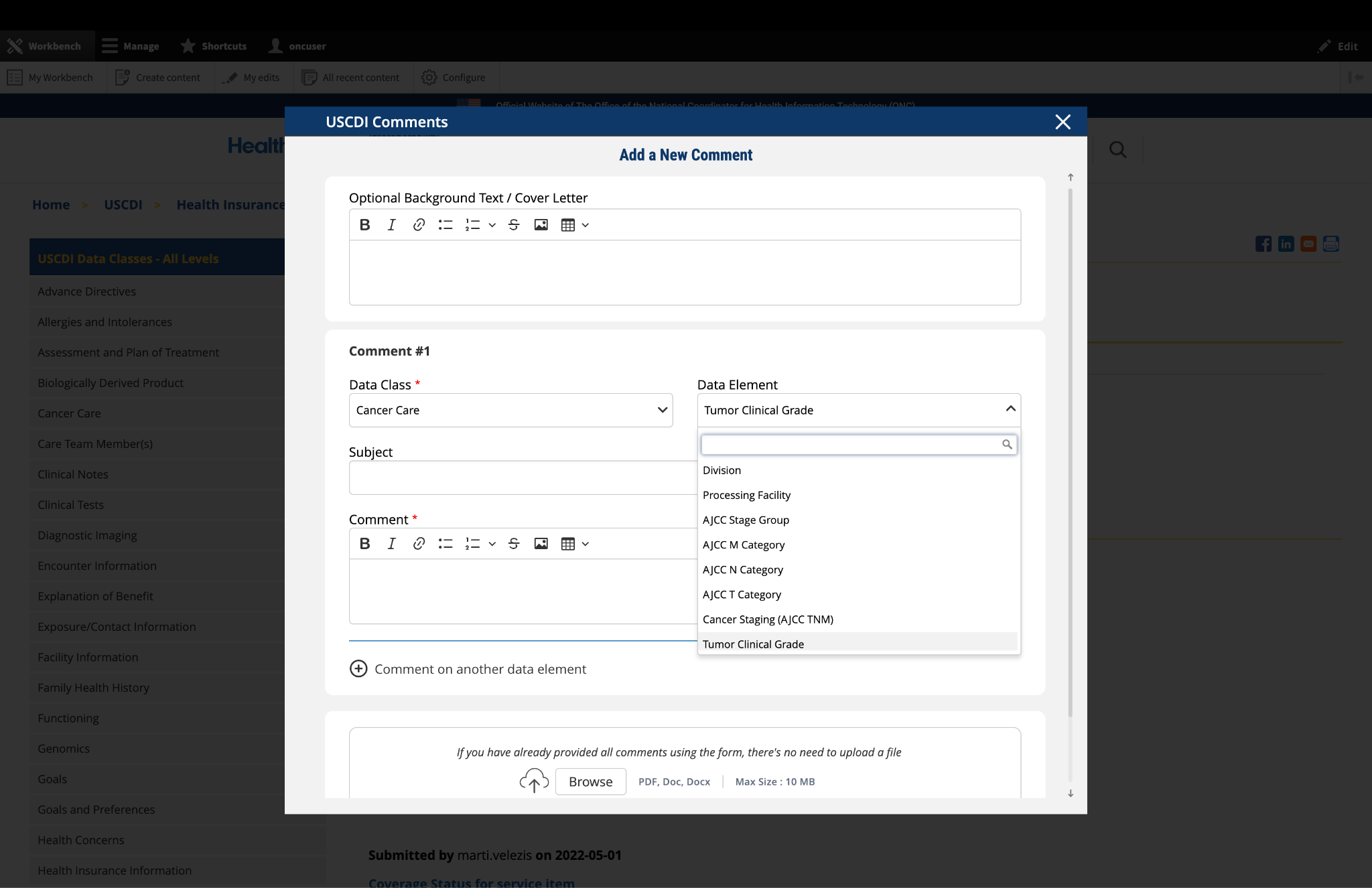
Fig 1 The "Data Class" and "Data Element" dropdown menus allow users to specify the exact content they wish to comment on.
If you cannot find the appropriate data class or element for your comment:
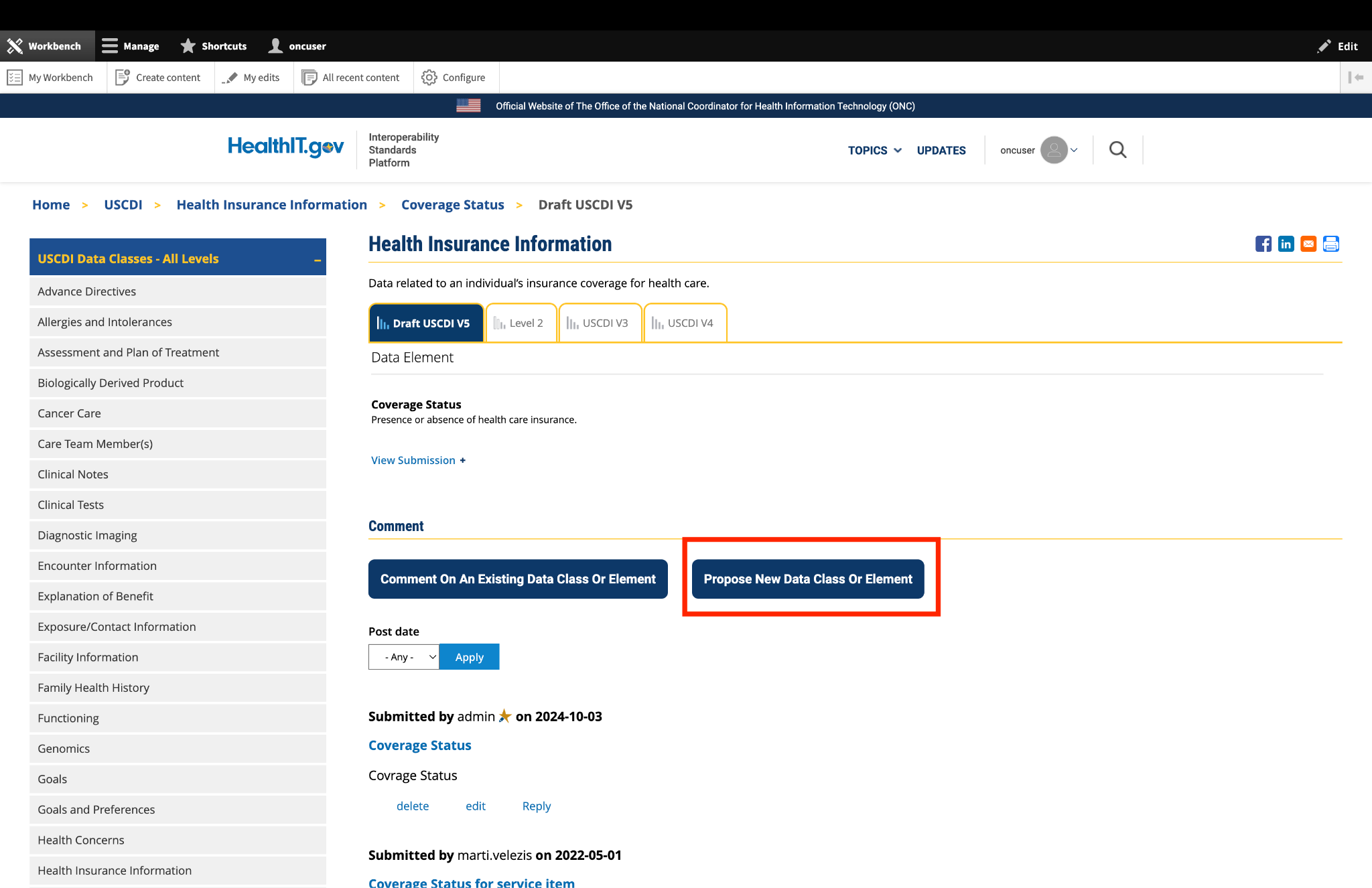
Fig 2 The "Propose a New Data Class or Data Element" button redirects users to the ONDEC Submission System for proposing new data elements not currently available in the system.
Fill out the required fields in the comment form:
Subject: Enter a brief, descriptive title that summarizes your comment. This helps reviewers quickly understand the nature of your feedback.
Comment: In this field, provide the full details of your comment or feedback. Be as clear and specific as possible about your suggestions, concerns, or observations. Include any relevant details that support your position.
If you need to comment on multiple data classes or elements:
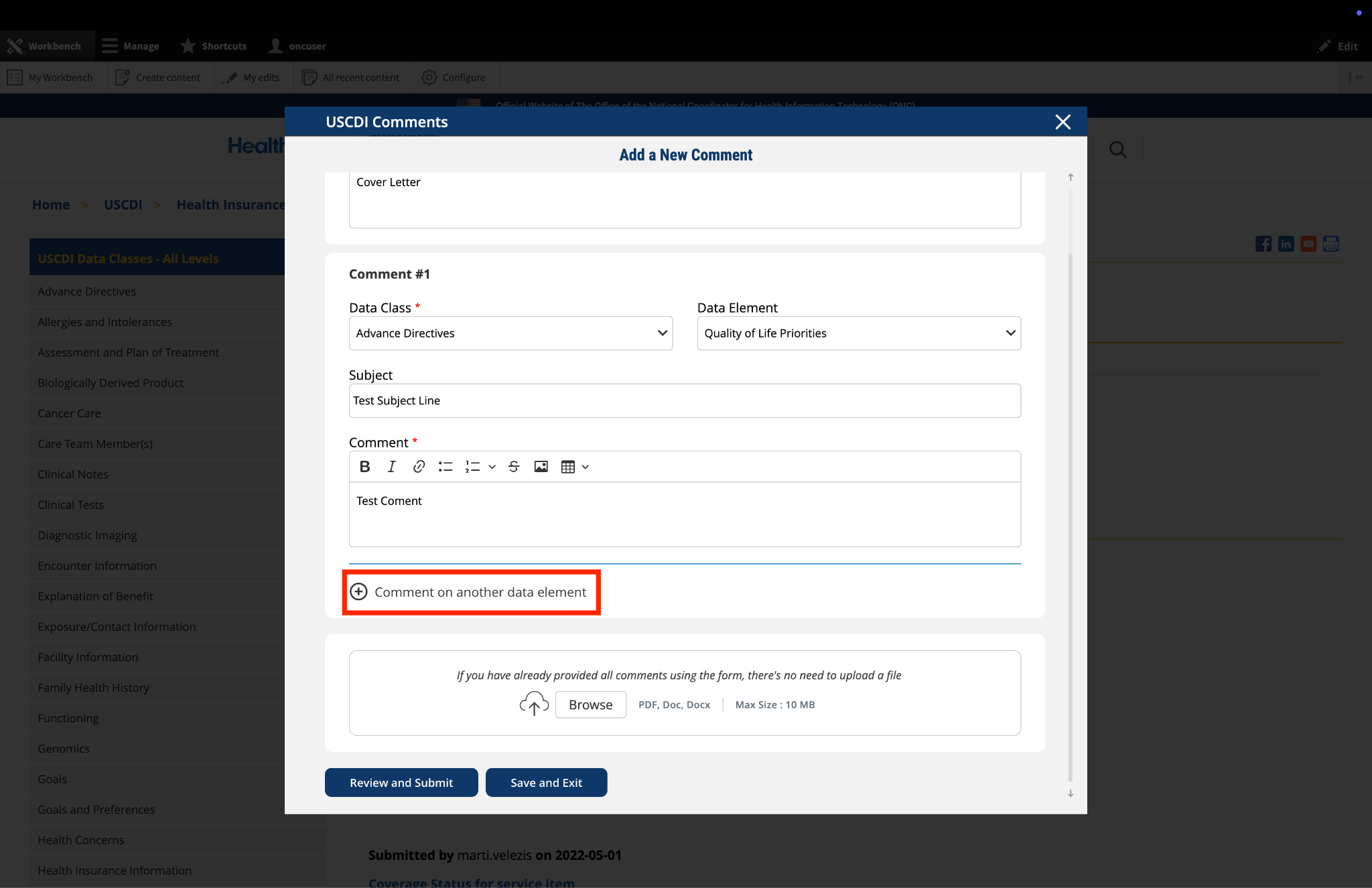
Fig 3 The "Comment on another data element" link enables users to create multiple comments addressing different elements within a single submission.
The platform allows you to upload supporting documentation to enhance your comment:
Important: If you have already entered your comments using the form fields, there is no need to upload duplicate content in PDF format. The file upload feature is intended for supplementary materials only. Please avoid uploading files that contain the same information already provided in your comment text.
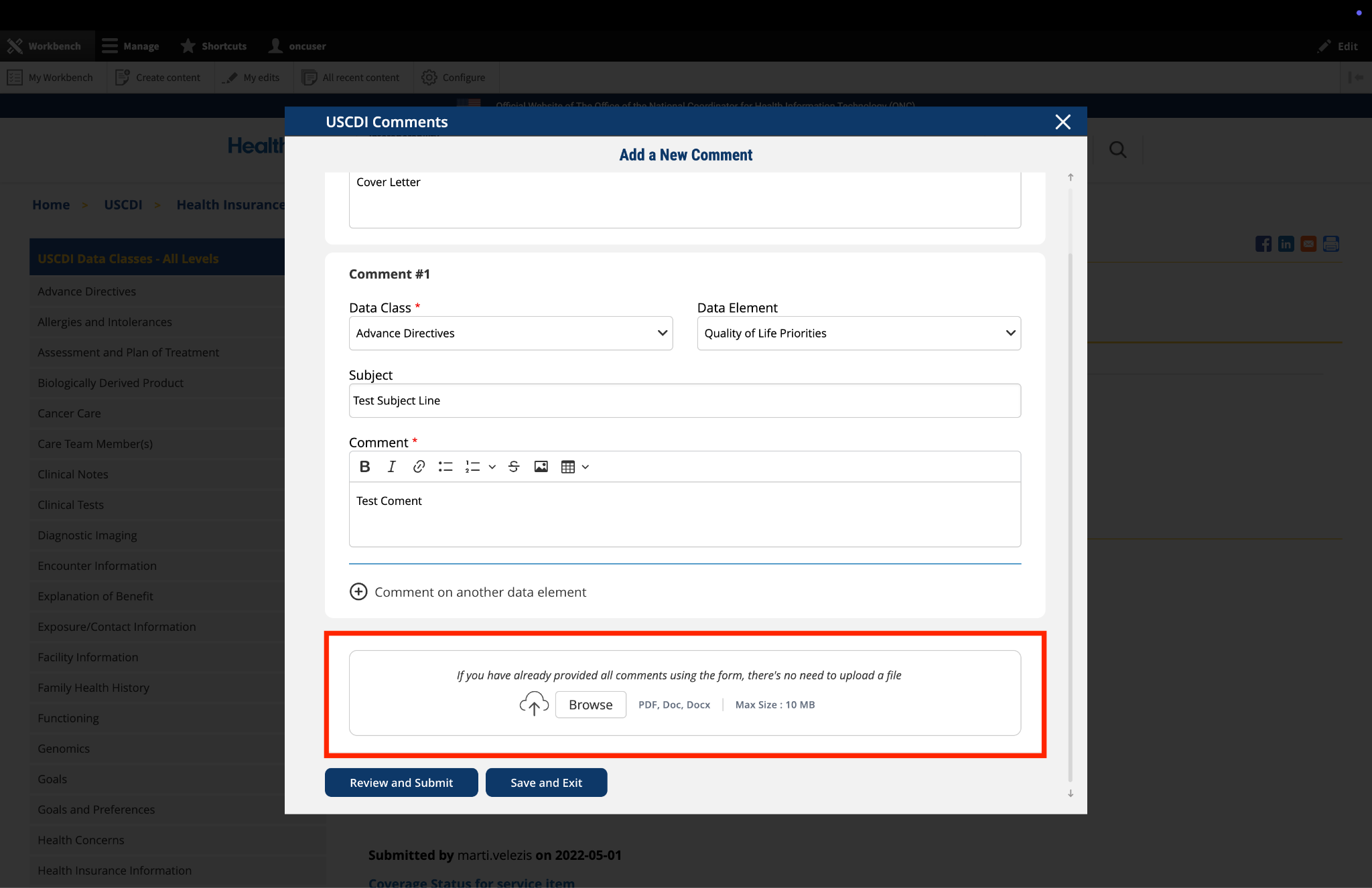
Fig 4 The "File Upload" section permits users to attach supporting documentation that supplements their written comments.
If you need to pause your work and return to complete your comment later:
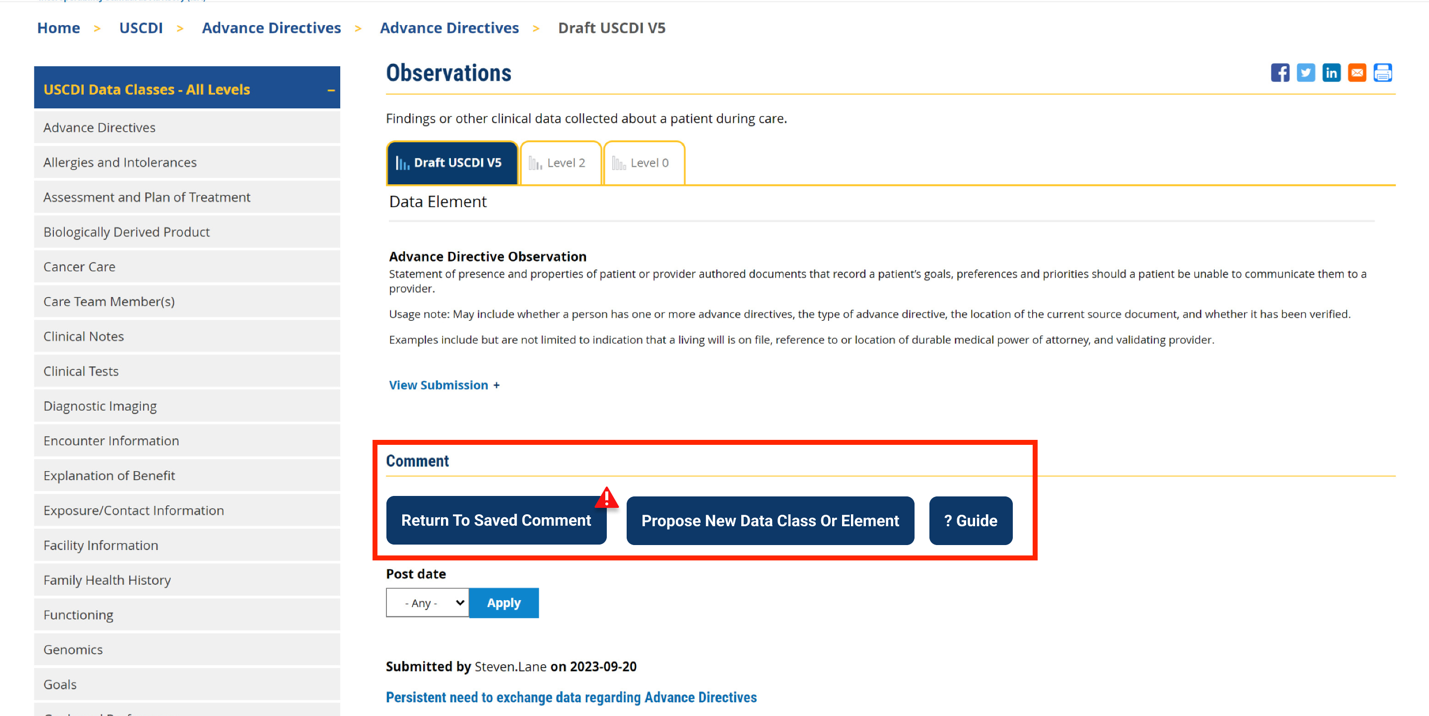
Fig 5 A red triangle with exclamation mark indicator appears next to the “Return to saved Comment” button when draft comments are saved in the system.
Once you have completed your comment:
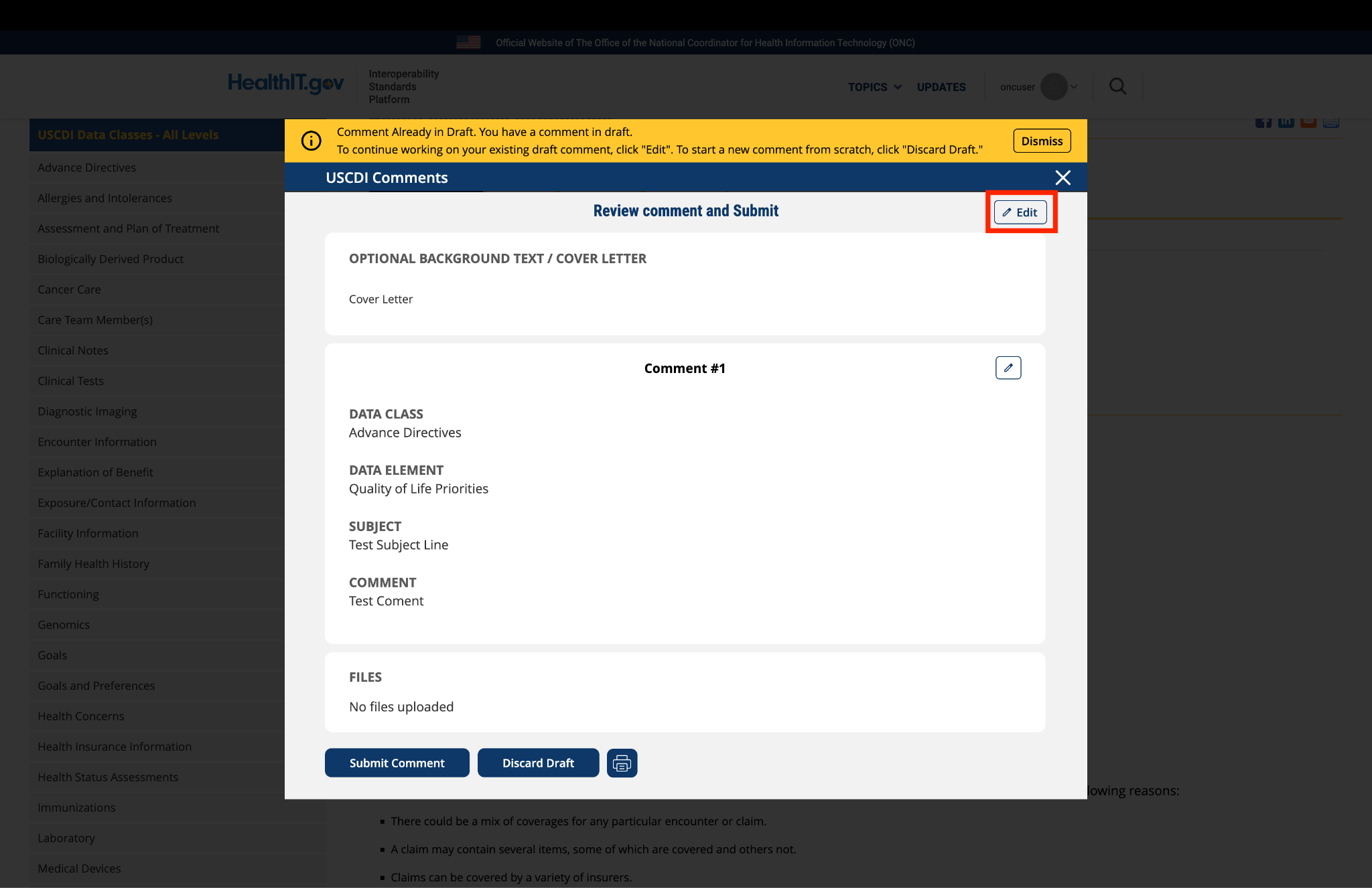
Fig 6 The review screen allows users to verify comment content and make any necessary modifications before final submission.
Submitted by rdillaire on
CMS-CCSQ Recommends Advancing Pain Assessment to USCDI
Recommendation: CMS CCSQ recommends advancing Pain Assessment to Level 2 and include in USCDI v8. CMS CCSQ also recommends updating the description for Pain Assessment to make clear that the data element captures both the assessment conducted and the results of the assessment.
Rationale: