
Submitted by CDC_DSMH_WG on
CDC's comment on behalf of CSTE for USCDI v4
CSTE agrees with CDC's recommendation for this data element.
 Official Website of the Office of the National Coordinator for Health Information Technology
Physical place of available services or resources.
Data Element |
||||||||||||||||||||||||||||||||||||||||||
|---|---|---|---|---|---|---|---|---|---|---|---|---|---|---|---|---|---|---|---|---|---|---|---|---|---|---|---|---|---|---|---|---|---|---|---|---|---|---|---|---|---|---|
|
Facility Identifier
Description (*Please confirm or update this field for the new USCDI version*)
Sequence of characters representing a physical place of available services or resources. | ||||||||||||||||||||||||||||||||||||||||||
|
||||||||||||||||||||||||||||||||||||||||||
Submitted by CDC_DSMH_WG on
CSTE agrees with CDC's recommendation for this data element.
Submitted by CDC_DSMH_WG on
We support the CMS comment ‘CMS-CCSQ Support for Facility/Organization Identifier: USCDIv3’ on 2022-03-22 that Facility/Organization Identifiers are critical component of EHR for providing high quality care to patients, reducing disparities, SDOH data analysis, promoting interoperability and data aggregation. HIPAA requires that health care providers have standard NPI that identify them on all standard transactions. We recommend adding the ‘Facility/Organization Identifiers’ to USCDI data classes. We suggest the following definition of this data class: ‘Facility/Organization Identifiers in EHRs are standardized codes, names and other attributes that provide a unique data pointer to a healthcare facility/organization where patient’s care has occurred.’
We found a similar concept description in the Level 2 under the ‘Facility Level Data’. Because a potential ambiguity of the ‘Facility Level Data’ term (i.e., it could mean aggregate level facility data rather than unique identifiers) we strongly suggest replacing it with proposed by CMS title ‘Facility/Organization Identifiers’. Based on the recent experience in management of the COVID-19 EHRs and ONC requirements on EHR aggregation and reporting data for situational awareness, we propose that the following data elements and associated vocabulary standards should be included into the Facility/Organization Identifiers data class:
Additional applicable standards and additional specifications:
This element is also shared priority for both CDC and CMS as outlined in the joint support letter
Submitted by CDC_DSMH_WG on
Both CDC and CMS support inclusion of this element in v3. More details are provided in the joint letter sent to ONC.
Submitted by sg999 on
Identifiers are critical for billing, linking billing/clinical EHRs, supporting data aggregation across data sources and reducing burden, as well as attribution and tracking of data. All of these activities are necessary for providing high quality care to patients, reducing disparities, promoting interoperability and communicating across silos. Facility identifiers are also critical for public health reporting and tracking, an ONC stated priority for USCDI version 3.
CMS specifically prioritizes exchange of CMS Certification number (CCN), Provider Transaction number (PTAN), and National Provider Identifier (NPI)—unique identifiers for a healthcare organization.
Maturity:
Submitted by CDC_DSMH_WG on
Submitted by pwilson@ncpdp.org on
NCPDP SCRIPT transactions uses the NPI type 2 and proprietary Facility ID values. NCPDP request these values be added to Draft Version 2.
The "Optional Background Text / Cover Letter" field provides space for additional context or introductory information related to your comment.
If you wish to provide context, explanation, or an introduction to your comment, enter this information in the field labeled "Optional Background Text / Cover Letter." This is entirely optional and is most useful when submitting multiple related comments or when additional background would help reviewers understand your feedback.
If you are only commenting on a single data class or element, you may leave this field blank.
To specify which data class your comment addresses:
To specify which data element your comment addresses:
Note: Comments on a specific data element will appear on the respective data element page, while comments on a data class (without a specific element selected) will appear on the landing page for that data class.
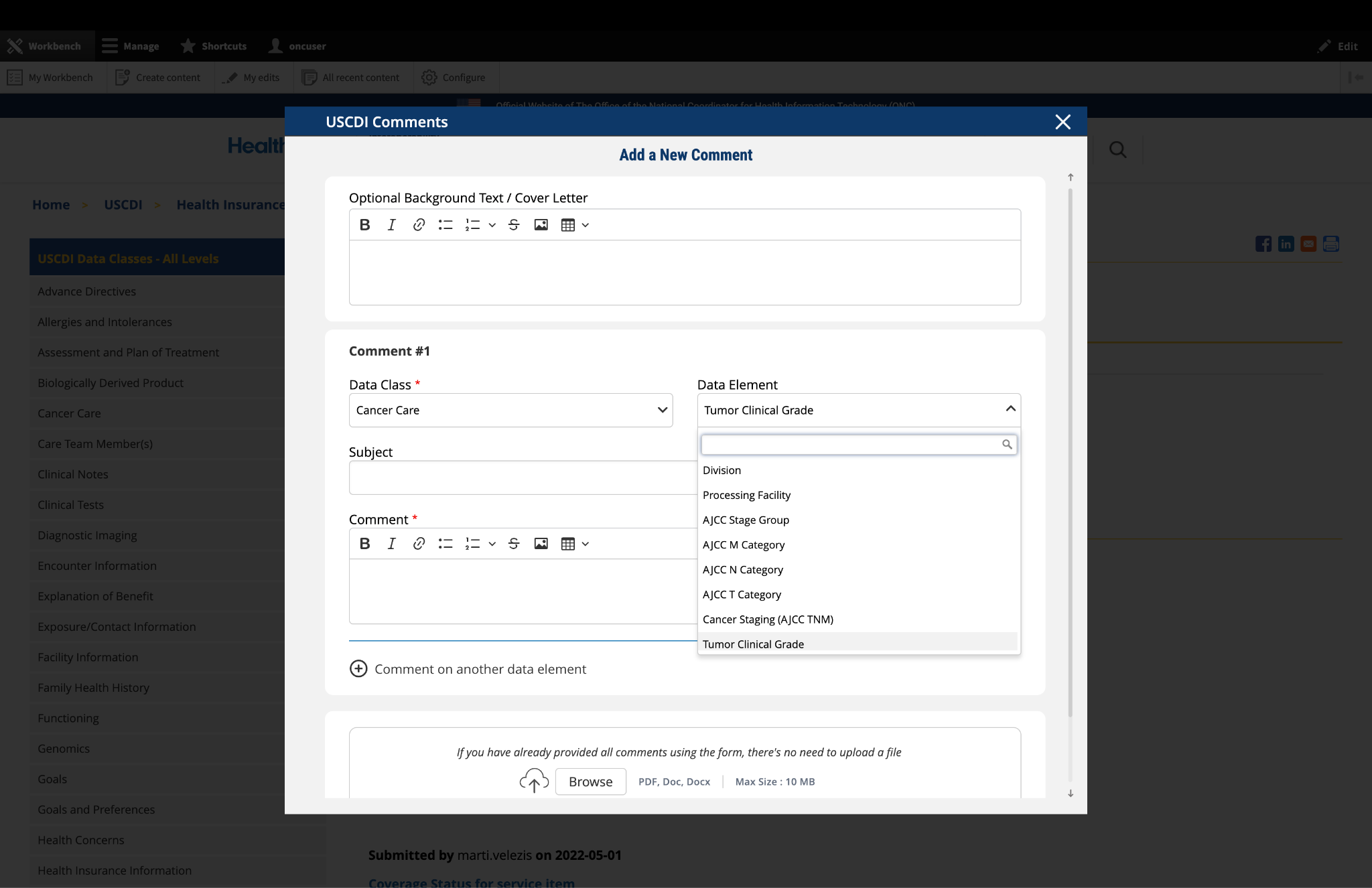
Fig 1 The "Data Class" and "Data Element" dropdown menus allow users to specify the exact content they wish to comment on.
If you cannot find the appropriate data class or element for your comment:
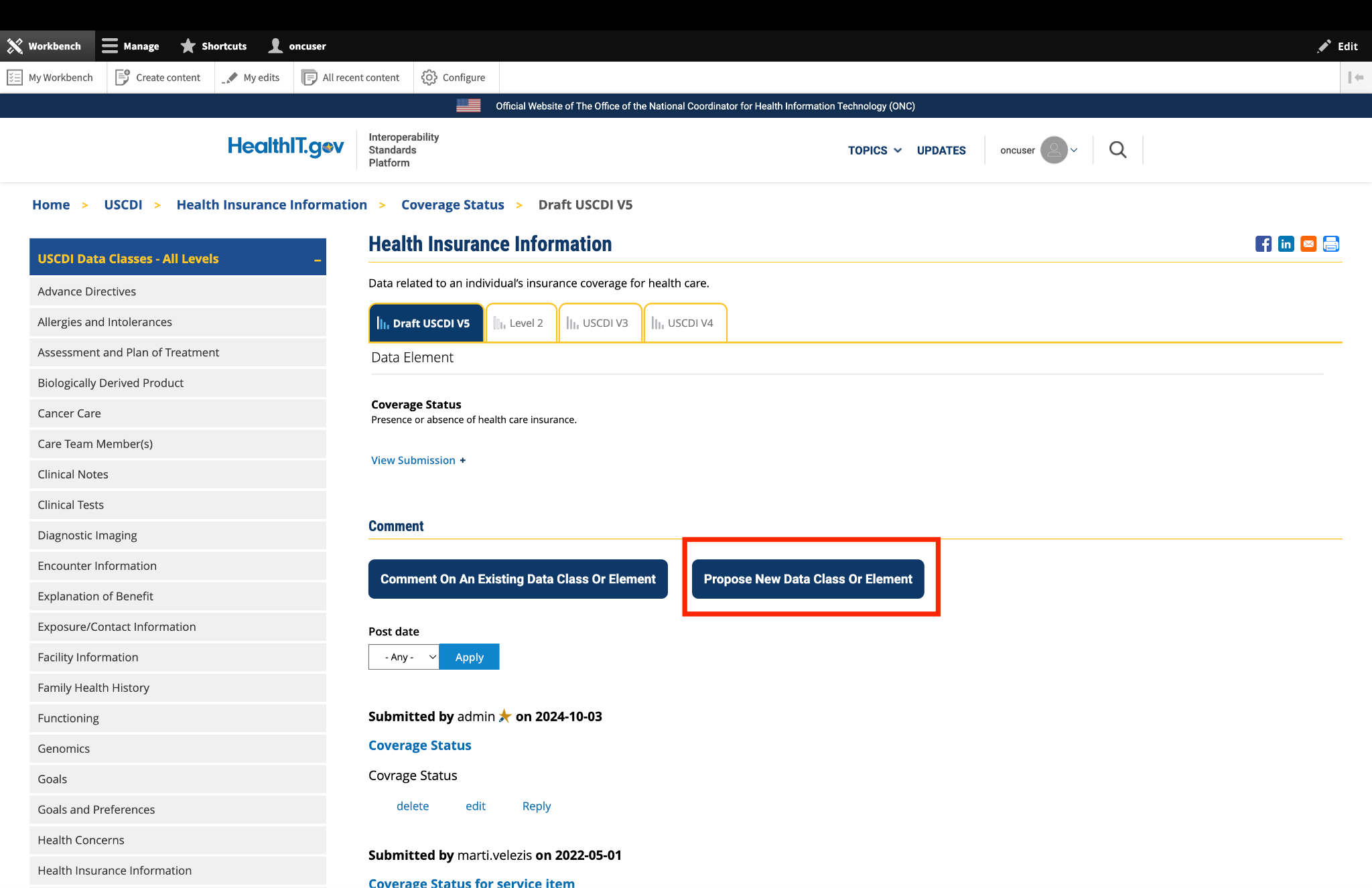
Fig 2 The "Propose a New Data Class or Data Element" button redirects users to the ONDEC Submission System for proposing new data elements not currently available in the system.
Fill out the required fields in the comment form:
Subject: Enter a brief, descriptive title that summarizes your comment. This helps reviewers quickly understand the nature of your feedback.
Comment: In this field, provide the full details of your comment or feedback. Be as clear and specific as possible about your suggestions, concerns, or observations. Include any relevant details that support your position.
If you need to comment on multiple data classes or elements:
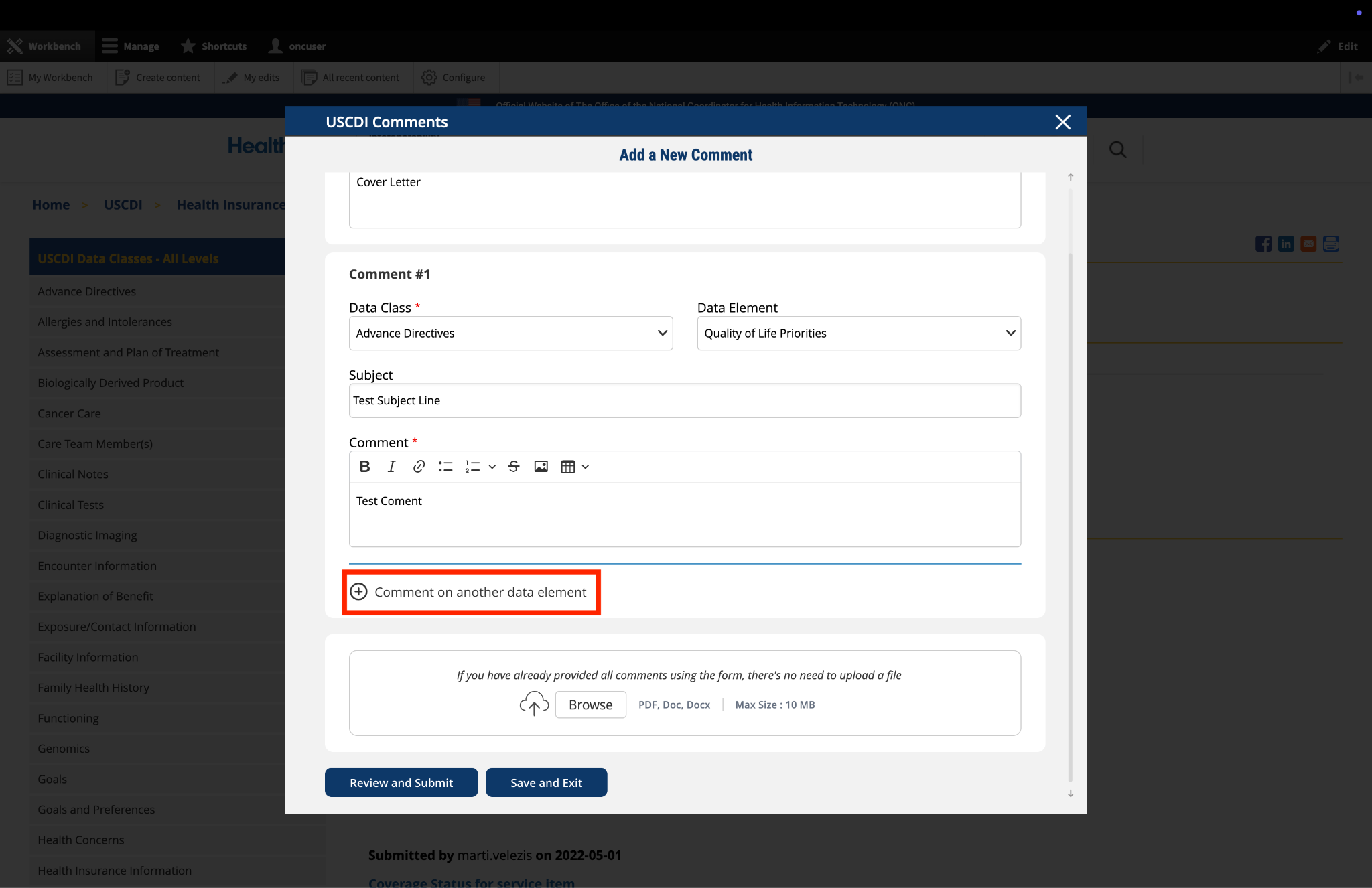
Fig 3 The "Comment on another data element" link enables users to create multiple comments addressing different elements within a single submission.
The platform allows you to upload supporting documentation to enhance your comment:
Important: If you have already entered your comments using the form fields, there is no need to upload duplicate content in PDF format. The file upload feature is intended for supplementary materials only. Please avoid uploading files that contain the same information already provided in your comment text.
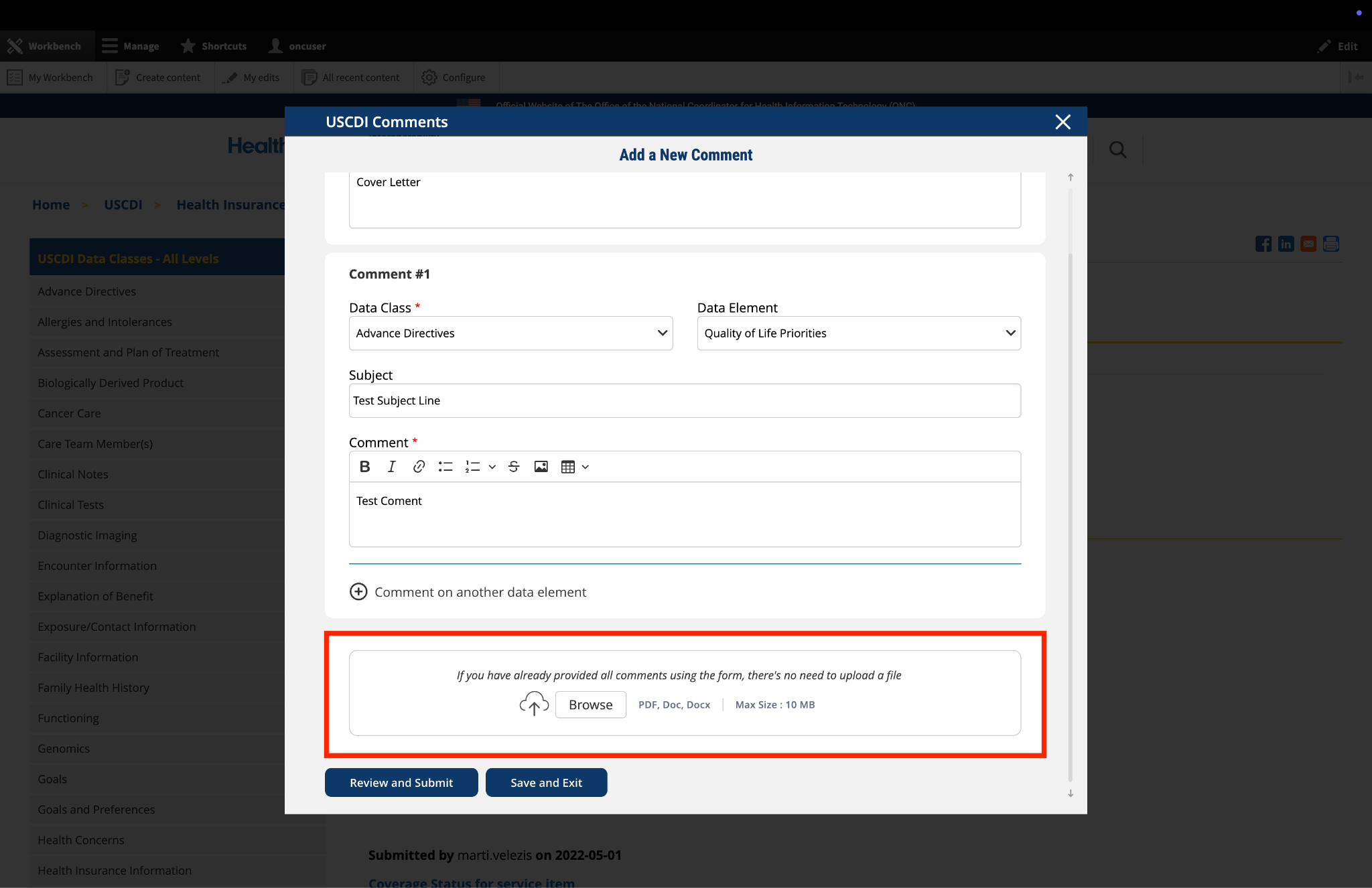
Fig 4 The "File Upload" section permits users to attach supporting documentation that supplements their written comments.
If you need to pause your work and return to complete your comment later:
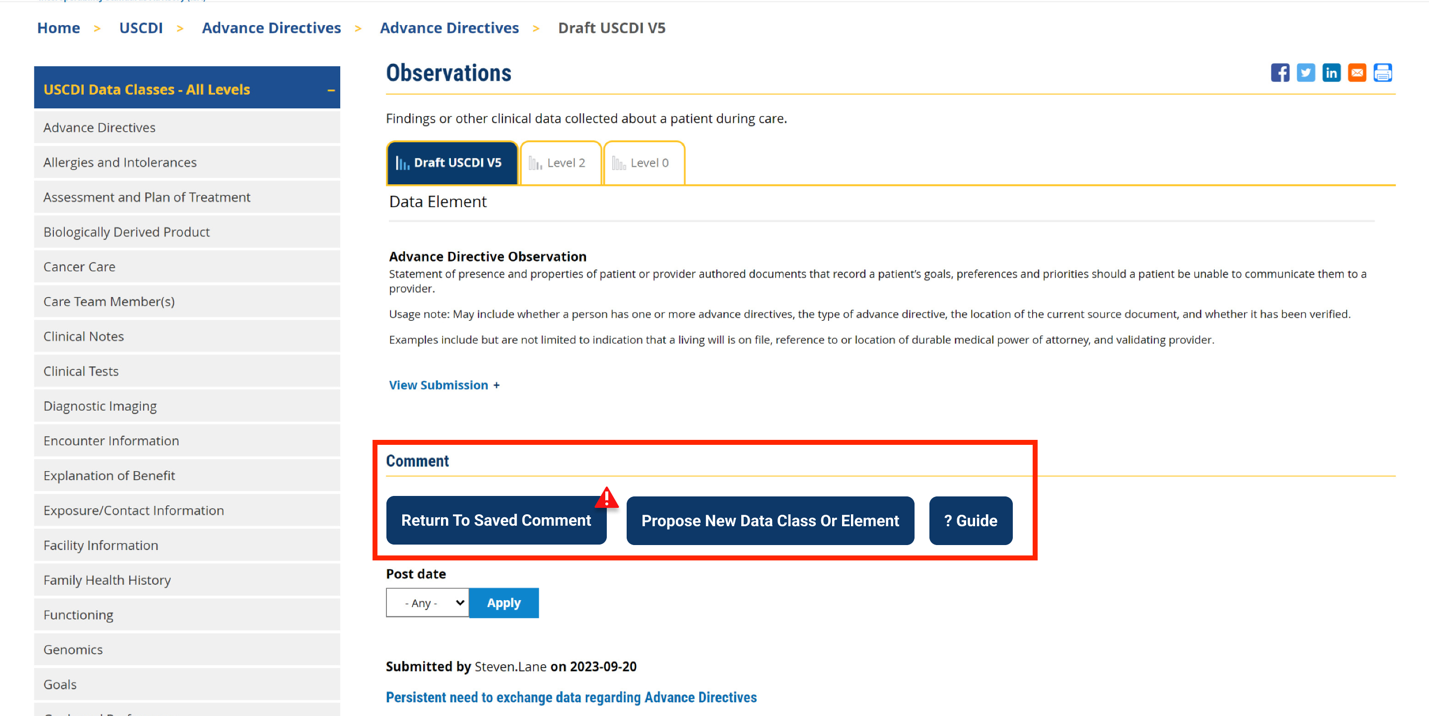
Fig 5 A red triangle with exclamation mark indicator appears next to the “Return to saved Comment” button when draft comments are saved in the system.
Once you have completed your comment:
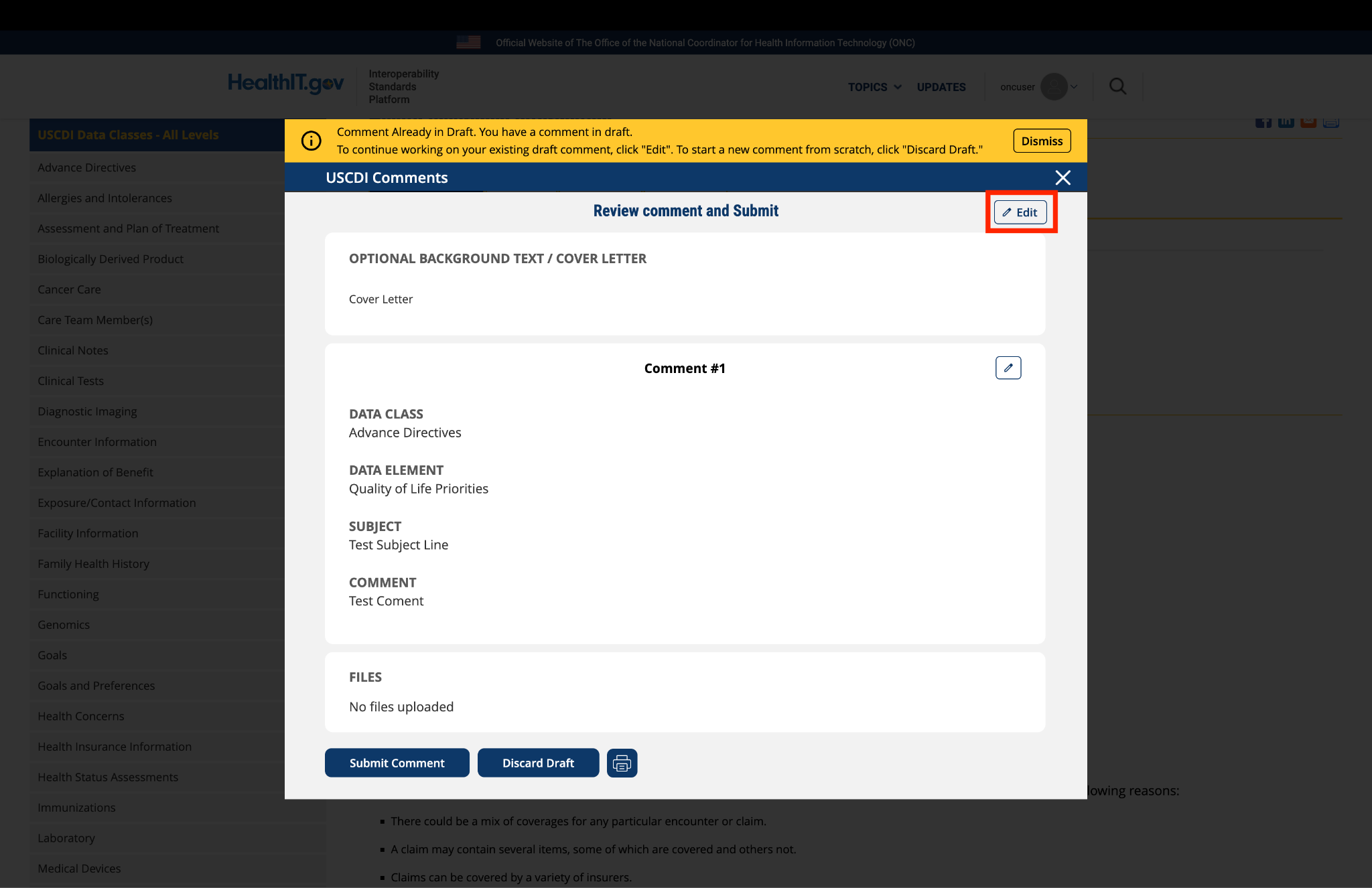
Fig 6 The review screen allows users to verify comment content and make any necessary modifications before final submission.
Submitted by Svellanky on
CMS-CCSQ Support for Facility/Organization Identifier: USCDI v4
A facility, or organizational, identifier is critical for providing context for granular patient data and supports tracking data back to organizations—this type of contextual data element ensures usability of interoperable clinical data. Facility identifiers are used for billing, support data aggregation across sources, as well as attribution. They can also support exchange of data between hospitals and post-acute care providers. All of these activities are necessary for providing high quality care to patients, reducing healthcare inequities and disparities, and promoting interoperability and communication – all ONC stated priorities for the USCDI. Facility identifiers were also previously identified as a joint CMS-Centers for Disease Control and Prevention (CDC) priority as a critical element for public health reporting, surveillance and emergency response – an ONC stated priority for USCDI v4. For example, CDC and CMS rely on facility identifiers to measure the incidence of healthcare associated infections and other patient safety events in facilities, and to direct technical assistance and quality improvement support to underperforming facilities. Furthermore, the ISWG recommended this element for final USCDI v3, and received HITAC support, noting the need for an identifier combined with an assigning authority.
Maturity: This element is classified as Level 2 by ONC and continues to have strong standardization and be in wide use.
Current uses, exchange, and use cases: CCN, PTAN, NPI, and CLIA numbers are exchanged across the nation for CMS reporting to appropriately attribute outcomes and measure results. They are used extensively for electronic clinical quality measure (eCQM) reporting, linking data sources for quality measurement, and for post-acute care reporting and payment purposes. Facility identifiers are also used extensively for electronic case reporting (eCR) and electronic lab reporting (ELR) and are critical for public health agencies ability to monitor the spread of reportable conditions. Exchange of organization identifiers supports facility-specific quality, prior authorization activities, and other assessments that are limited without this information. Additionally, there is active work underway to create an IG for healthcare directories (HL7.FHIR.US.DIRECTORY-EXCHANGE\Home - FHIR v4.0.1) as part of the FAST Da Vinci accelerator initiative, which includes the critical organization and provider identifiers necessary to appropriately use and attribute exchanged data. Among other purposes, organization identifiers are also used to support public health use cases, including electronic case reporting and emergency response activities. For instance, during the early COVID-19 pandemic phase, there was insufficient data tracking across organizations, further complicated by the need to track emergency response resources across individual facilities. Exchange of facility/organization identifiers can mitigate such delays in emergency response activities.