Analysis of clinical specimens to obtain information about the health of a patient.

Data Element

Specimen collection date/time
Description
Date/time when clinical specimen was collected from subject patient.

Comment

What is the justification…

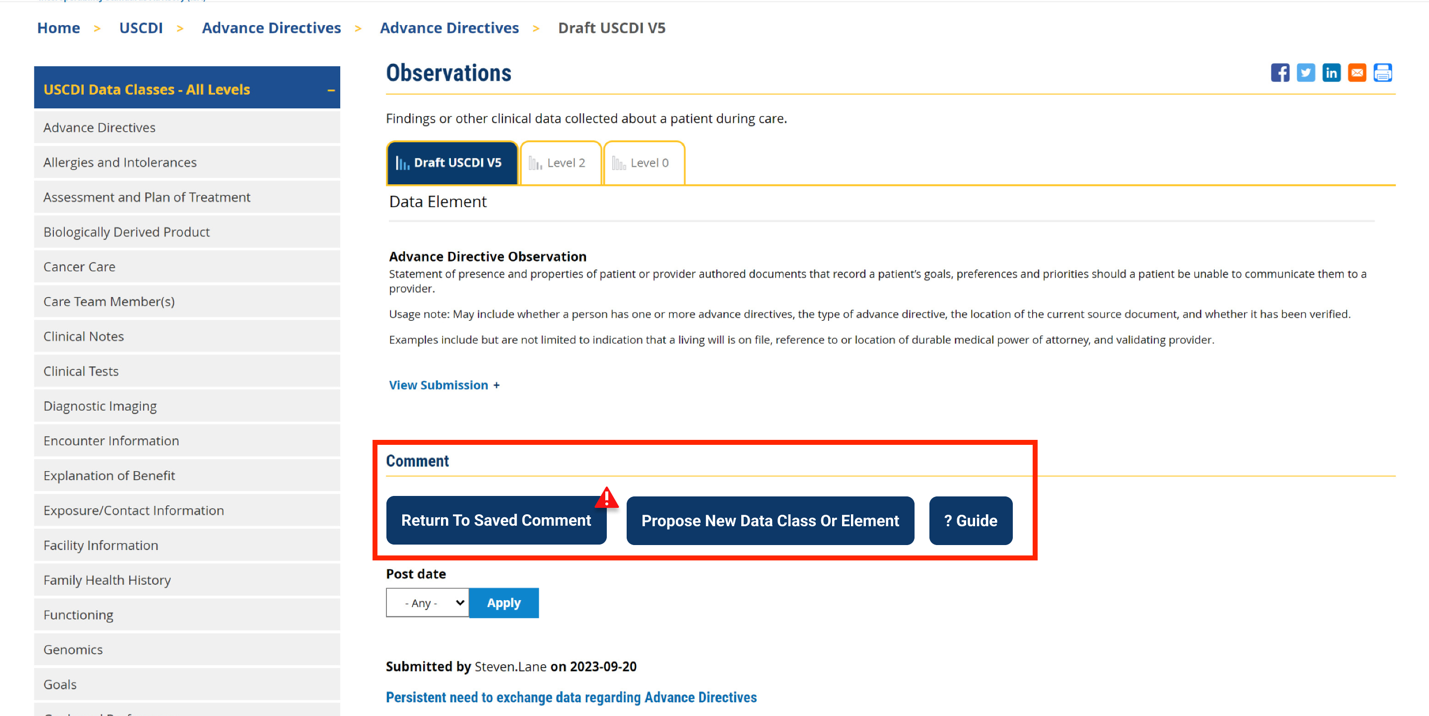
What is the justification for the demotion of the following Case Reporting data elements in USCDI, specifically:

• Exposure/Contact Information: Exposure/Contact Agent
• Exposure/Contact Information: Exposure/Contact Date
• Exposure/Contact Information: Exposure/Contact Direction
• Exposure/Contact Information: Exposure/Contact Source/Target Participant
• Exposure/Contact Information: Exposure/Contact Type
• Health Insurance Information: Medicare Patient Identifier
• Immunizations: Vaccination Administration Date
• Laboratory: Specimen Collection Date/Time
• Patient Demographics/Information: Patient Birth Place
• Patient Demographics/Information: Tribal Enrollment
• Pregnancy Information: Estimated Date of Delivery
• Pregnancy Information: Gestational Age
• Pregnancy Information: Last Menstrual Period (LMP)
• Provenance: Unique Identifier
• Social Determinants of Health: Housing Instability and Homelessness
• Social History: Congregate Living
• Work Information: Employment Status
• Work Information: Job Employer Address
• Work Information: Job Employer Name
• Work Information: Usual Industry
• Work Information: Usual Occupation

Currently, 21 certified EHR products exchange these elements using electronic Case Reporting (eCR) specifications demonstrating real-world adoption that typically supports promotion, not demotion, within the USCDI maturity model.

Collectively, these elements provide clinical, demographic, occupational, social, and epidemiological context essential to disease investigation and outbreak response for nationally notifiable conditions.

We urge ONC to either reverse this decision or publish a detailed, evidence-based rationale.

Specimen Collection Date/Time - CSTE Comment

CSTE supports collection of more granular laboratory data to support case adjudication and reporting as well as patient deduplication and linking of data from cases to ELR, which can be critical. The variables we recommend be added to USCDI v7 include:
Name of testing/performing laboratory and associated identifiers (CLIA)(HIGH PRIORITY)
Name of ordering provider and submitter
Address of testing/performing laboratory
Accession number at testing laboratory (HIGH PRIORITY for matching purposes)
Date the test was ordered
Date the test was performed (needs to be reconciled with results date/timestamp)
Specimen collection date and time (HIGH PRIORITY) (Needs to be reconciled with Test Date=Clinically relevant time)
Test result value (needs to be reconciled with values/results in USCDI V1 and V2), units, reference range and interpretation (HIGH PRIORITY)
Abnormal flag (HIGH PRIORITY)
Test kit identifier

Dates and times are critical to evaluating the timeliness of reporting - it is a major indicator for the performance of public health surveillance systems and without this information it is unknown how data exchange is impacting the ability for public health to respond in a timely fashion. Although the date and time data are generated by the system, in practice it has been observed that availability of this data to Public Health Departments is sparse for use in timeliness analysis

Specimen Collection Date/Time

Specimen Collection Date/Time is currently included as a Level 0 Data Element because it represents a specific type of existing USCDI data element- Performance Time in the Procedure data class. The use case provided in the element details explains how the information is used and specifically its importance in supporting timely public health surveillance, investigation, and interventions. Additionally, Specimen Collection Date/Time is critical when a specimen is sent to various laboratories for testing. For instance, a specimen could travel from a doctor's office to a commercial lab A, that lab could run a PCR but not serotyping or culture. If they send the specimen to laboratory B for that additional testing, then it is identified as reportable and sent to a state public health lab. All of that could be occurring over weeks of time and it is crucial to know when the original specimen was actually collected so that Public Health can accurately understand non-positive results, understand specimen viability, and have a better approximation of time to help inform interventions and epidemiology. It's documented that this element is used extensively in production environments, used by over 3,000 public health agencies in the US, and has been tested at scale between multiple different production environments to support the majority of anticipated stakeholders. It is a requirement for reporting of reportable lab results to Public Health from hospitals and should be included in electronic case reports when appropriate from both hospital and provider EHR implementations. No potential challenges have been documented. As commented by others, this specialization of Performance Time to represent Specimen Collection Date/Time isn't clear and may yield inconsistencies in interpretation and usage. To reduce ambiguity, TDH-OIA recommends consideration for either 1.) inclusion of Specimen Collection Date/Time in USCDI 7 to further align existing implementation, standards, reporting requirements to reduce ambiguity, or 2.) updating of the element name to Clinically-Relevant Date/Time and update the notes to read "For in-vivo care activities like vaccine and medication administration, surgery, ultrasound performed, vital signs documentation, health status assessment- this date/time is equivalent to the Performance Date/Time. For in-vitro care activities like laboratory testing- this date/time is equivalent to Specimen Collection Date/Time."

CDC's comment for inclusion in USCDI v7

CDC recommends Specimen collection date/time for inclusion in USCDI v7. Specimen Collection Collected captures the date and time a clinical specimen was obtained from the patient. Accurate collection timing supports event identification, onset classification, and alignment of diagnostic results with other relevant clinical events, such as medication exposure or admission timing. Without structured specimen collection timestamps, accurate attribution and evaluation of clinical events is limited.

CDC programs, including NHSN, rely on specimen collection timestamps in combination with related clinical events to determine whether defined time-based criteria are met, such as whether an event occurred within a required timeframe, and to support reliable evaluation of time-based quality measure logic.

CSTE Comment - v6

CSTE supports inclusion of this data element in USCDI V6. Please see previously submitted CSTE comments for additional recommendations.

CMS-CCSQ Support Specimen Collection Date/Time for USCDI v6

Data Element: Specimen Collection Date/Time (Level 0)

  1. Recommendation: Advance the Specimen Collection Date/Time data element to Level 2 and add to Final USCDI v6
  2. Rationale: The Specimen Collection Date/Time data element in the Laboratory data class can be critical for providing context in quality measurement. This data element provides key information needed to confirm diagnoses, understand disease severity, and classify cases that require public health intervention, including outbreak identification and response. Knowing the date and time of specimen collection helps determine when a patient has a laboratory-verified illness. This data element helps healthcare providers interpret test findings correctly, especially in urgent care settings like Intensive Care Units (ICUs) and emergency rooms as well as during public health response to infectious disease outbreaks. The collection date and time of a specimen is particularly important in understanding when a disease process was present in a patient, which helps interpret laboratory findings for severity and transmissibility. Current CMS quality measures require date/time elements for different aspects of laboratory tests such as collection, recording, and reporting. Elevating this data element to Final USCDI v6 will be significant in helping to ensure accurate and effective patient care in addition to comprehensive and timely public health response. CMS would also highly recommend date/time data elements be incorporated to other areas to enhance collection and reporting of key healthcare activities such as radiology, immunizations, and clinical notes.

APHL requests inclusion of this critical element in V6

APHL supports inclusion of this discrete data element until the design of USCDI accomodates a mechanism for each use case to define further constraints around generic data elements, as otherwise the clinical context and signifcance of when to collect this element cannot be sufficently described.
APHL points out that specimen collection is not normally modeled as a procedure in the EHR-s and LIS and hence it is not a type of procedure date/time.
For public health, this is used to to determine onset of a case (for some conditions and if onset date is not available), as a proxy for infectious/contagious period, to calculate turnaround time/timeliness metrics or as a proxy date for classifying a specimen result for temporal aggregation if other dates are not available. It is essential for understanding laboratory situational awareness. It is different from order date, as sometimes the order is placed well before the specimen was collected.
It is called out as a required element of the test request in a test report in 42 CFR 493.1241(c)(6) (https://www.ecfr.gov/current/title-42/part-493/subject-group-ECFR5f8f0b6639946fd#p-493.1241(c)(6)): "The date and, if appropriate, time of specimen collection."
This element maps to in V2 = SPM-17 (Specimen Collection Date/Time) https://www.hl7.eu/refactored/segSPM.html#1765 and also in OBR-7 (Observation Date/Time) = https://www.hl7.eu/refactored/segOBR.html#241 for speicmen based observations (and OBR-7 is Required for results in the base standard ORU^R01 message), in FHIR = observation.effectiveTime for specimen based observations and specimen.collected (either DateTime or Period)
Rationale for elevating to V6 level: 
Every lab evaluates each specimen it receives prior to performing the ordered test(s) based on the acceptiblity criteria, that are part of every lab's catalog: most test have one for time ranges, which is calculated using the specimen collection date/time to the specimen received date time for example: SPECIMEN STABILITY INFORMATION: https://www.mayocliniclabs.com/test-catalog/overview/75759#Specimen, time delay elements are also used to evaluate reserach studies (https://www.ncbi.nlm.nih.gov/pmc/articles/PMC6816912/) and highlighted in 9.1 Required Activities and Documentation in Guidelines on Good Clinical Laboratory Practice (https://www.ncbi.nlm.nih.gov/pmc/articles/PMC2213906/).
It is a "Must Support" (represented by usage code "RE") data element in SPM-17, but required in OBR-7 in the base LRI profile (https://www.hl7.org/implement/standards/product_brief.cfm?product_id=279) and Required in both SPM-17 and OBR-7 in NAACR (https://www.naaccr.org/pathology-laboratory-electronic-reporting/) and ELR R1 IGs (https://www.hl7.org/implement/standards/product_brief.cfm?product_id=98). ELR R1 has been part of certification requirements for lab result reporting to public health since MU1 as called out "Implementation specifications. HL7 Version 2.5.1 Implementation Guide: Electronic Laboratory Reporting to Public Health, Release 1 (US Realm) (incorporated by reference in § 170.299) with Errata and Clarifications, (incorporated by reference in § 170.299) and ELR 2.5.1 Clarification Document for EHR Technology Certification, (incorporated by reference in § 170.299)." in https://www.ecfr.gov/current/title-45/part-170/section-170.205#p-170.205(g) - covers these 3 criteria for at least being level 2: Represented by a terminology standard or SDO-balloted technical specification or implementation guide.
Data element is captured, stored, or accessed in multiple production EHRs or other HIT modules from more than one developer.
Data element is electronically exchanged between more than two production EHRs or other HIT modules of different developers using available interoperability standards.

CSTE Comment - v5

CSTE supports collection of more granular laboratory data to support case adjudication and reporting as well as patient deduplication and linking of data from cases to ELR, which can be critical. The variables we recommend be added to USCDI v5 include:


Name of testing/performing laboratory and associated identifiers (CLIA) (HIGH PRIORITY)
Name of ordering provider and submitter
Address of testing/performing laboratory 
Accession number at testing laboratory (HIGH PRIORITY for matching purposes)
Date the test was ordered
Date the test was performed (needs to be reconciled with results date/timestamp)
Specimen collection date and time (HIGH PRIORITY) (Needs to be reconciled with Test Date=Clinically relevant time)
Test result value (needs to be reconciled with values/results in USCDI V1 and V2), units, reference range and interpretation (HIGH PRIORITY)
Abnormal flag (HIGH PRIORITY)
Test kit identifier

Dates and times are critical to evaluating the timeliness of reporting - it is a major indicator for the performance of public health surveillance systems and without this information it is unknown how data exchange is impacting the ability for public health to respond in a timely fashion. Although the date and time data are generated by the system, in practice it has been observed that availability of this data to Public Health Departments is sparse for use in timeliness analysis
 

CDC's comment for USCDI Draft v5

CDC supports the inclusion of this data element in USCDI v5 as it is an element that may be necessary for calculation of our digital quality metrics from FHIR data. 

Conceptualizing Laboratory Specimen collection date/time as a procedure time may not be clinically correct. In certain situations, such as during a surgery, the procedure time, i.e., Surgery start time, could be different from the time the specimen is obtained.

Laboratory specimen collection date/time is used for laboratory situational awareness and surveillance needs. This date/time is used as a proxy for infectious/contagious period. It is different from order date, as sometimes the order is placed well before the specimen was collected.

This is used in public health to determine onset of a case (for some conditions and if onset date is not available) and also, as with other dates, is used to assess timeliness of data and lab processes. 

Additional Resources for 4):

CLIA Requirement (https://www.ecfr.gov/current/title-42/part-493/subject-group-ECFR5f8f0b6639946fd#p-493.1241(c)(6)). 

In this study, look at Table 1 where they indicate time delay as a reason for specimen rejection. Specimen collection time is needed to calculate the time delay. 

“The request form must document unique study-participant identifiers, specimen collection date and time, study participant demographics, specimen type, and the collector’s (phlebotomist’s) identity” from this study. 

For this study, see the relationship between temperature and time. Collection time is crucial to know if the specimen is viable. 

In this Mayo Clinic’s document time delay is again a reason for rejection. 

Overarching Comment: 

There are extensive comments that have been submitted in support of the specific, granular date/timestamps for laboratory data, including a very granular one submitted by CMS. We agree with these, and CSTE explained it best in their existing comment: “Dates and times are critical to evaluating the timeliness of reporting - it is a major indicator for the performance of public health surveillance systems and without this information it is unknown how data exchange is impacting the ability for public health to respond in a timely fashion. Although the date and time data are generated by the system, in practice it has been observed that availability of this data to Public Health Departments is sparse for use in timeliness analysis.” 

These are required data elements in the many laboratory data-public health exchange standards (including the dominant one used for laboratory data exchange currently, ELR 251 r1).

Clinical value of Specimen collection date/time

As a practicing physician I cannot fully understand or utilize exchanged laboratory data without knowing the date and time that the specimen was collected.  This information is critical to be able to interpret results that change over time, especially in an intensive care setting, such as the Emergency Department, Labor & Delivery, operating room, ICU, etc..  As noted in the numerous comments received from laboratory and public health organizations supporting the inclusion of this data element, this data is routinely collected and exchanged and should therefore be added to USCDI as a CORE data element for exchange.

Log in or register to post comments

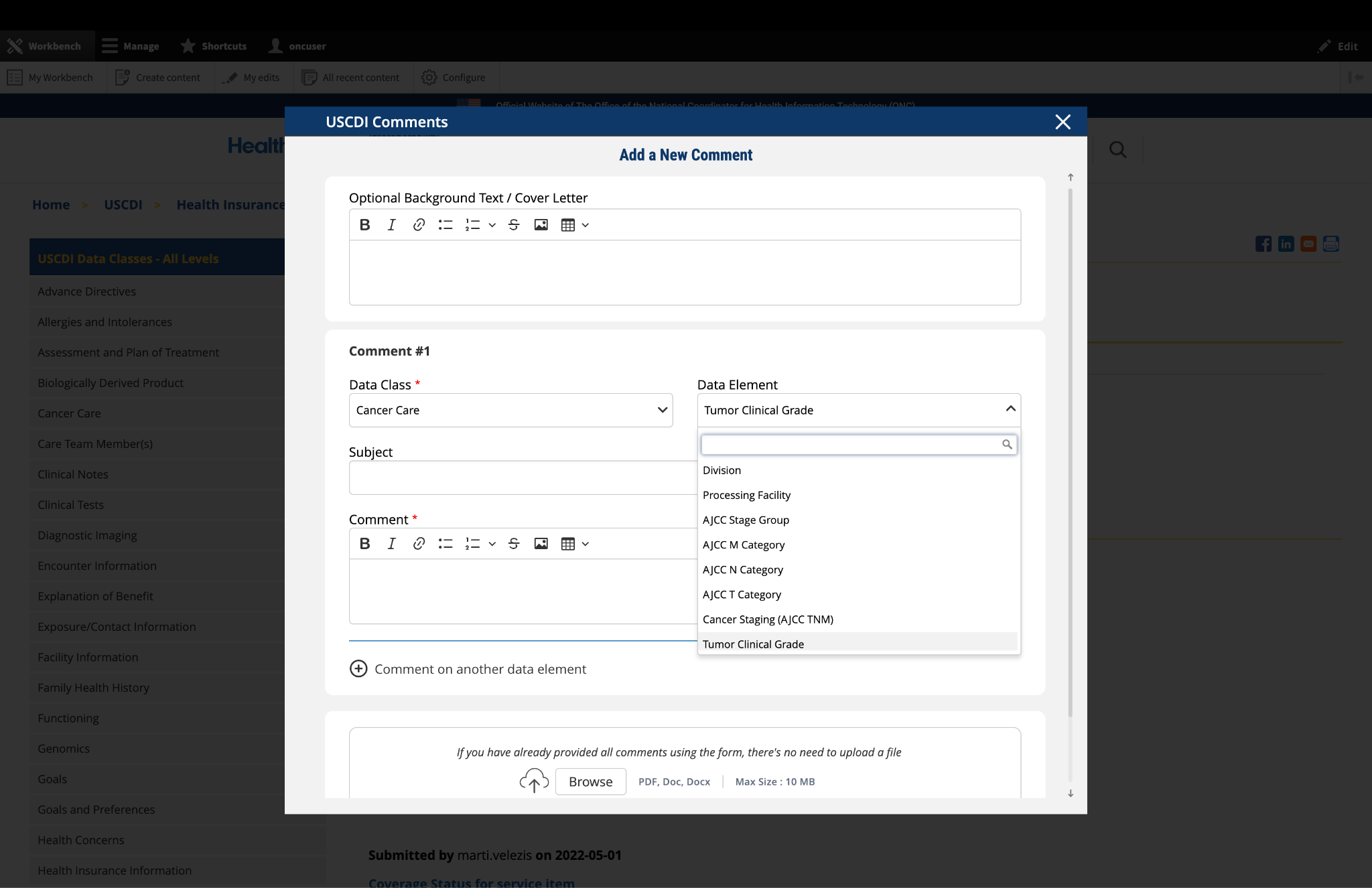
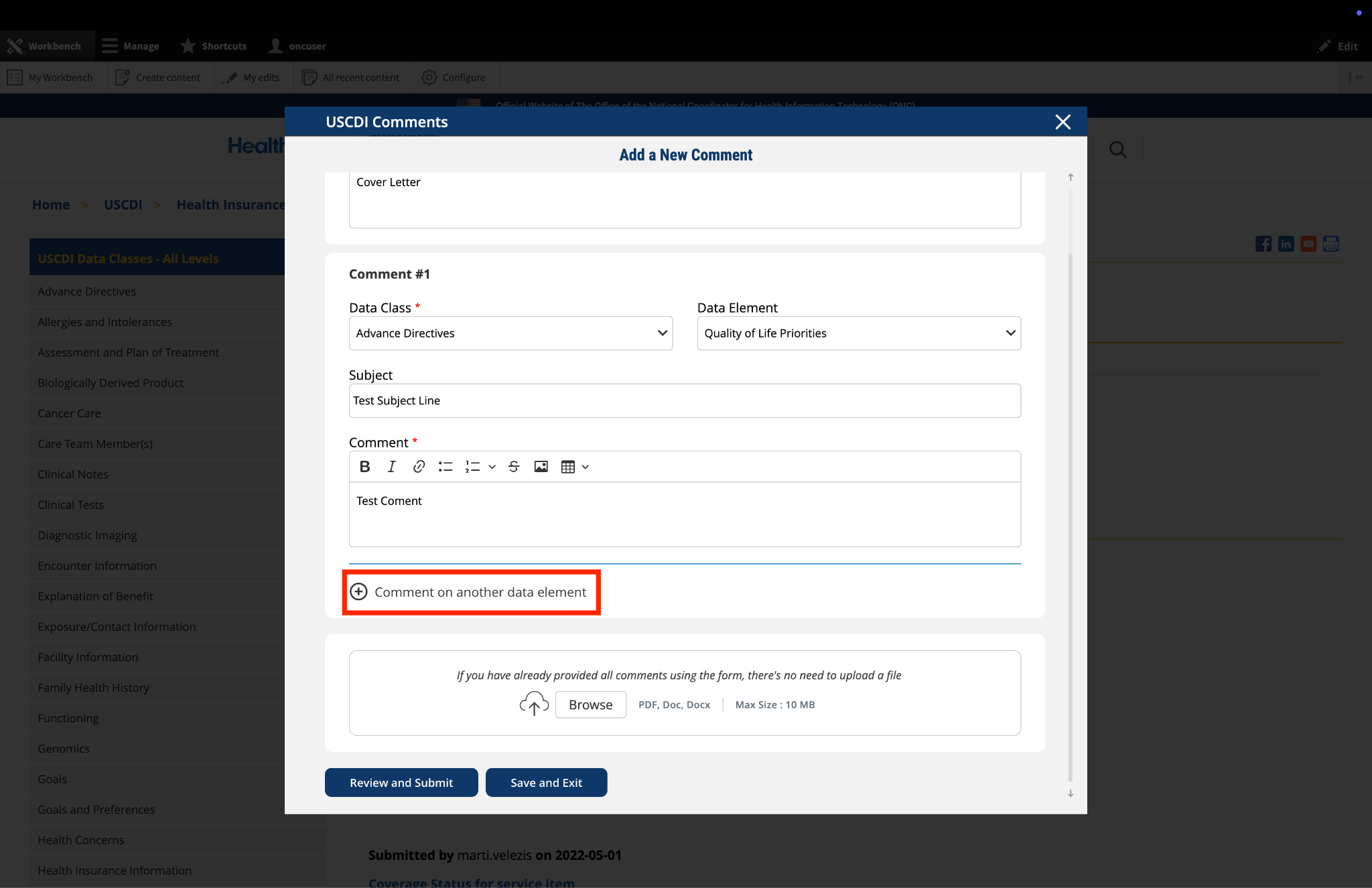
Add a New Comment

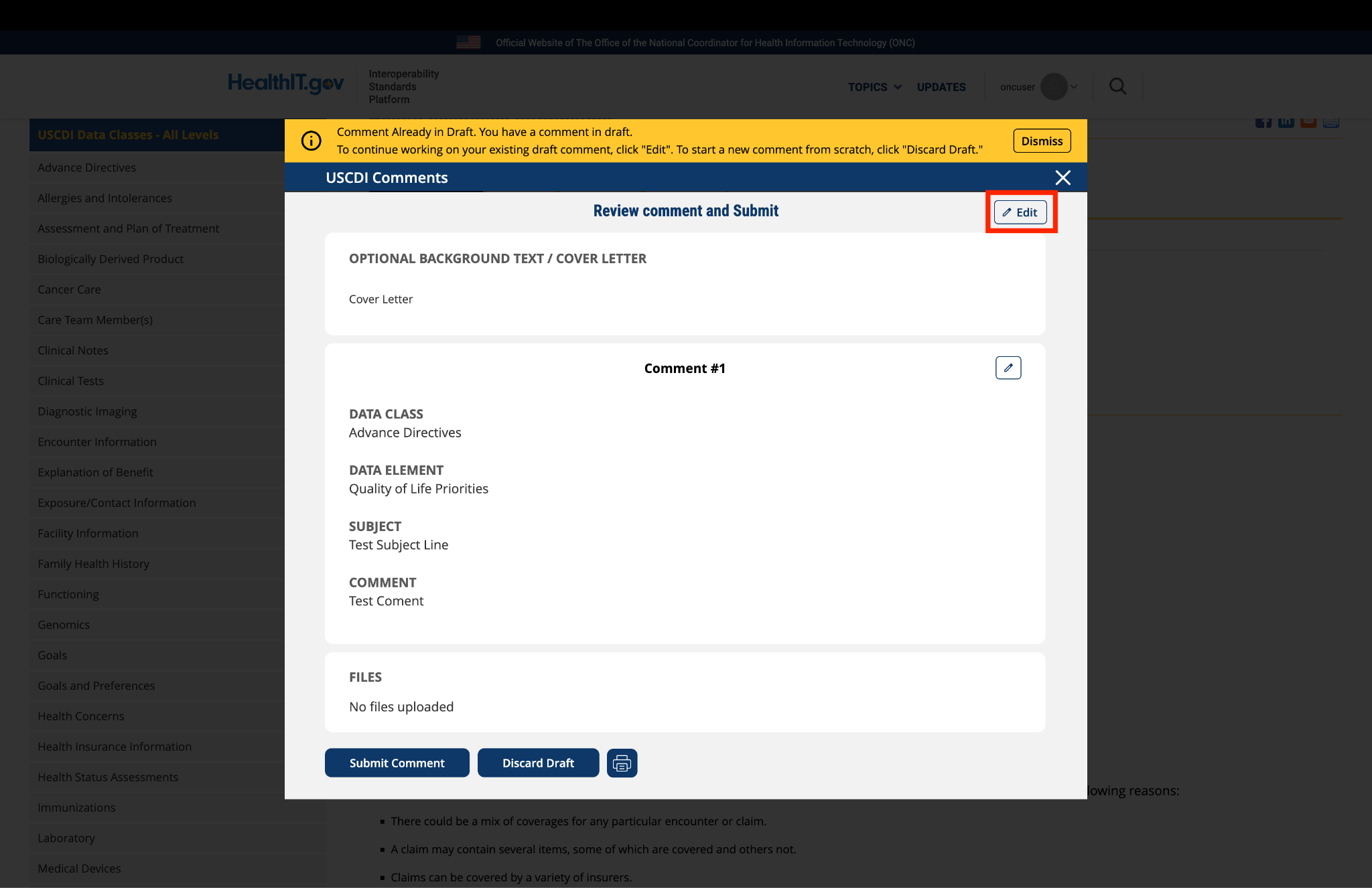
Review comment and Submit

Edit
Comment #1
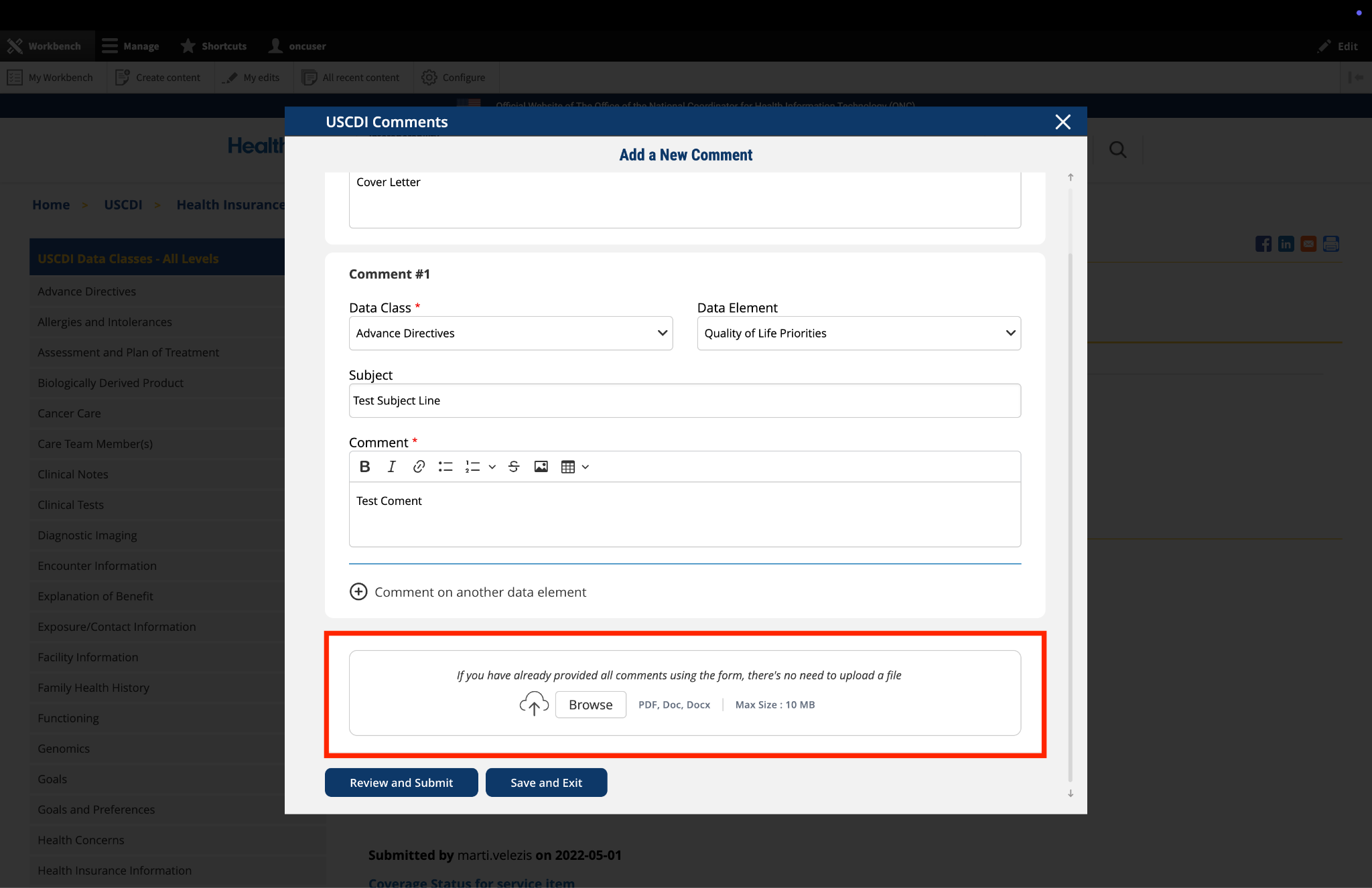
PDF, Doc, Docx
Max Size : 10 MB