Record of vaccine administration.

Data Element

Vaccination Administration Date
Description

The date the vaccination event occurred.

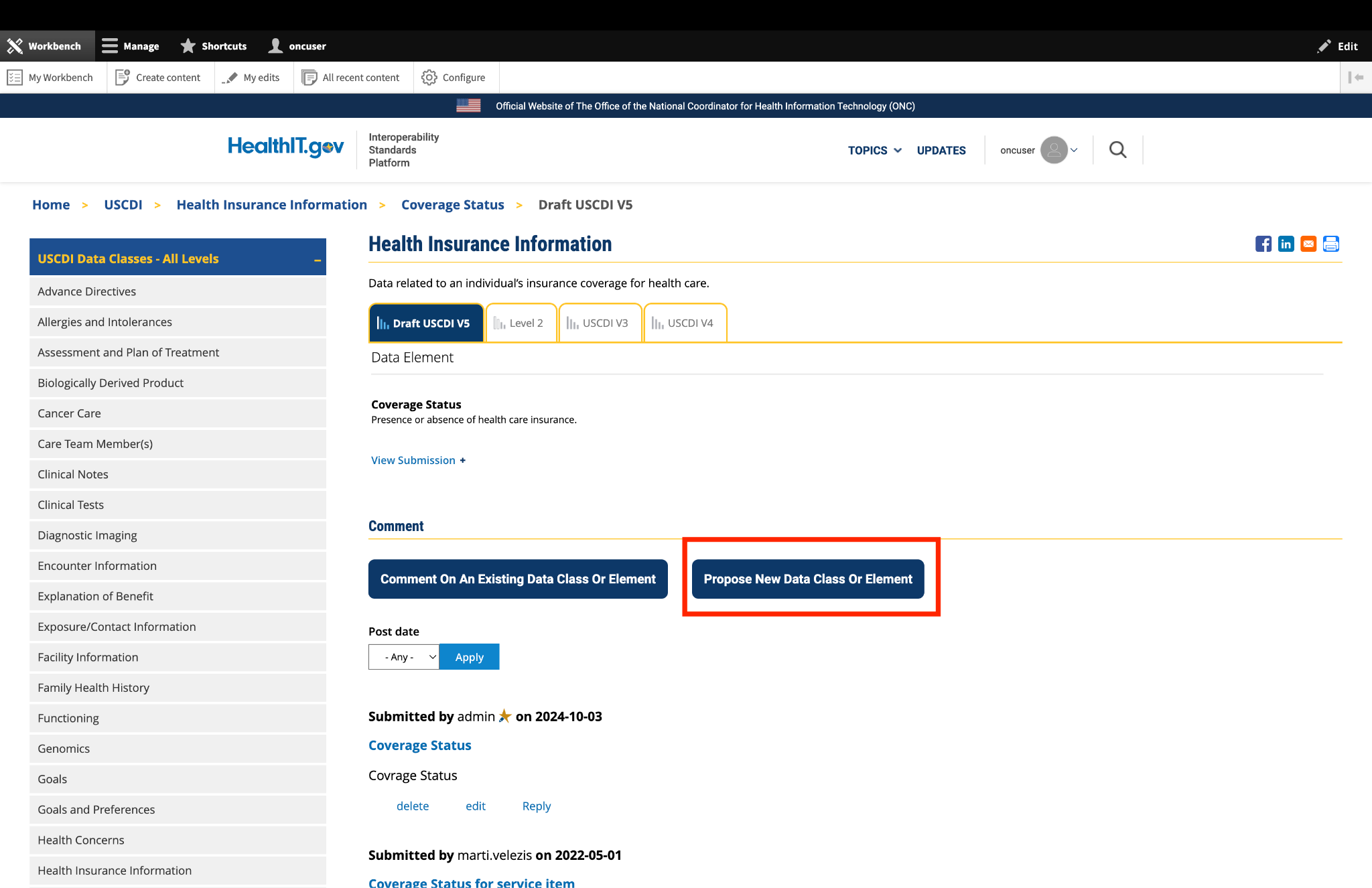
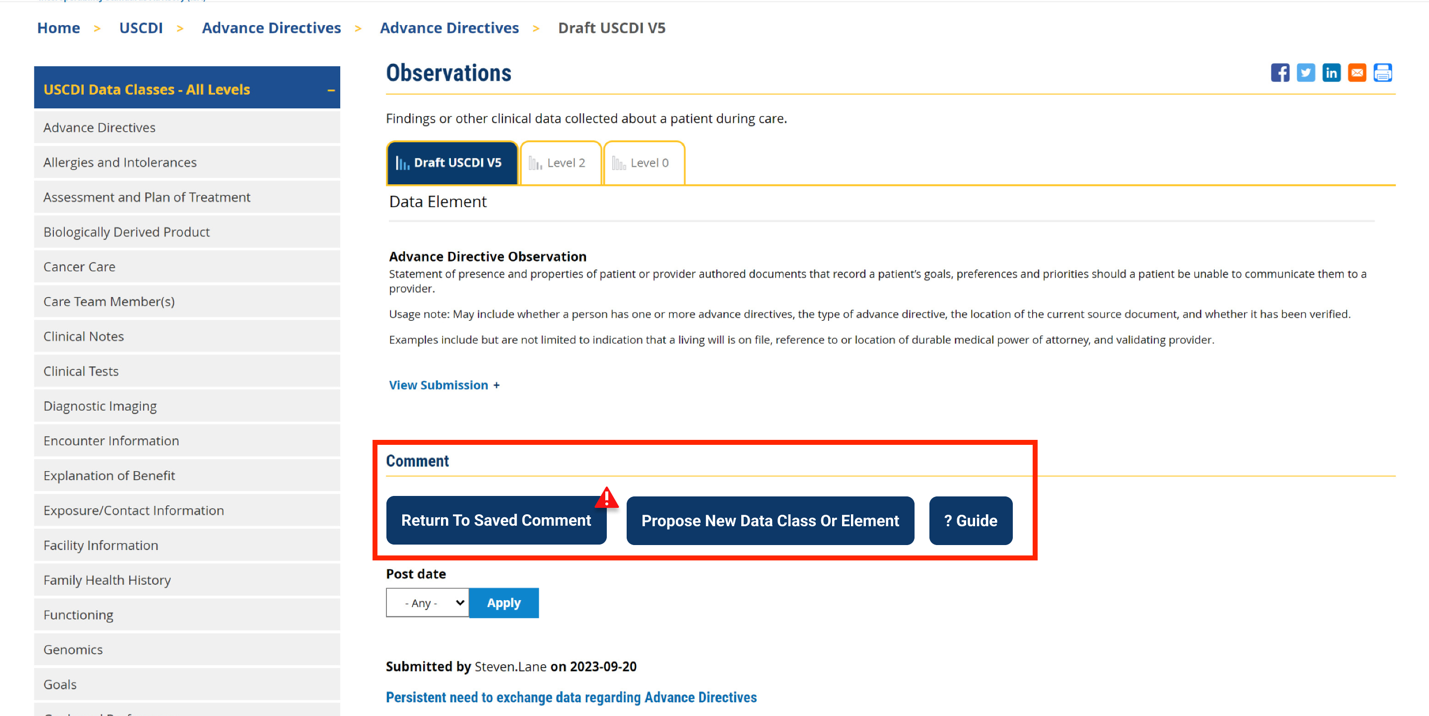
Comment

What is the justification…

What is the justification for the demotion of the following Case Reporting data elements in USCDI, specifically:

• Exposure/Contact Information: Exposure/Contact Agent
• Exposure/Contact Information: Exposure/Contact Date
• Exposure/Contact Information: Exposure/Contact Direction
• Exposure/Contact Information: Exposure/Contact Source/Target Participant
• Exposure/Contact Information: Exposure/Contact Type
• Health Insurance Information: Medicare Patient Identifier
• Immunizations: Vaccination Administration Date
• Laboratory: Specimen Collection Date/Time
• Patient Demographics/Information: Patient Birth Place
• Patient Demographics/Information: Tribal Enrollment
• Pregnancy Information: Estimated Date of Delivery
• Pregnancy Information: Gestational Age
• Pregnancy Information: Last Menstrual Period (LMP)
• Provenance: Unique Identifier
• Social Determinants of Health: Housing Instability and Homelessness
• Social History: Congregate Living
• Work Information: Employment Status
• Work Information: Job Employer Address
• Work Information: Job Employer Name
• Work Information: Usual Industry
• Work Information: Usual Occupation

Currently, 21 certified EHR products exchange these elements using electronic Case Reporting (eCR) specifications demonstrating real-world adoption that typically supports promotion, not demotion, within the USCDI maturity model.

Collectively, these elements provide clinical, demographic, occupational, social, and epidemiological context essential to disease investigation and outbreak response for nationally notifiable conditions.

We urge ONC to either reverse this decision or publish a detailed, evidence-based rationale.

Vaccination Administration Date - CSTE Comment

CSTE strongly recommends that Vaccine Administration Date be included in USCDI v7. Vaccine Administration Date enables accurate record evaluation (e.g., were doses given at the proper age and at a proper interval) while Vaccination Event Record Type enable accurate inventory decrementing by public health and aids in vaccine matching/deduplication.

CDC's comment for inclusion in USCDI v7

CDC recommends inclusion of Vaccine Administration Date in USCDI v7. We are aware that there is already a “Medication Administration” element in Draft USCDI v7 on the corresponding ONC ISP site here. However, the proposal herein for a “Vaccine Administration Date” element is distinctly different for the following reasons, among others: (1) the unique clinical practices, immunization informatics and standards (e.g., code sets, value sets), and information systems associated with vaccine-related events (such as ordering, inventorying, administering, billing, etc.), (2) the operational aspects of ETLing vaccine administering data for clinical, regulatory, and public health needs, and (3) addresses the priority of USCDI data to address public health interoperability needs of reporting, investigation, and emergency response, unique to the vaccine data ecosystem. 

The inclusion of a “Vaccine Administration Date” element in USCDI v7 is essential to support accurate, interoperable immunization data exchange and high-quality patient matching for vaccine administration, i.e., vaccination.

This data element provides a critical temporal attribute that enhances identity resolution and deduplication processes when used in combination with demographic data. In cases where individuals share similar identifiers (e.g., first name, last name, middle name if any, and date of birth), the vaccine administration date can serve as an additional differentiator, improving data integrity across systems.

Importantly, the Vaccine Administration Date is already routinely captured in certified electronic health record (EHR) systems and immunization information systems (IIS), making it a mature and implementable data element with a relatively low adoption burden. Its inclusion would align USCDI with existing clinical and public health workflows, rather than introducing new documentation requirements.

Standardizing this element—using a consistent ISO 8601 international standard for representing the date, such as the Date format (YYYY-MM-DD) or UTC DateTime format (YYYY-MM-DDThh:mm:ssZ )—would significantly improve interoperability and reduce variability and potentially record reconciliation efforts in data exchange across healthcare providers, public health agencies, educational institutions, and other stakeholders that rely on immunization records.

The "Vaccine Administration Date" plays a pivotal role in public health initiatives, from managing preventive care to responding to outbreaks and epidemics. It supports precise public health surveillance and reporting, which are vital for international travel compliance, school admissions procedures, and workforce readiness in healthcare environments. Its relevance spans all age groups—from pediatrics to geriatrics—underscoring its universal application throughout the continuum of care.

Incorporating the “Vaccine Administration Date” data element into USCDI v7 would strengthen data completeness, improve matching accuracy, and enable more effective coordination of immunization efforts. We strongly support its inclusion and recommend the development of clear implementation guidance to ensure consistent capture, formatting, and exchange across systems.

CDC's comment for proposed inclusion in USCDI v7

We propose the inclusion of the "Vaccination Administration Date" in USCDI v7 due to its critical role in enhancing healthcare data management and interoperability. This data element serves as a unique temporal identifier that, when combined with demographic information, aids in accurately matching and deduplicating patient records. This is particularly vital in cases where common names or birthdates may lead to record confusion.
The "Vaccination Administration Date" is essential for the effective coordination of immunization efforts, ensuring that individuals receive their vaccinations on schedule. It is routinely captured in electronic health record (EHR) systems, making it a key component for maintaining accurate immunization records.
Standardizing the "Vaccination Administration Date" with a consistent format (e.g., YYYY-MM-DD) will significantly enhance interoperability across various healthcare systems. This standardization will facilitate reliable health information exchanges among healthcare providers, public health organizations, educational institutions, and employers, particularly in sectors where health status is critical.
Moreover, this data element is pivotal for public health initiatives, supporting preventive care management and epidemic response. It is crucial for accurate public health surveillance and reporting, which are essential for compliance with international travel regulations, school admissions, and workforce readiness in healthcare settings. Its relevance spans all age groups, from pediatrics to geriatrics, highlighting its universal application throughout the continuum of care.
Incorporating the "Vaccination Administration Date" into USCDI v7 will not only promote interoperability but also enhance population health outcomes by enabling timely and coordinated vaccination strategies. Additionally, it supports health equity by identifying disparities in vaccination rates, facilitates integration with Health Information Exchanges, and enhances clinical decision support systems.
Furthermore, standardized vaccination data is essential for research and public health studies, aligns with national health initiatives, and bolsters emergency preparedness efforts. It also empowers patients by providing them with access to their vaccination history, encouraging active participation in their healthcare.
We strongly advocate for its inclusion and recommend the development of comprehensive conformance and implementation guidelines to ensure consistent capture and exchange of this vital data element across healthcare platforms.

CDC's Comment for draft USCDI v6

The inclusion of the "Vaccination Administration Date" in USCDI v6 is strongly advocated, as it serves as a critical component for effective healthcare data management, particularly in matching and deduplication processes. This date acts as a unique temporal identifier that, when paired with demographic information, aids in distinguishing individuals who may share similar identifiers. The importance of this element is highlighted in the American Immunization Registry Association (AIRA)'s Modeling of Immunization Registry Operations Workgroup (MIROW) document titled "Consolidating Demographic Records and Vaccination Event Records." The need for specificity becomes especially apparent when common names or birthdates could lead to record discrepancies.

The Vaccination Administration Date is essential for coordinating immunization efforts effectively, ensuring that individuals receive their vaccines at the appropriate times. It is routinely documented across various Electronic Health Record (EHR) systems and plays a vital role in maintaining accurate immunization records.

By standardizing this data element and implementing a consistent date format (e.g., YYYY-MM-DD), interoperability can be significantly enhanced. Such standardization will enable more reliable health information exchanges among diverse entities, including healthcare providers, public health organizations, educational institutions, and employers where health status is critical.

Moreover, the "Vaccination Administration Date" is integral to public health initiatives ranging from preventive care management to epidemic response. It supports accurate public health surveillance and reporting—key components for compliance with international travel regulations, school admissions processes, and workforce readiness within healthcare settings. Its significance spans all age demographics—from pediatrics to geriatrics—highlighting its universal applicability throughout the continuum of care.

Incorporating this data element into USCDI v6 would not only foster interoperability but also substantially improve population health outcomes by enabling timely and coordinated vaccination strategies. Urgent consideration for its inclusion is recommended along with the development of comprehensive conformance and implementation guidelines to ensure consistent capture and exchange of this crucial data element across healthcare platform

Vaccination Administration Date

The inclusion of the "Vaccination Administration Date" in the USCDI v6 is paramount, as it serves as an indispensable tool for matching and deduplication processes within healthcare data management. The vaccination administration date serves as a distinct temporal identifier, which, when combined with other demographic details, helps differentiate individuals with similar identifiers. This significance is emphasized in the American Immunization Registry Association (AIRA)'s Modeling of Immunization Registry Operations Workgroup (MIROW) document titled "Consolidating Demographic Records and Vaccination Event Records". Specificity is particularly important when common names or birthdates lead to potential record confusion. Vaccination Administration Date underpins the effective coordination of immunization efforts, ensuring that individuals receive vaccines at the appropriate times. The vaccination administration date is a key identifier routinely recorded in numerous EHR systems and is essential for maintaining accurate immunization records.

By standardizing this data element and adopting a consistent date format (e.g., YYYY-MM-DD), we can achieve greater interoperability. Such standardization will facilitate more reliable exchanges of health information across various entities, including healthcare providers, public health organizations, educational institutions, and employers in sectors where health status is crucial.

The "Vaccination Administration Date" plays a pivotal role in public health initiatives, from managing preventive care to responding to epidemics. It supports precise public health surveillance and reporting, which are vital for international travel compliance, school admissions procedures, and workforce readiness in healthcare environments. Its relevance spans all age groups—from pediatrics to geriatrics—underscoring its universal application throughout the continuum of care.

Incorporating this data element into USCDI v6 would not only promote interoperability but also significantly enhance population health outcomes by facilitating timely and well-coordinated vaccination strategies. CDC strongly support its inclusion and urge the development of comprehensive conformance and implementation guidelines that ensure this critical data element's consistent capture and exchange across healthcare platforms.

CSTE Comment - v6

CSTE supports inclusion of this data element in USCDI V6. Please see previously submitted CSTE comments for additional recommendations.

APHL supports inclusion of this data element

APHL supports inclusion of this discrete data element until the design of USCDI accomodates a mechanism for each use case to define further constraints around generic data elements, as otherwise the clinical context and signifcance of when to collect this element cannot be sufficently described.
In FHIR the immunization resource is it's own resource, separate from medication administration, so should be kept separate here, too; in the base the respective element is immunization.occurence, which is 1..1 (i.e. required!!) - it has a choice of date/time or text to accomodate less precise dating, so it is already also required in US Core because of that (see 13.134.1.1 under "Each Immunization Must Have" item #4 = https://hl7.org/fhir/us/core/StructureDefinition-us-core-immunization.html#mandatory-and-must-support-data-elements)
As per CDC comment on USCDIV5 draft content: "Vaccination Administration Date" is crucial for effective immunization management across healthcare settings. It facilitates accurate tracking of vaccination schedules, aligning with established terminology and date formats to enhance interoperability and streamline processes. Its broad relevance in public health reporting, international travel, and healthcare employment underscores the necessity for its inclusion, with strong advocacy for conformance and implementation guides to ensure consistent and accurate utilization across systems.
It is unjustified to have this element in level 0, as it meets all level 2 requirements:
Represented by a terminology standard or SDO-balloted technical specification or implementation guide = in V2 = and the CDC Implementation guide called out in https://www.ecfr.gov/current/title-45/subtitle-A/subchapter-D/part-170/subpart-B/section-170.205#p-170.205(e)(4)) , in CDA = , in FHIR = 
Data element is captured, stored, or accessed in multiple production EHRs or other HIT modules from more than one developer. (immunization reporting has been in certification requirements since MU 1 and many immunization reports are being exchanged nation wide)
Data element is electronically exchanged between more than two production EHRs or other HIT modules of different developers using available interoperability standards.(immunization reporting has been in certification requirements since MU 1 and many immunization reports are being exchanged nation wide)
Use cases apply to most care settings or specialties. It applies to ALL patients at some point or another (unless they refuse all vaccines)

USCoreMustSupportElements.pdf

CSTE Comment - v5

CSTE agrees with CDC and continues to strongly recommends that Vaccine Administration Date and Vaccination Event Record Type be included in USCDI v5. Both elements are required for immunization exchange and always have been. Each year, IIS respond to CDC’s annual report (IISAR). At the end of calendar year 2019, IIS records contained vaccine administration date 99.9% of the time with only 1 IIS reporting less than 100%. With these lacking from USCDI v5 draft, it would be possible to list only the immunization code a patient received, but not the date the patient received the dose or if the vaccination event originated in the source system. Vaccine Administration Date enables accurate record evaluation (e.g., were doses given at the proper age and at a proper interval) while Vaccination Event Record Type enable accurate inventory decrementing by public health and aids in vaccine matching/deduplication.

CDC's comment for USCDI Draft v5

CDC would like to reemphasize "Vaccination Administration Date" for inclusion in USCDI v5. "Vaccination Administration Date" is crucial for effective immunization management across healthcare settings. It facilitates accurate tracking of vaccination schedules, aligning with established terminology and date formats to enhance interoperability and streamline processes. Its broad relevance in public health reporting, international travel, and healthcare employment underscores the necessity for its inclusion, with strong advocacy for conformance and implementation guides to ensure consistent and accurate utilization across systems.

Log in or register to post comments

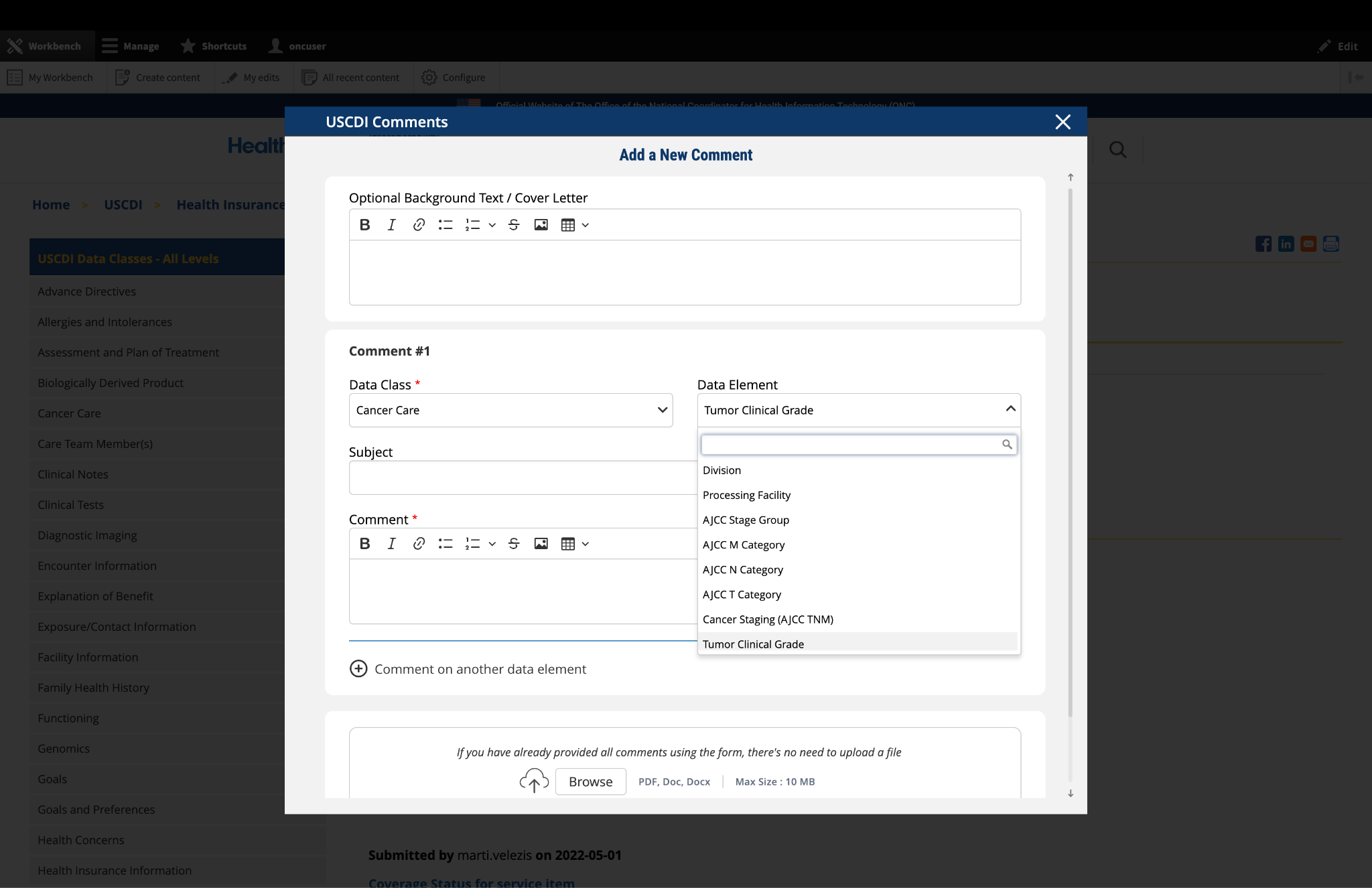
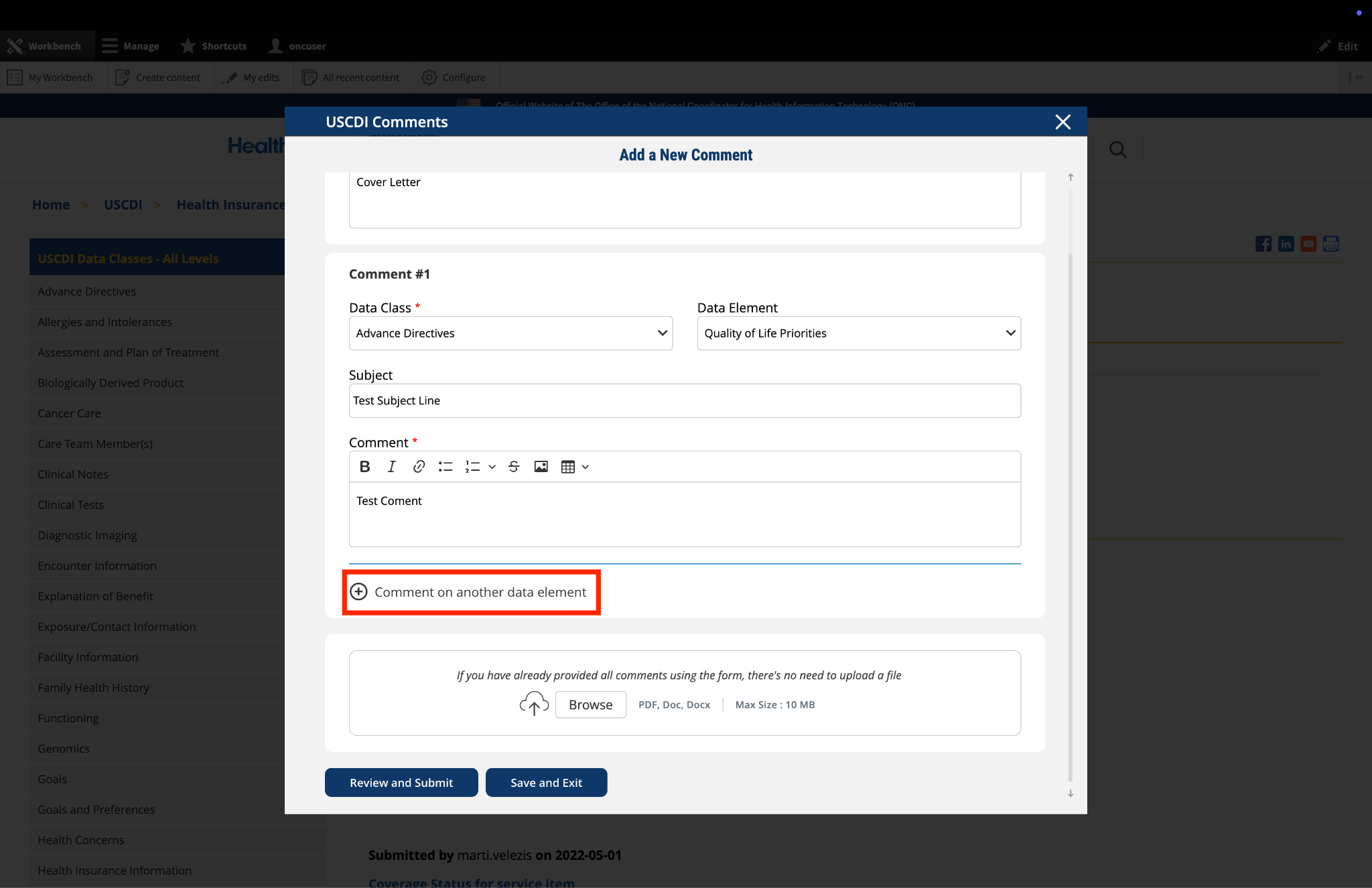
Add a New Comment

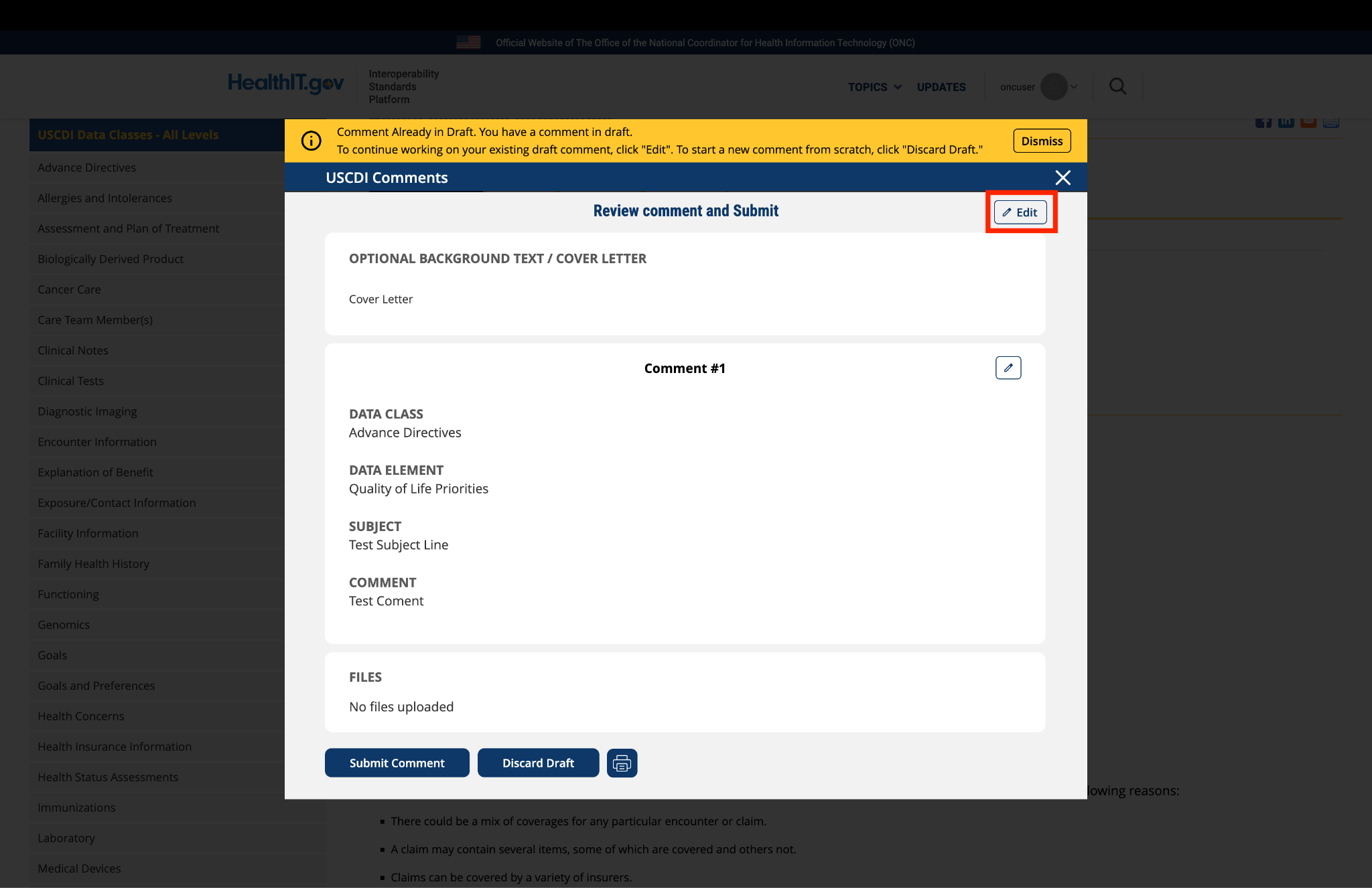
Review comment and Submit

Edit
Comment #1
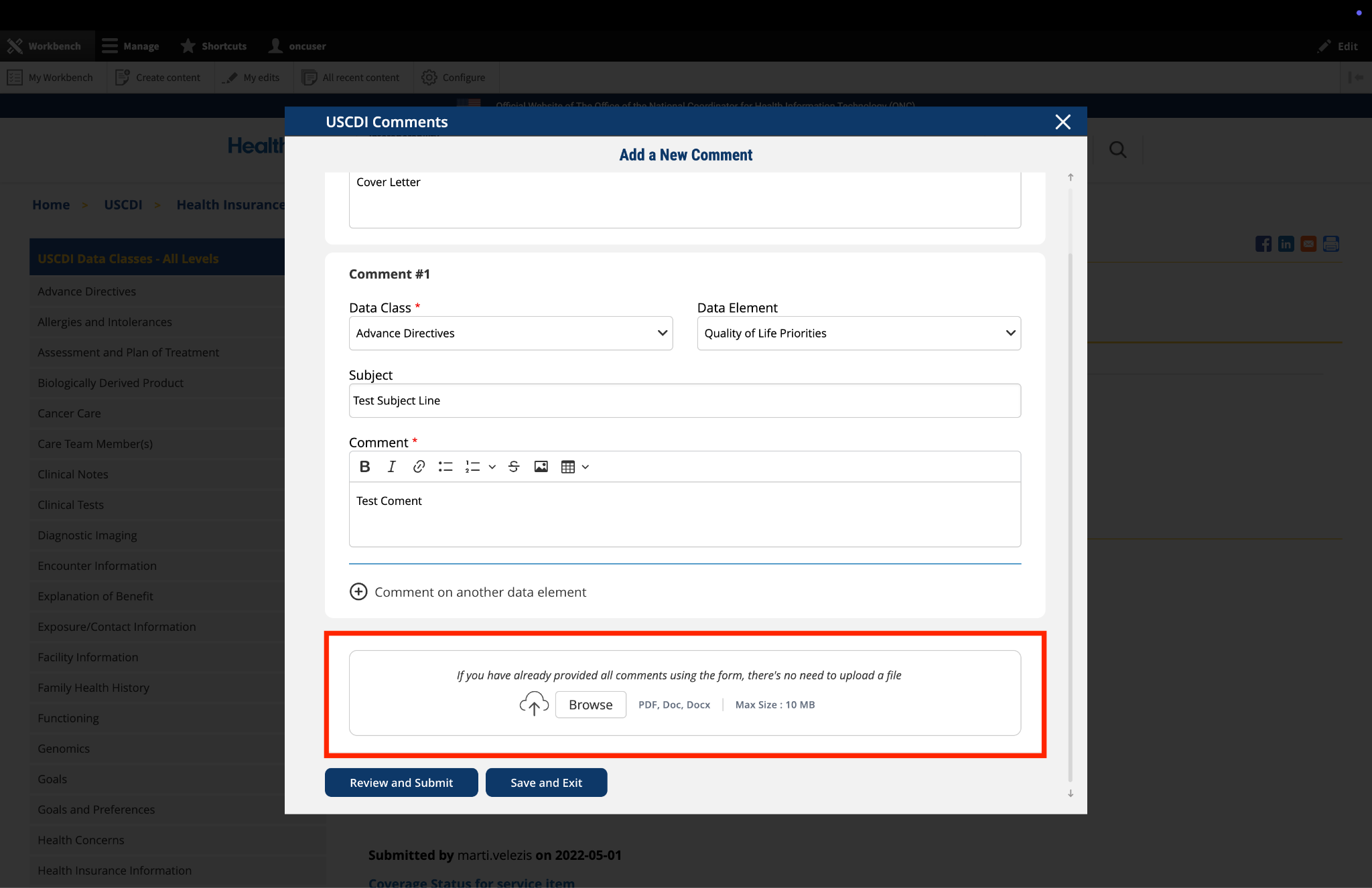
PDF, Doc, Docx
Max Size : 10 MB