

Submitted by melanie.kourba… on
Assigning Authority
APHL supports the addition of this very important data element for public health (see previous comment on USCDI V6: https://isp.healthit.gov/comment/14142) but points out that in order to be useful across organizations the system that created the identifier, HL7 calls this the assigning authority, needs to also be included. Thus, APHL recommends including the assigning authority with this and ANY other identifier data element (in all HL7 products this is part of the various supported data types for identifiers). APHL proposes to update the definition to: " Sequence of characters assigned by an organization to uniquely refer to a patient over time, including a means to identify the organization or system that assigned it."
Submitted by BLampkins_CSTE on
Patient Identifier Type - CSTE Comment
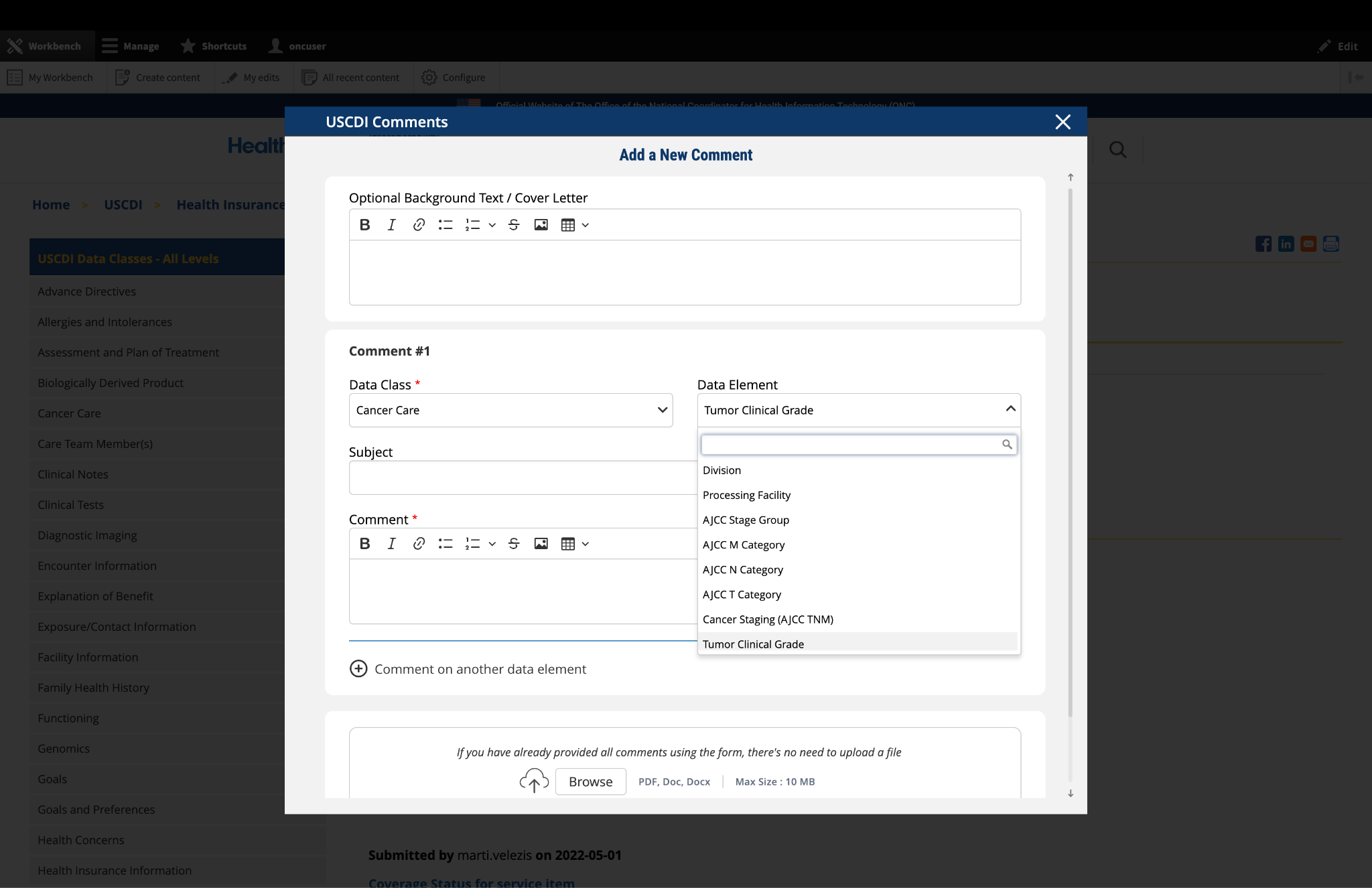
CSTE supports the inclusion of Patient identifier in USCDI v7. CSTE also recommends the inclusion of 2 additional data elements to provide data critical to supporting the usability of the patient identifier data element. These include the Type of Patient Identifier (which would detail whether the identifier is, for example, a medical record number, a Medicare number, a social security number, a laboratory patient identifier) and the Patient Identifier Assigning Authority (which would provide information on which organization has assigned the identifier - for example, which health care organization, which governmental agency etc.).
1. The patient identifier field is incredibly helpful for person matching and deduplication, which currently requires a huge amount of manual effort at STLT public health agencies to manage the many potential duplicates across and within data streams (even with the best algorithms and automation for patient deduplication, health department staff spend countless hours deduplicating partially matched patient records).
2. It is critical for identifying patients as part of public health follow-up - as in when medical information is sought as part of a case investigation or when additional demographics or contact information are needed in order to quickly reach a patient, or when lab results are needed from a hospital.
3. For any type of automated or semi-automated query of an HIE or another clinical repository (as will hopefully be possible through TEFCA), MR number will be invaluable in narrowing the query and ensuring the returned results pertain to the correct individual - this will save an enormous amount of time and frustration, as well as serve to protect patient privacy by reducing or eliminating records returned for a potential patient match.
4. For any bidirectional data exchange it would be invaluable to the receiving health care org to be able to use medical record to route the data to the correct medical record.