

Submitted by Xueting on
Strong Support for the Care Plan Data Element in USCDI v6
As the founder and architect of a digital health platform built on wearable technologies, I strongly support the inclusion and scope of the Care Plan data element in USCDI v6. This is a landmark step toward aligning digital, preventive, and consumer-centered health tools with regulated clinical data exchange standards.
Why this matters:
- Care Plan is distinct from Medical Orders
The Care Plan data element reflects patient goals, priorities, and strategies—often co-developed with care teams but not requiring clinician authorization. This distinction is critical. Many wearable-based platforms like ours generate feedback, targets, and suggested actions based on device data (e.g., temperature, sleep, HRV) that are clinically relevant but not formal medical orders. Recognizing this class of data within USCDI allows us to contribute to structured health records without overstepping regulatory boundaries. - Facilitating Continuity and Interoperability
Care Plans can serve as a bridge between device-generated insights and team-based care. For example, our platform may suggest sleep hygiene plans or glucose management routines based on continuous monitoring. With Care Plan now standardized, these data can be shared with primary care providers, specialists, or caregivers in a structured and interpretable format. - Recommending Minor Enhancements
We encourage ONC to:
- Clarify that patient-generated health data (PGHD) and device-inferred recommendations may form the basis of assessments and interventions.
- Provide examples of how digital health tools and consumer apps can contribute structured Care Plan entries to the broader ecosystem.
- Encourage vocabulary alignment between PGHD and SNOMED CT or LOINC where applicable.
By formally recognizing the Care Plan as a distinct, flexible, and broadly applicable construct—separate from physician orders—ONC opens the door for meaningful integration of digital, wearable-enabled patient engagement tools into national interoperability frameworks.
Thank you for your leadership in expanding USCDI to reflect real-world, preventive, and participatory care models.
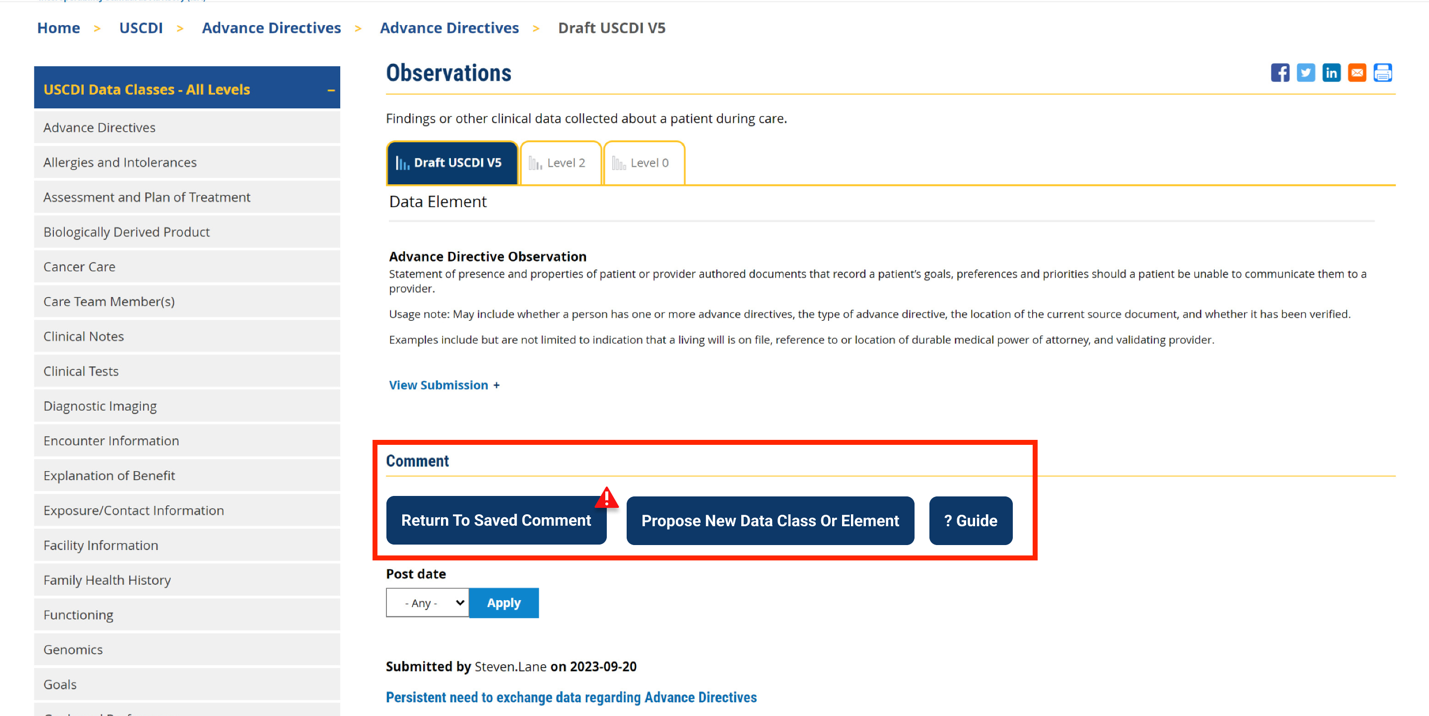
Submitted by rdillaire on
CMS-CCSQ Requests Enhancing Care Plan
Recommendation: CCSQ recommends enhancing the description for Care Plan by including “Personal Advance Care Plan" as an example.
Rationale: “Personal Advance Care Plan” is currently represented as a separate Level 1 data element under the Advance Directives data class. However, given the current scope of the Care Plan data element in USCDI v7, it would be more appropriate to capture it within the Care Plan data element rather than as a separate element and streamlines the USCDI as a whole.