
Submitted by rdillaire on
CMS CCSQ supports PACIO’s…
CMS CCSQ supports PACIO’s recommendation that the Transfer Summary Note data element be advanced from Level 0 to Level 2.
 Official Website of the Office of the National Coordinator for Health Information Technology
Narrative patient data relevant to the context identified by note types.
Data Element |
||||||||||||||||||||||||||||||||||||||||||||||||||
|---|---|---|---|---|---|---|---|---|---|---|---|---|---|---|---|---|---|---|---|---|---|---|---|---|---|---|---|---|---|---|---|---|---|---|---|---|---|---|---|---|---|---|---|---|---|---|---|---|---|---|
|
Transfer summary note
|
||||||||||||||||||||||||||||||||||||||||||||||||||
|
||||||||||||||||||||||||||||||||||||||||||||||||||
Submitted by rdillaire on
CMS CCSQ supports PACIO’s recommendation that the Transfer Summary Note data element be advanced from Level 0 to Level 2.
Submitted by NCQA on
NCQA supports the PACIO recommendation of advancing this element to Level 2, as a critical element for patient transfers and patient safety.
Submitted by ubackonja@mitre.org on
Recommendation: Advance the Transfer Summary Note data element from Level 0 to Level 2.
Rationale: The PACIO Project Community* recommends advancing the Transfer Summary Note data element from Level 0 to Level 2. The Transfer Summary Note is a synopsis of a patient’s admission and clinical course in one setting that is generated to facilitate the patient being transferred to another setting. It is a foundational clinical document for ensuring safe, timely, and effective transitions of care between healthcare settings.
Impact of transfer information in post-acute care (PAC): The distinction between Transfer Summary Note and Discharge Summary Note is particularly important for PAC settings, where patients are frequently transferred between hospitals, skilled nursing facilities, inpatient rehabilitation facilities, long-term acute care hospitals, and home health agencies. In these transitions, the absence of a standardized, timely transfer summary can lead to medication errors, missed diagnoses, duplicative testing, and preventable readmissions. The Transfer Summary Note helps avoid these issues by helping bridge the information gap that exists between the point of transfer and the eventual availability of a complete discharge summary.
Data Standard: The Transfer Summary Note data element is well represented by several established terminology and content standards.
The HL7® C-CDA (Consolidated Clinical Document Architecture) includes a dedicated Transfer Summary document template, most recently published in C-CDA Edition 4 (on FHIR®).
USCDI Level Criteria
Current Standards: Level 2 – Transfer Summary Note is represented by multiple terminology standards and SDO-balloted technical specifications.
The HL7 C-CDA v.2.0.0 (STU 2 Ballot) and C-CDA Edition 4 include a balloted Transfer Summary document template with defined required, recommended, and additional sections for structured clinical content.
Current Use: Level 2 – Transfer Summary Note data are captured, stored, or accessed in multiple production EHRs or other HIT modules from more than one developer.
Oracle Health (Cerner) supports operation for querying document references, through its FHIR R4 APIs and Millennium platform.
Current Exchange: Level 2 – Transfer Summary Notes are electronically exchanged between production EHRs and HIT modules of different developers using available interoperability standards.
Oracle Health Clinical Data Exchange uses C-CDA documents to deliver clinical event information including admit and discharge messages.
Breadth of Applicability: Level 2 – Use cases for Transfer Summary Note apply to most care settings.
* The PACIO (Post-Acute Care Interoperability) Project, established February 2019, is a collaborative effort between industry, government, and other stakeholders, that aims to advance interoperable health information exchange between post-acute care (PAC) providers, patients, and other key stakeholders across health care.
Submitted by Katherine.Lusk… on
1.Transfer Reason – Course of care
2.Medications, last dose and schedule
3.Allergies
4.Admission Diagnosis
5.Discharge Diagnosis
6.Procedures: including Interventional Radiology, Cardiac Cath, operative procedures
7.Diagnostic Imaging – Advanced imaging for example: MRI, CT, PET, Nuclear Imaging, Ultrasound, Echo, & Venous Doppler
8.Laboratory – Recommend 1st and last laboratory result for every test. On those rare tests – they are only done once so would be included (ANA Rheumatoid)
9.Consultations
10.Assessment
11.Active Problem List
Submitted by Katherine.Lusk… on
The following elements should be included:
·Medications given and discharged on
·History & Physical
·Discharge Summary
·Test and studies that are pending
·Basic labs (hemoglobin)
·When is the next appointment
·Who is going to follow up with them – PCP or psychiatrist
·Education on Medication and Diagnoses
·Safety plan & crisis number
·Psychiatrist Evaluation
The "Optional Background Text / Cover Letter" field provides space for additional context or introductory information related to your comment.
If you wish to provide context, explanation, or an introduction to your comment, enter this information in the field labeled "Optional Background Text / Cover Letter." This is entirely optional and is most useful when submitting multiple related comments or when additional background would help reviewers understand your feedback.
If you are only commenting on a single data class or element, you may leave this field blank.
To specify which data class your comment addresses:
To specify which data element your comment addresses:
Note: Comments on a specific data element will appear on the respective data element page, while comments on a data class (without a specific element selected) will appear on the landing page for that data class.
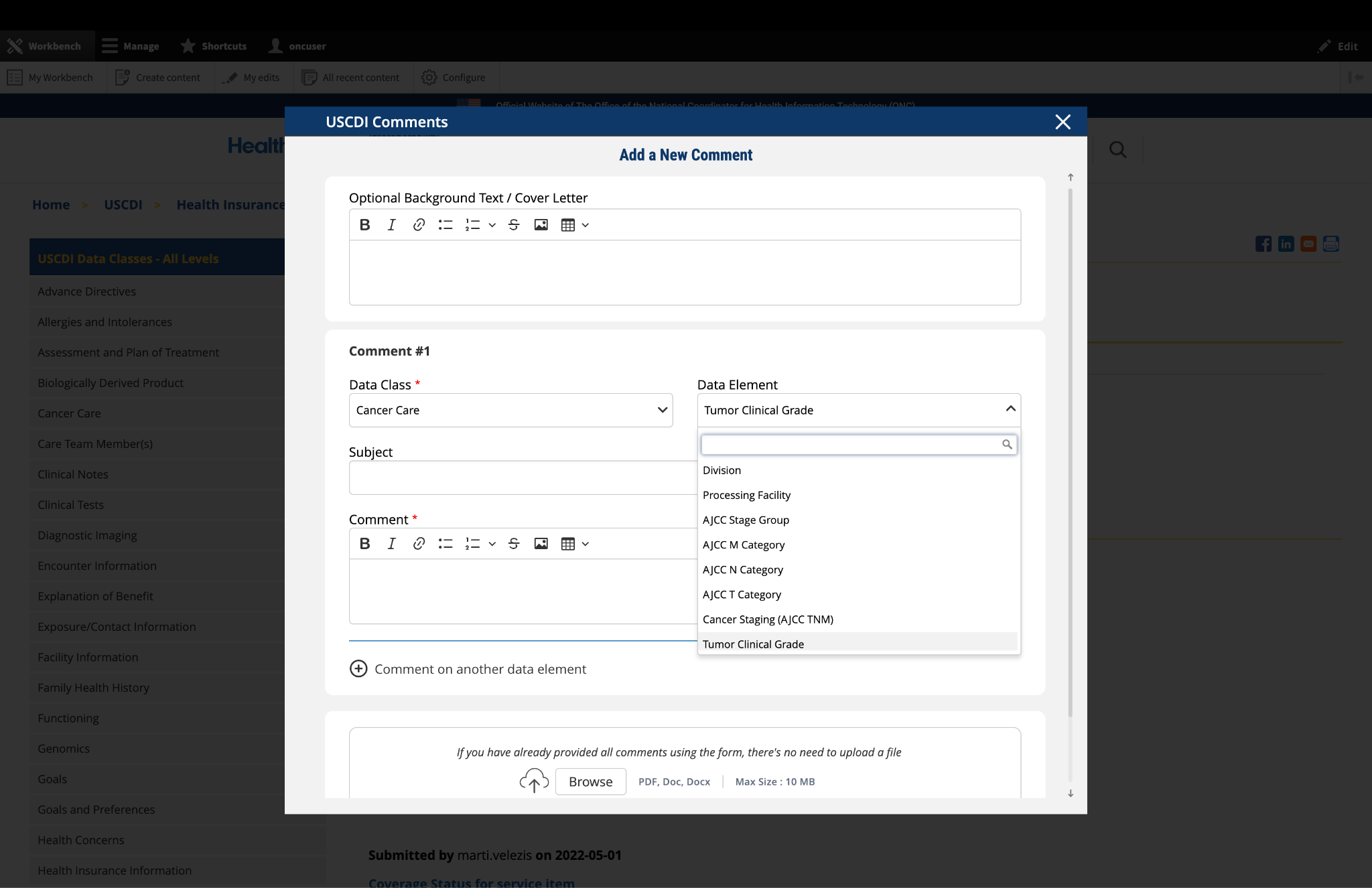
Fig 1 The "Data Class" and "Data Element" dropdown menus allow users to specify the exact content they wish to comment on.
If you cannot find the appropriate data class or element for your comment:
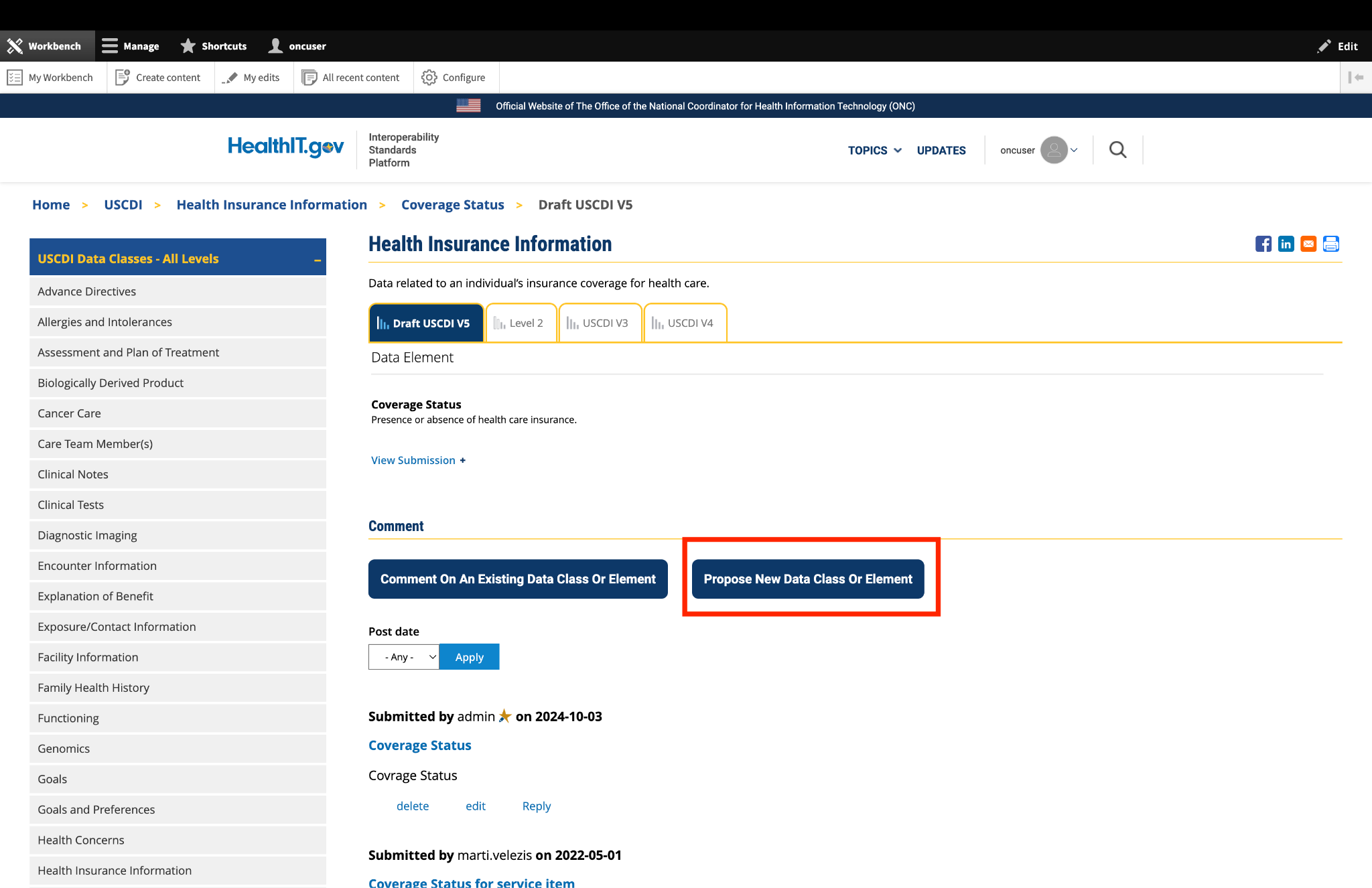
Fig 2 The "Propose a New Data Class or Data Element" button redirects users to the ONDEC Submission System for proposing new data elements not currently available in the system.
Fill out the required fields in the comment form:
Subject: Enter a brief, descriptive title that summarizes your comment. This helps reviewers quickly understand the nature of your feedback.
Comment: In this field, provide the full details of your comment or feedback. Be as clear and specific as possible about your suggestions, concerns, or observations. Include any relevant details that support your position.
If you need to comment on multiple data classes or elements:
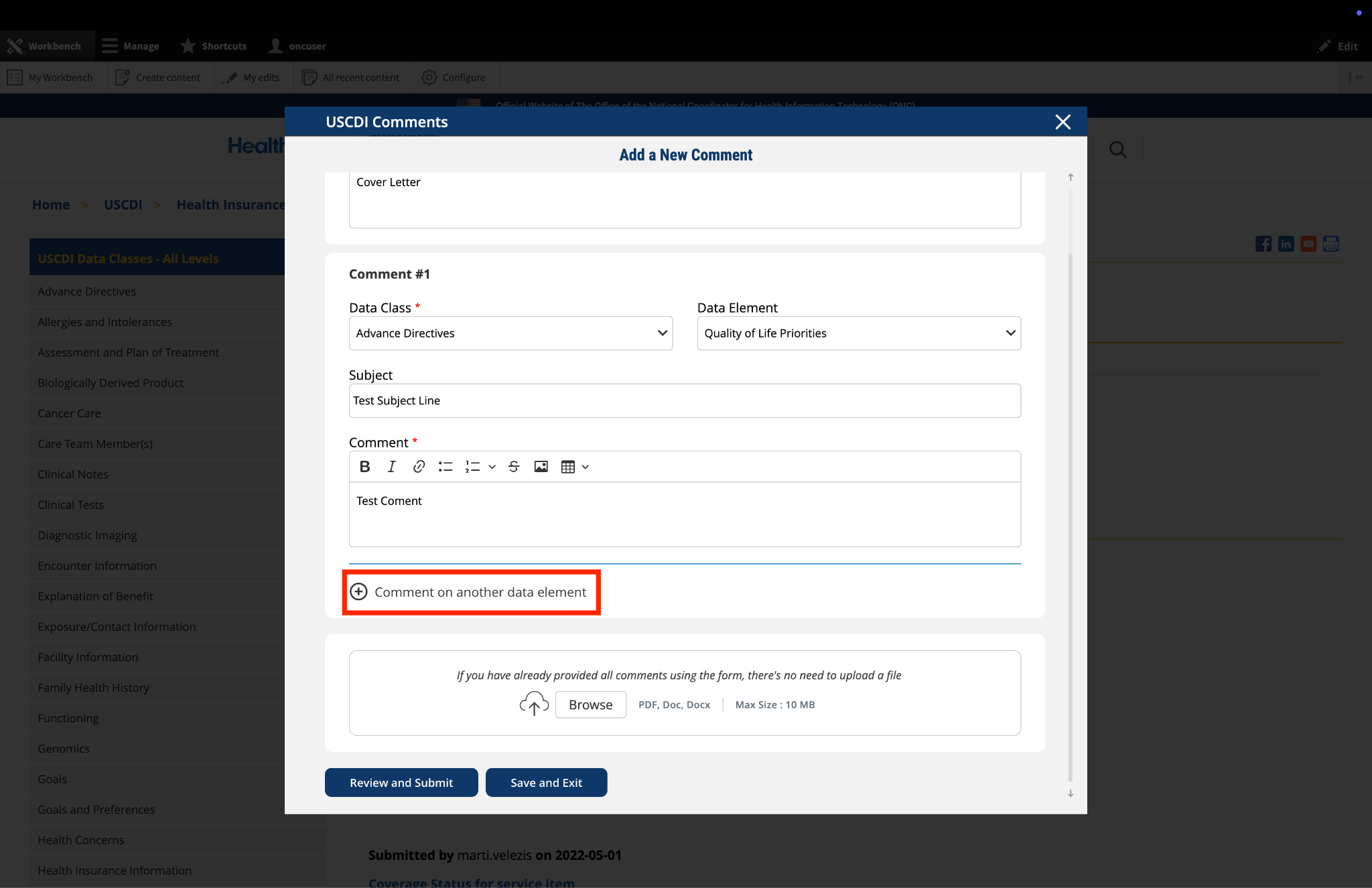
Fig 3 The "Comment on another data element" link enables users to create multiple comments addressing different elements within a single submission.
The platform allows you to upload supporting documentation to enhance your comment:
Important: If you have already entered your comments using the form fields, there is no need to upload duplicate content in PDF format. The file upload feature is intended for supplementary materials only. Please avoid uploading files that contain the same information already provided in your comment text.
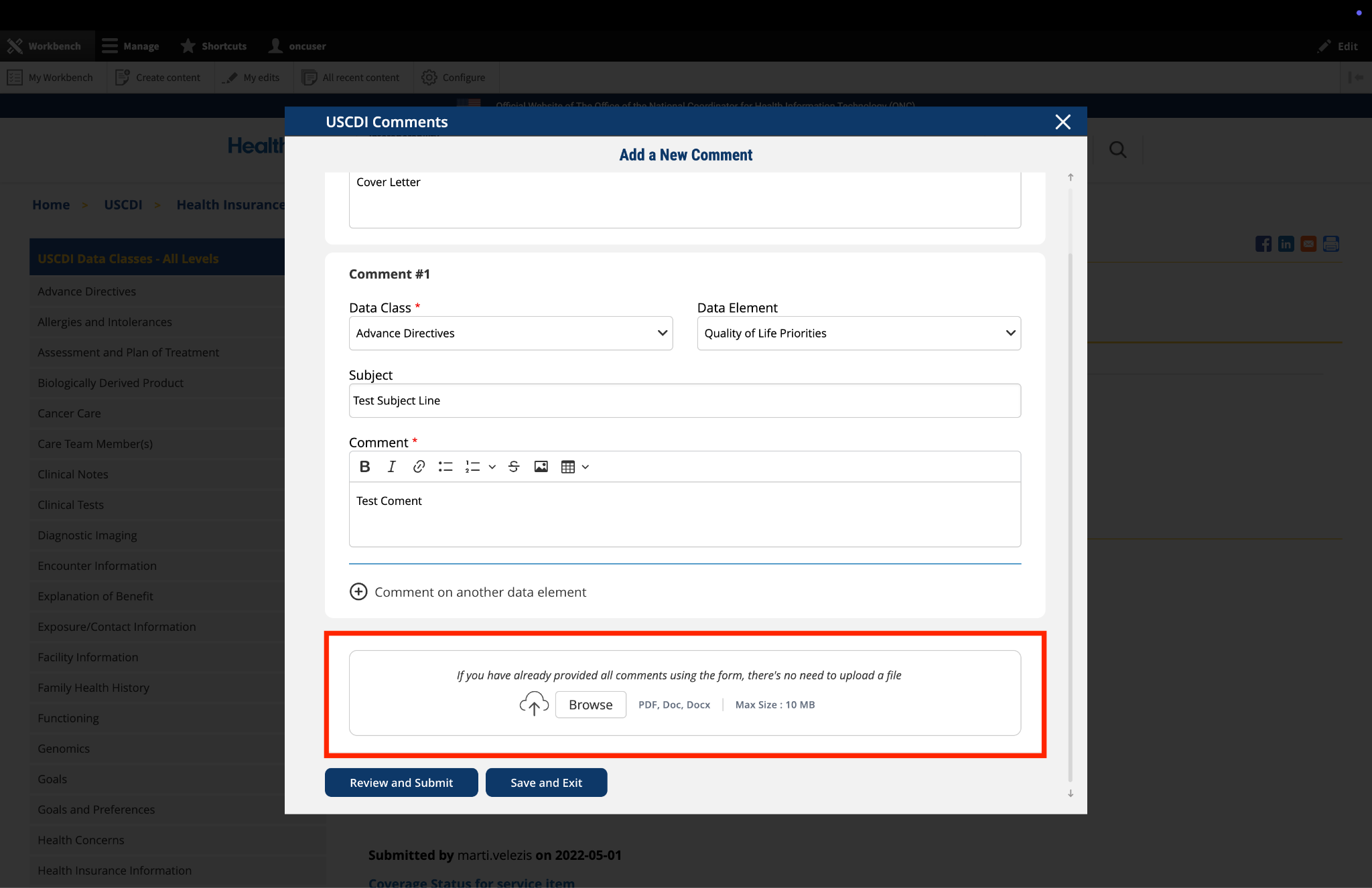
Fig 4 The "File Upload" section permits users to attach supporting documentation that supplements their written comments.
If you need to pause your work and return to complete your comment later:
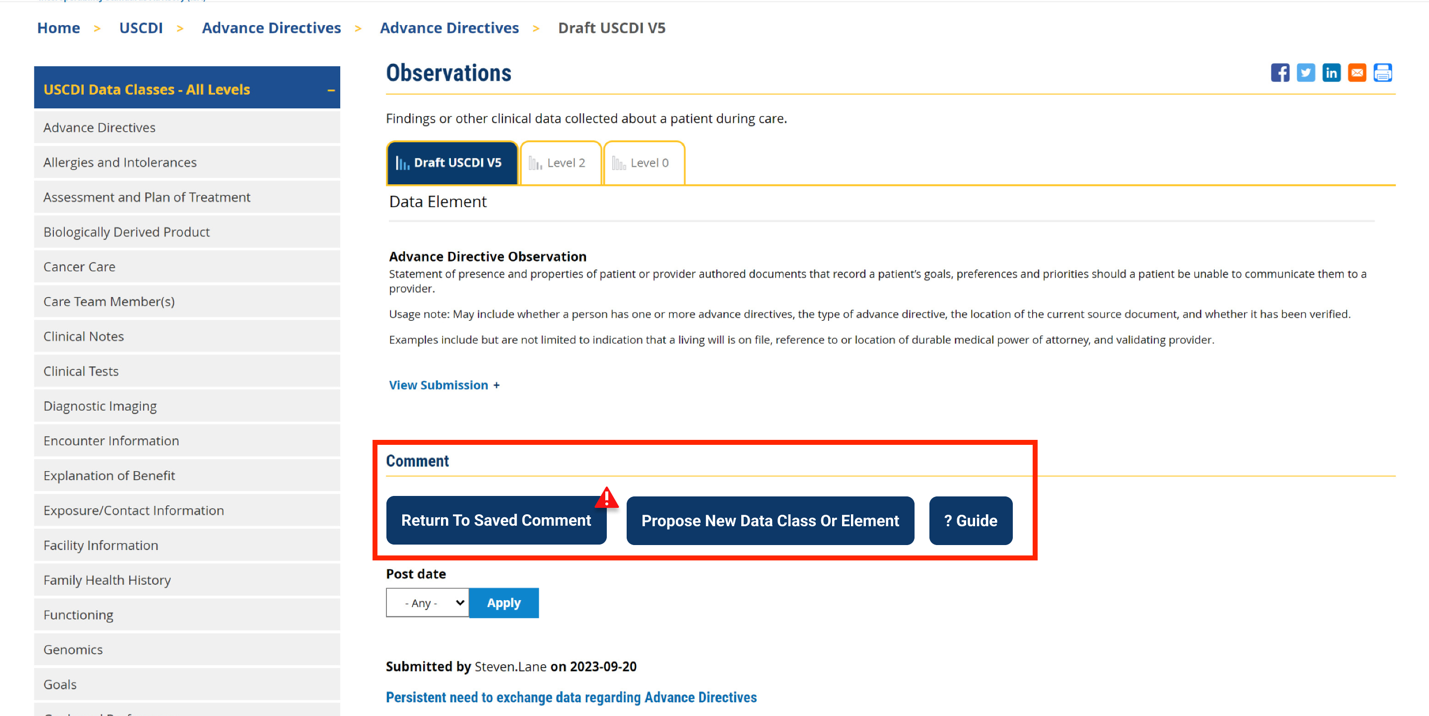
Fig 5 A red triangle with exclamation mark indicator appears next to the “Return to saved Comment” button when draft comments are saved in the system.
Once you have completed your comment:
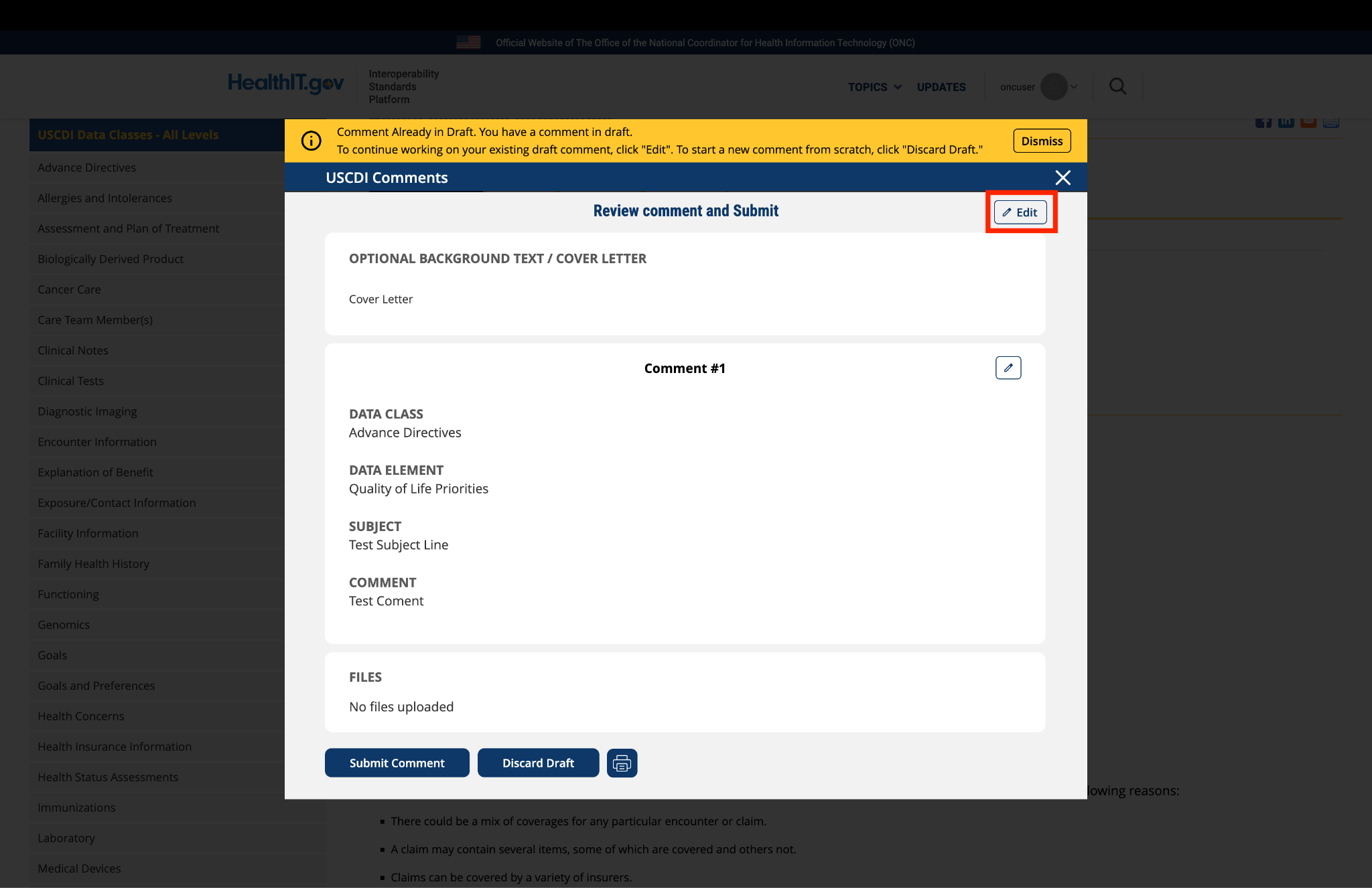
Fig 6 The review screen allows users to verify comment content and make any necessary modifications before final submission.
Submitted by ubackonja@mitre.org on
PACIO Recommends Advancement from Level 0 to Level 2
Recommendation: Advance the Transfer Summary Note data element from Level 0 to Level 2.
Rationale: The PACIO Project Community* recommends advancing the Transfer Summary Note data element from Level 0 to Level 2. The Transfer Summary Note is a synopsis of a patient’s admission and clinical course in one setting that is generated to facilitate the patient being transferred to another setting. It is a foundational clinical document for ensuring safe, timely, and effective transitions of care between healthcare settings.
CMS priority to improve care transitions:
"The 2020 CMS Interoperability and Patient Access final rule (CMS-9115-F) requires hospitals, psychiatric hospitals, and critical access hospitals (CAHs), that if such hospital utilizes a compliant electronic medical records system or other electronic administrative system as discussed above, the system should send notifications directly, or through an intermediary that facilitates exchange of health information at the time of: (i) The patient's registration in the hospital's emergency department (if applicable) or (ii) The patient's admission to the hospital's inpatient services (if applicable). The final rule also requires that if a hospital (or CAH) utilizes an electronic medical records system or other electronic administrative system, the system should send notifications directly, or through an intermediary that facilitates exchange of health information, either immediately prior to, or at the time of: (i) The patient's discharge or transfer from the hospital's emergency department (if applicable) or (ii) The patient's discharge or transfer from the hospital's inpatient services (if applicable).”
Distinct importance of Transfer Summary Note vs. Discharge Summary:
The Transfer Summary Note serves a distinct and time-critical function that is not addressed by the Discharge Summary Note. The Transfer Summary Note must accompany the patient at the time of transfer to support patient safety and care decisions that must be immediately made at admission. In contrast, discharge summaries are often completed up to seven days after discharge and driven largely by billing and regulatory requirements. The content and timeliness of the Transfer Summary Note are essential for avoiding errors, providing appropriate care, and decreasing provider and patient burden; this note gives receiving providers immediate needed access to important patient information (e.g., C-CDA Transfer Summary required patient information), such as their clinical status, active problems, current medications, allergies, recent procedures, and ongoing treatment plans to safely assume care without interruption.
Impact of transfer information in post-acute care (PAC):
The distinction between the Transfer Summary Note and Discharge Summary Note is particularly important for PAC settings, where patients are frequently transferred between hospitals, skilled nursing facilities, inpatient rehabilitation facilities, long-term acute care hospitals, and home health agencies. In these transitions, the absence of a standardized, timely transfer summary can lead to medication errors, missed diagnoses, duplicative testing, and preventable readmissions. The Transfer Summary Note helps avoid these issues by helping bridge the information gap that exists between the point of transfer and the eventual availability of a complete discharge summary.
Data Standard: The Transfer Summary Note data element is well represented by several established terminology and content standards.
The HL7® C-CDA (Consolidated Clinical Document Architecture) includes a dedicated Transfer Summary document template, most recently published in C-CDA Edition 4 (on FHIR®).
USCDI LEVELING CRITERIA:
Current Standards: Level 2 – Transfer Summary Note is represented by multiple terminology standards and SDO-balloted technical specifications.
The HL7 C-CDA v.2.0.0 (STU 2 Ballot) and C-CDA Edition 4 include a balloted Transfer Summary document template with defined required, recommended, and additional sections for structured clinical content.
Current Use: Level 2 – Transfer Summary Note data are captured, stored, or accessed in multiple production EHRs or other HIT modules from more than one developer.
Oracle Health (Cerner) supports the ability to query document references, through its FHIR R4 APIs and Millennium platform.
Current Exchange: Level 2 – Transfer Summary Notes are electronically exchanged between production EHRs and HIT modules from different developers using available interoperability standards.
Oracle Health Clinical Data Exchange uses C-CDA documents to deliver clinical event information including admit and discharge messages.
Breadth of Applicability: Level 2 – Use cases for Transfer Summary Note apply to most care settings.
* The PACIO (Post-Acute Care Interoperability) Project, established February 2019, is a collaborative effort between industry, government, and other stakeholders, which aims to advance interoperable health information exchange between post-acute care (PAC) providers, patients, and other key stakeholders across health care.