
Submitted by BLampkins_CSTE on
CSTE Comment - v5
CSTE is supportive of Riki Merrick's comment from April 2024.
 Official Website of the Office of the National Coordinator for Health Information Technology
Analysis of clinical specimens to obtain information about the health of a patient.
Data Element |
|---|
|
Value/Result
Description (*Please confirm or update this field for the new USCDI version*)
Documented findings of a tested specimen including structured and unstructured components. Applicable Vocabulary Standard(s) Applicable Standards (*Please confirm or update this field for the new USCDI version*)
View guidance on Applicable Vocabulary Standards and versioning. |
Submitted by BLampkins_CSTE on
CSTE is supportive of Riki Merrick's comment from April 2024.
Submitted by Riki Merrick on
As previously commented the definition should be more precise and indicate relationships to other UCSDI elements, when required (first part copied from Regenstrief comment on USCDI+): Recorded value or findings of the analytical test performed on a specimen. Note that the scale of the test influences the format of this data element:
For quantitative tests the format is numeric or structured numeric (to support ranges, titers etc) and often must be interpreted in conjunction with the element "Result Unit of Measure"
For qualitative tests the format can be structured and is coded for ordinal or nominal scale or unstructured text (short or formatted) for narrative scale.
Vocabulary binding is only valid for coded qualitative result types - depending on the scale the binding shifts, so the binding should be more prescriptive based on scale of test:
For nominal scale often SCT in organism hierarchy, example value set: https://phinvads.cdc.gov/vads/ViewValueSet.action?id=64089FFA-B015-4DC7-B470-F20DF5B13BFA
For ordinal scale use SCT from qualifier hierarchy: https://phinvads.cdc.gov/vads/ViewValueSet.action?id=815C6DD4-C5A6-DF11-9BDD-0015173D1785
Corresponds to CLIA element in §493.1291(c)(6), §493.1291(c)(7) in CLIA 42 CFR 493.1291 - Test Report (http://www.ecfr.gov/cgi-bin/text-idx?SID=1248e3189da5e5f936e55315402bc38b&node=pt42.5.493&rgn=div5#se42.5.493_11291)
Submitted by Riki Merrick on
As highlighted in comment https://www.healthit.gov/isa/comment/7016 and also requested by https://www.healthit.gov/isa/comment/3231 including more detail around the type of results, with furhter constraint on the hierachies within SNOMED CT that properly represent the expected concepts:
narrative (not coded) - usable for human consumption
qualitative (coded) using different hierarchies within SNOMED CT: organism hierarchy for micro results, qualifier value for ordinal results, clinical findings for any others
quantitative using UCUM to express the unit of measure (as also pointed out in this comment: https://www.healthit.gov/isa/comment/3321)
APHL also supports the reconciliation (as requested in this comment: https://www.healthit.gov/isa/comment/11901) with this level 2 data element Laboratory Result Value but prefers that name for this element.
Submitted by hantran on
The College of American Pathologists (CAP) recommends replacing this data element with the Level 2 data element Laboratory Result Value.
Submitted by jenna.stern on
Vizient recommends adding to USCDI v3 Laboratory results (date and timestamps). Date and time stamps would allow for trending of labs over time. This could be especially helpful when initially adding patient data into Fast Healthcare Interoperability Resources (FHIR) databases since the upload date would be similar for all results.
Submitted by Riki Merrick APHL on
This element should be called Result Value (to differentiate it from the performed test, which some also refer to as "result") (in v2 reported in OBX-5, in C-CDA and FHIR in observation.value).
While the definition indicates this captures structured and unstructured data it is missing all the detail around how to address the different formats:
This is a subtype of the proposed element Observation Value (https://www.healthit.gov/isa/taxonomy/term/1401/level-2), so if that is added clarification between when to use which would be needed.
This is a CLIA required element.
Submitted by Riki Merrick APHL on
The level 2 element https://www.healthit.gov/isa/taxonomy/term/2446/level-2 supports the renaming - these two elements need to be reconciled.
Submitted by sabhyankar on
The Regenstrief LOINC team recommends adding the following Applicable Standard(s) text to the Values/Results row: “SNOMED CT for qualitative results, UCUM units of measure to accompany quantitative results.”
Submitted by sabner on
There is a need for appropriate lab codes (LOINC and SNOMED) to pass from LIS to EHR. The codes need to be readily available in the EHR. We are aware that this is a known issue: https://www.healthit.gov/public-course/interoperability-lab-exchange/HITRC_lsn1085/docs/LIS_Implementation_Challenges_Guide.pdf
Lab results that are physical quantities should use UCUM for units.
Coded lab results for microorganisms should use SNOMED CT. Antimicrobial susceptibility test interpretation should use HL7 V3 Observation Interpretation.
The "Optional Background Text / Cover Letter" field provides space for additional context or introductory information related to your comment.
If you wish to provide context, explanation, or an introduction to your comment, enter this information in the field labeled "Optional Background Text / Cover Letter." This is entirely optional and is most useful when submitting multiple related comments or when additional background would help reviewers understand your feedback.
If you are only commenting on a single data class or element, you may leave this field blank.
To specify which data class your comment addresses:
To specify which data element your comment addresses:
Note: Comments on a specific data element will appear on the respective data element page, while comments on a data class (without a specific element selected) will appear on the landing page for that data class.
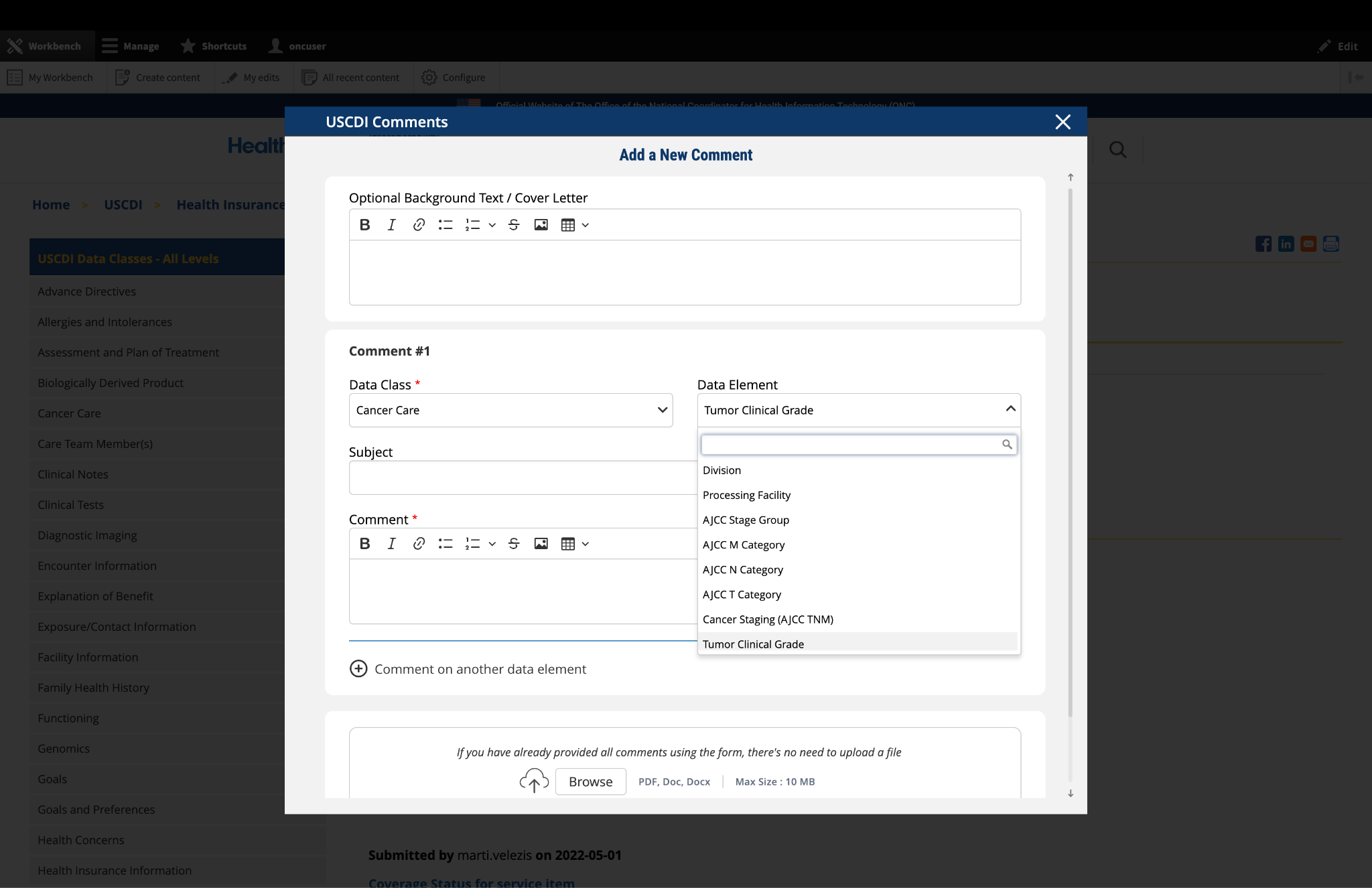
Fig 1 The "Data Class" and "Data Element" dropdown menus allow users to specify the exact content they wish to comment on.
If you cannot find the appropriate data class or element for your comment:
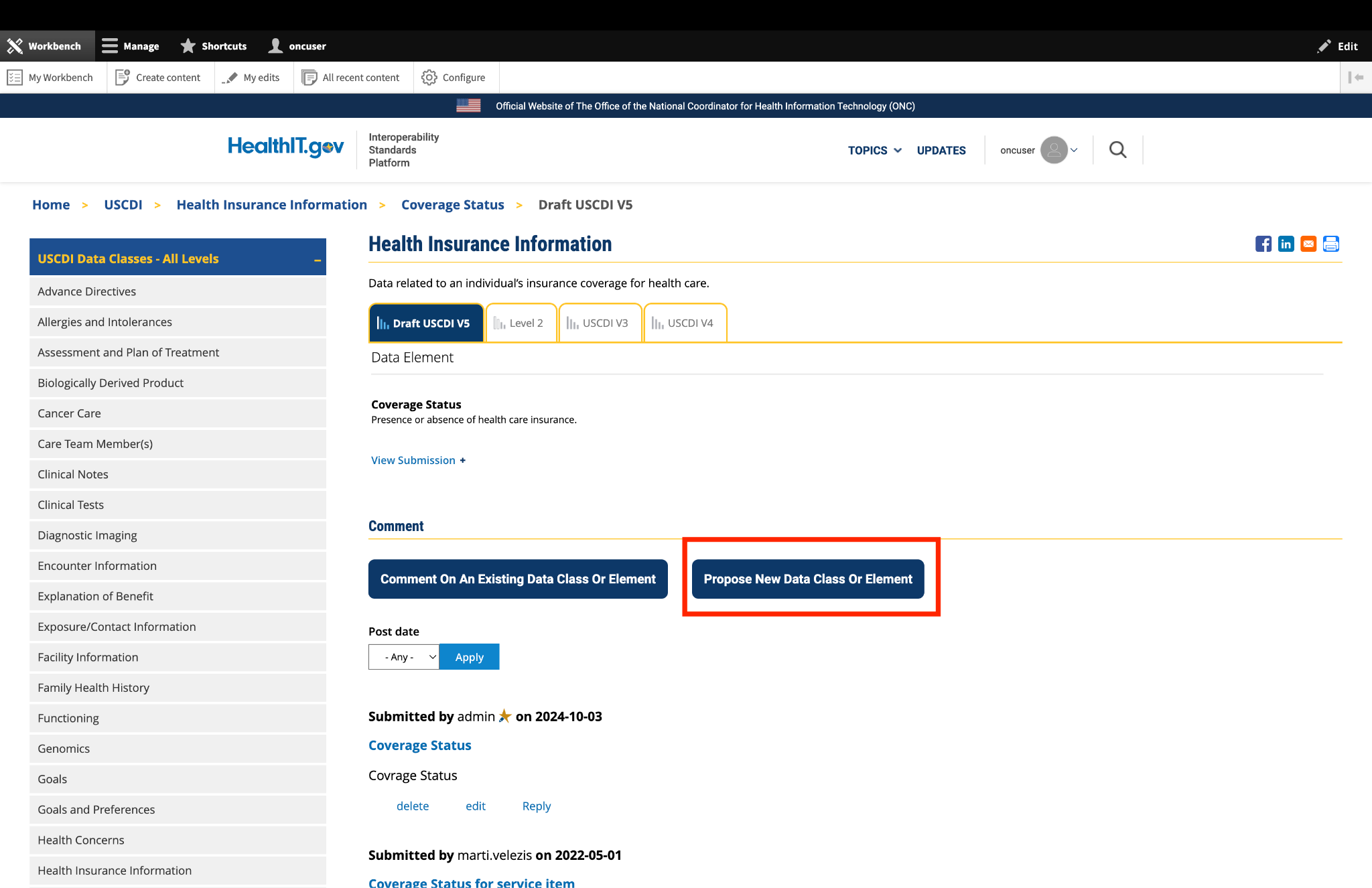
Fig 2 The "Propose a New Data Class or Data Element" button redirects users to the ONDEC Submission System for proposing new data elements not currently available in the system.
Fill out the required fields in the comment form:
Subject: Enter a brief, descriptive title that summarizes your comment. This helps reviewers quickly understand the nature of your feedback.
Comment: In this field, provide the full details of your comment or feedback. Be as clear and specific as possible about your suggestions, concerns, or observations. Include any relevant details that support your position.
If you need to comment on multiple data classes or elements:
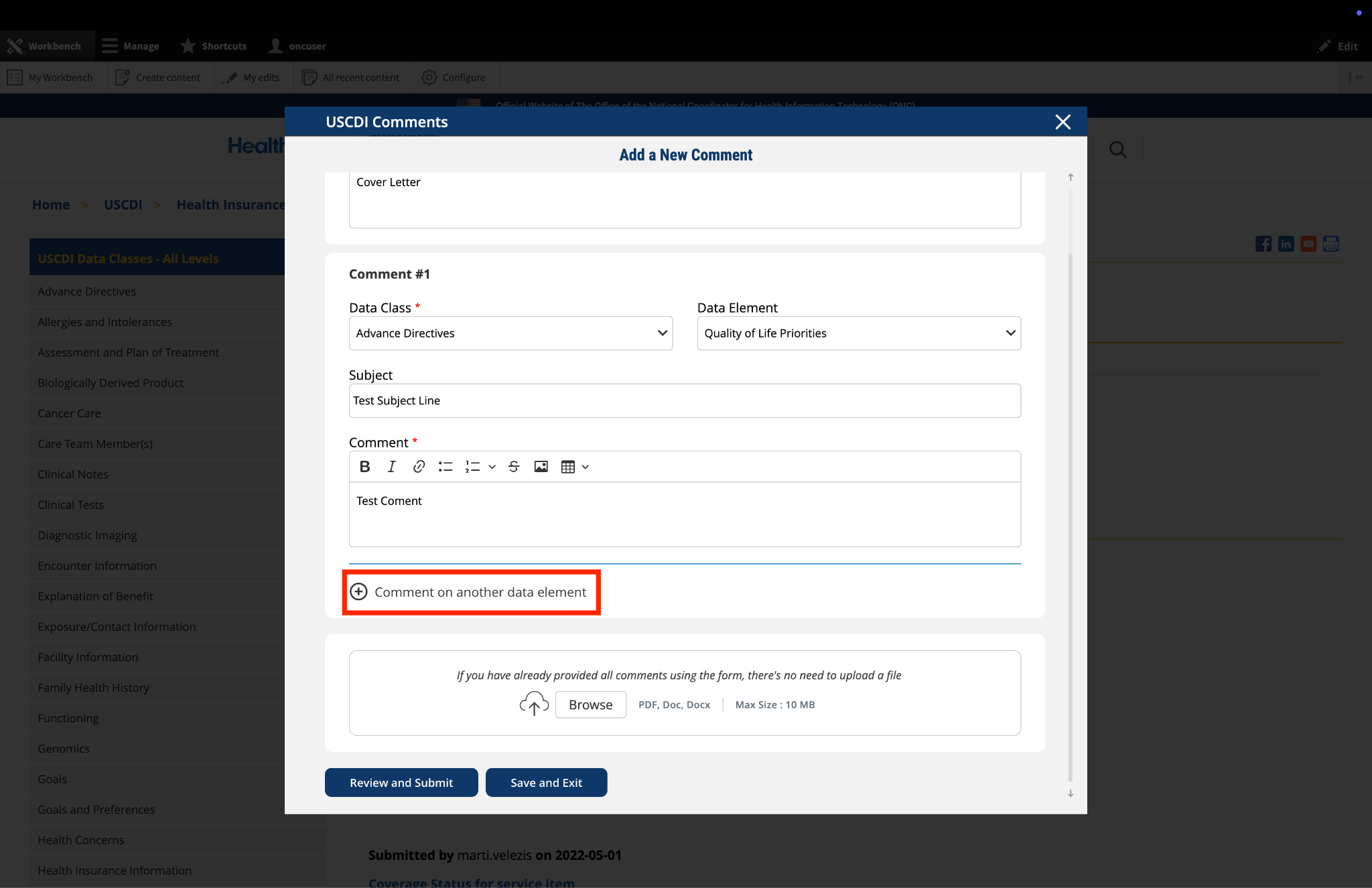
Fig 3 The "Comment on another data element" link enables users to create multiple comments addressing different elements within a single submission.
The platform allows you to upload supporting documentation to enhance your comment:
Important: If you have already entered your comments using the form fields, there is no need to upload duplicate content in PDF format. The file upload feature is intended for supplementary materials only. Please avoid uploading files that contain the same information already provided in your comment text.
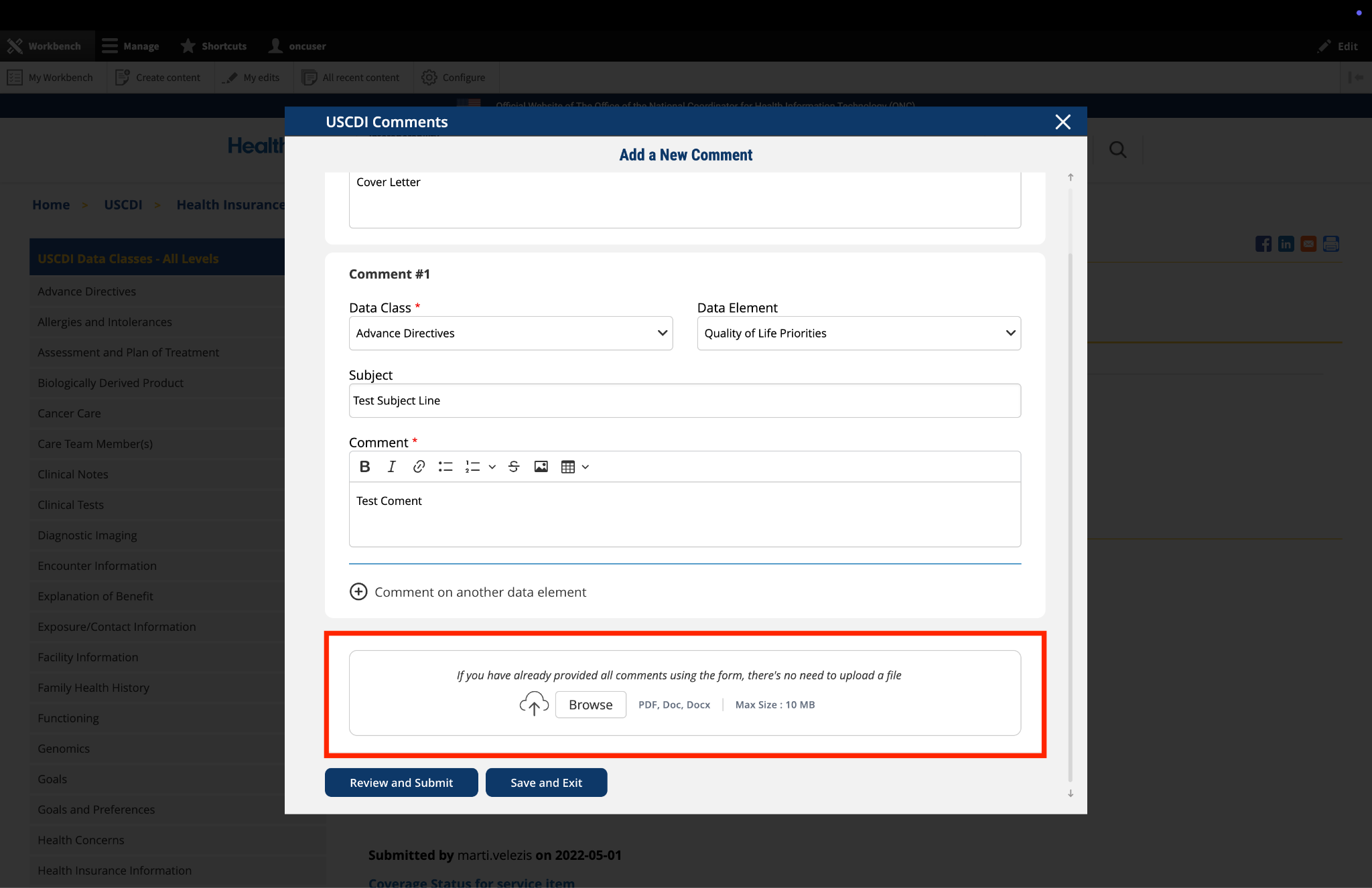
Fig 4 The "File Upload" section permits users to attach supporting documentation that supplements their written comments.
If you need to pause your work and return to complete your comment later:
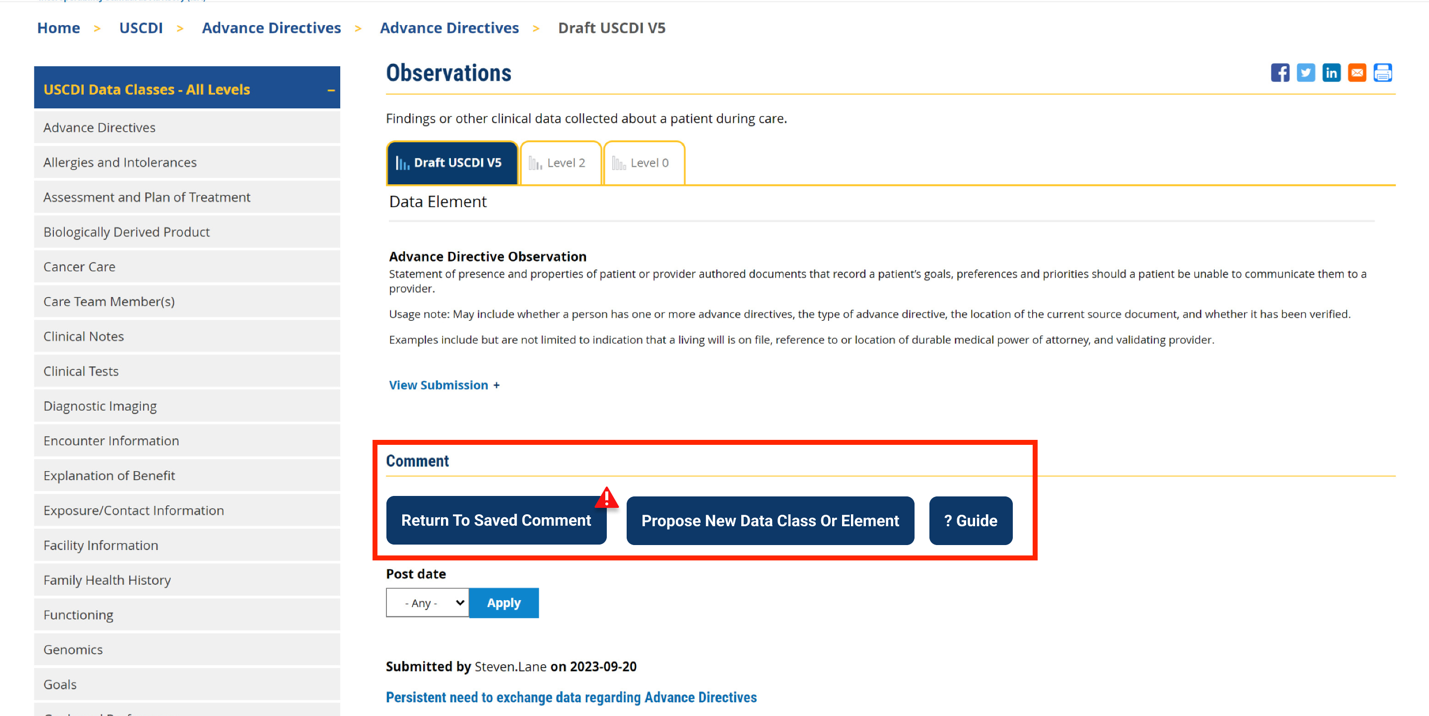
Fig 5 A red triangle with exclamation mark indicator appears next to the “Return to saved Comment” button when draft comments are saved in the system.
Once you have completed your comment:
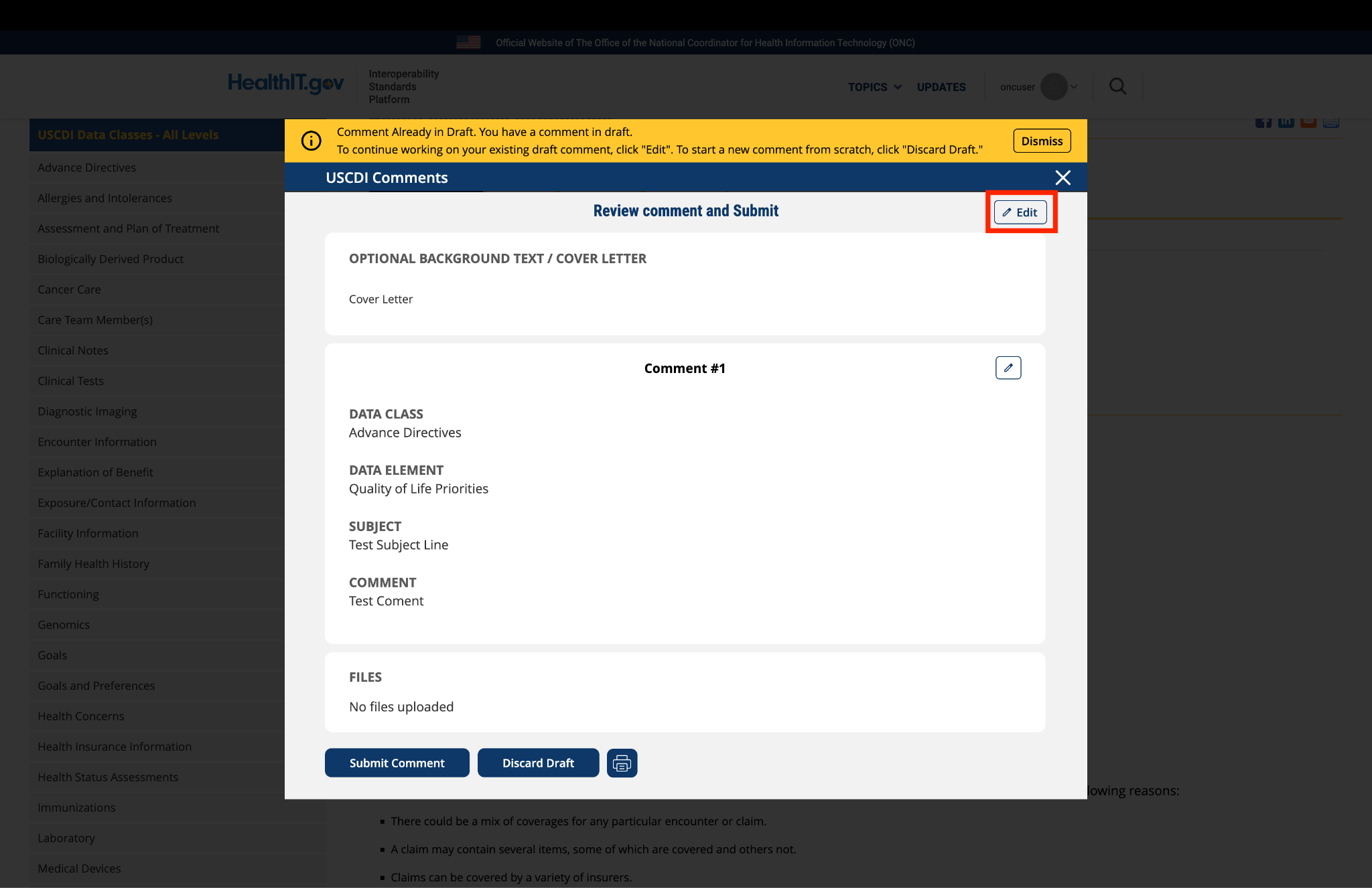
Fig 6 The review screen allows users to verify comment content and make any necessary modifications before final submission.
Submitted by BLampkins_CSTE on
Values/Results - CSTE Comment