
Submitted by BLampkins_CSTE on
CSTE Comment - v6
CSTE supports inclusion of this data element in USCDI V6. Please see previously submitted CSTE comments for additional recommendations.
 Official Website of the Office of the National Coordinator for Health Information Technology
Analysis of clinical specimens to obtain information about the health of a patient.
Data Element |
||||||||||||||||||||||||||||||||||||||||||||||||||||||||||||
|---|---|---|---|---|---|---|---|---|---|---|---|---|---|---|---|---|---|---|---|---|---|---|---|---|---|---|---|---|---|---|---|---|---|---|---|---|---|---|---|---|---|---|---|---|---|---|---|---|---|---|---|---|---|---|---|---|---|---|---|---|
|
Laboratory results: date and timestamps
Description
Date and timestamps associated with the completion of laboratory results, that are meta data associated with laboratory results |
||||||||||||||||||||||||||||||||||||||||||||||||||||||||||||
|
||||||||||||||||||||||||||||||||||||||||||||||||||||||||||||
Submitted by BLampkins_CSTE on
CSTE supports inclusion of this data element in USCDI V6. Please see previously submitted CSTE comments for additional recommendations.
Submitted by Riki Merrick on
APHL supports this data element being left at level 0, or removed entirely unless USCDI design has created a mechanism to further define domain specific constraints on generic data elements that provide guidance on which workflow steps should be date/time stamped.
Submitted by BLampkins_CSTE on
CSTE supports collection of more granular laboratory data to support case adjudication and reporting as well as patient deduplication and linking of data from cases to ELR, which can be critical. The variables we recommend be added to USCDI v5 include:
Name of testing/performing laboratory and associated identifiers (CLIA) (HIGH PRIORITY)
Name of ordering provider and submitter
Address of testing/performing laboratory
Accession number at testing laboratory (HIGH PRIORITY for matching purposes)
Date the test was ordered
Date the test was performed (needs to be reconciled with results date/timestamp)
Specimen collection date and time (HIGH PRIORITY) (Needs to be reconciled with Test Date=Clinically relevant time)
Test result value (needs to be reconciled with values/results), units, reference range and interpretation (HIGH PRIORITY)
Abnormal flag (HIGH PRIORITY)
Test kit identifier
Dates and times are critical to evaluating the timeliness of reporting - it is a major indicator for the performance of public health surveillance systems and without this information it is unknown how data exchange is impacting the ability for public health to respond in a timely fashion. Although the date and time data are generated by the system, in practice it has been observed that availability of this data to Public Health Departments is sparse for use in timeliness analysis
Submitted by CDC_DSMH_WG on
This is used to calculate turnaround time or to determine timeliness of reporting for quality metrics.
Overarching Comment:
There are extensive comments that have been submitted in support of the specific, granular date/timestamps for laboratory data, including a very granular one submitted by CMS. We agree with these, and CSTE explained it best in their existing comment: “Dates and times are critical to evaluating the timeliness of reporting - it is a major indicator for the performance of public health surveillance systems and without this information it is unknown how data exchange is impacting the ability for public health to respond in a timely fashion. Although the date and time data are generated by the system, in practice it has been observed that availability of this data to Public Health Departments is sparse for use in timeliness analysis.”
These are required data elements in the many laboratory data-public health exchange standards (including the dominant one used for laboratory data exchange currently, ELR 251 r1).
Submitted by erjones on
Vizient recommends adding the Laboratory Results data element to USCDI v5. Date and timestamps would allow for trending of labs over time. This could be especially helpful when initially adding patient data into Fast Healthcare Interoperability (FHIR) databases since the upload date would be similar for all results.
Submitted by CDC_DSMH_WG on
Submitted by erjones on
Vizient recommends adding the Laboratory Results data element to USCDI v4. Date and timestamps would allow for trending of labs over time. This could be especially helpful when initially adding patient data into Fast Healthcare Interoperability (FHIR) databases since the upload date would be similar for all results.
Submitted by hantran on
Submitted by CDC_DSMH_WG on
The "Optional Background Text / Cover Letter" field provides space for additional context or introductory information related to your comment.
If you wish to provide context, explanation, or an introduction to your comment, enter this information in the field labeled "Optional Background Text / Cover Letter." This is entirely optional and is most useful when submitting multiple related comments or when additional background would help reviewers understand your feedback.
If you are only commenting on a single data class or element, you may leave this field blank.
To specify which data class your comment addresses:
To specify which data element your comment addresses:
Note: Comments on a specific data element will appear on the respective data element page, while comments on a data class (without a specific element selected) will appear on the landing page for that data class.
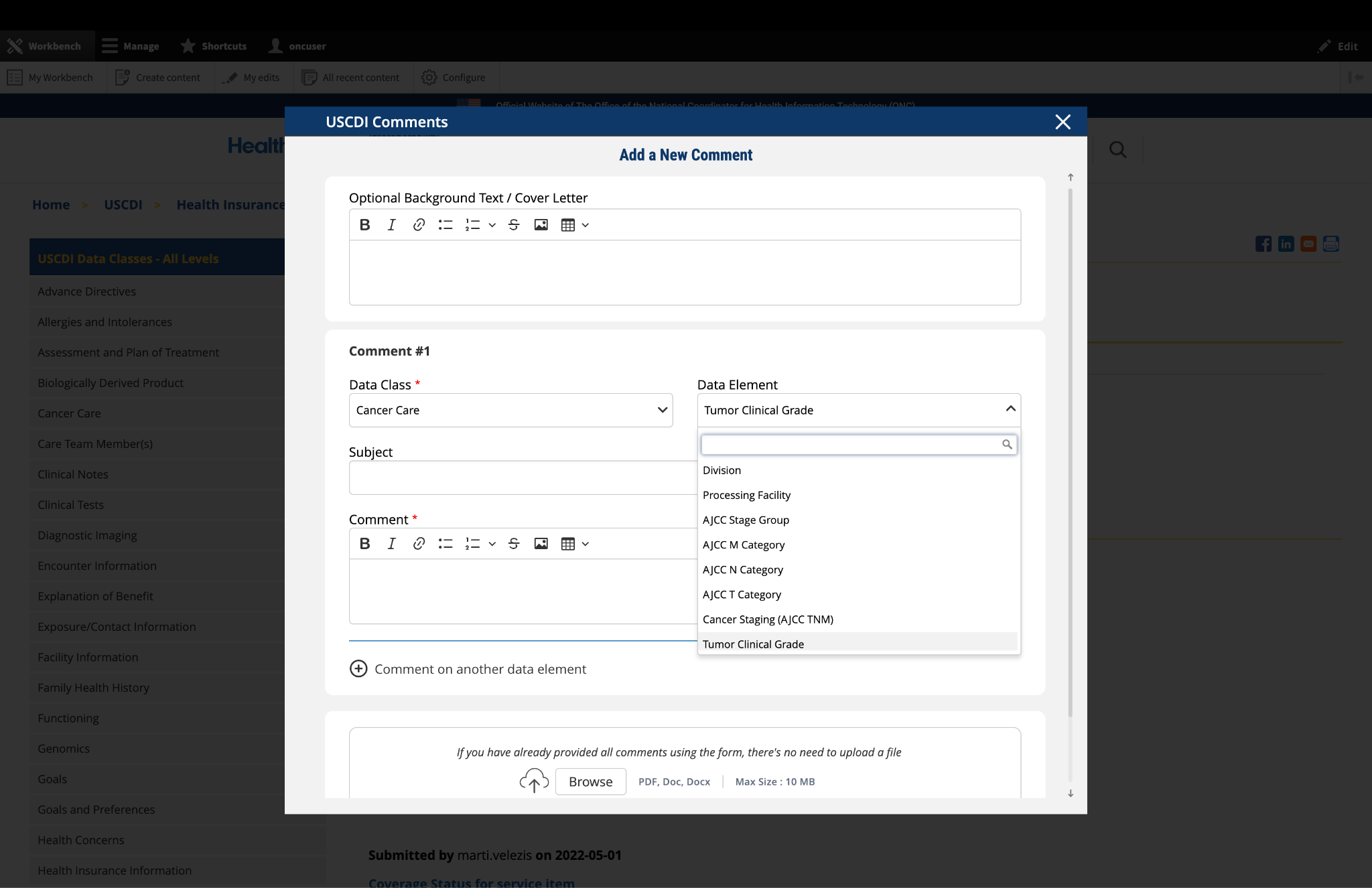
Fig 1 The "Data Class" and "Data Element" dropdown menus allow users to specify the exact content they wish to comment on.
If you cannot find the appropriate data class or element for your comment:
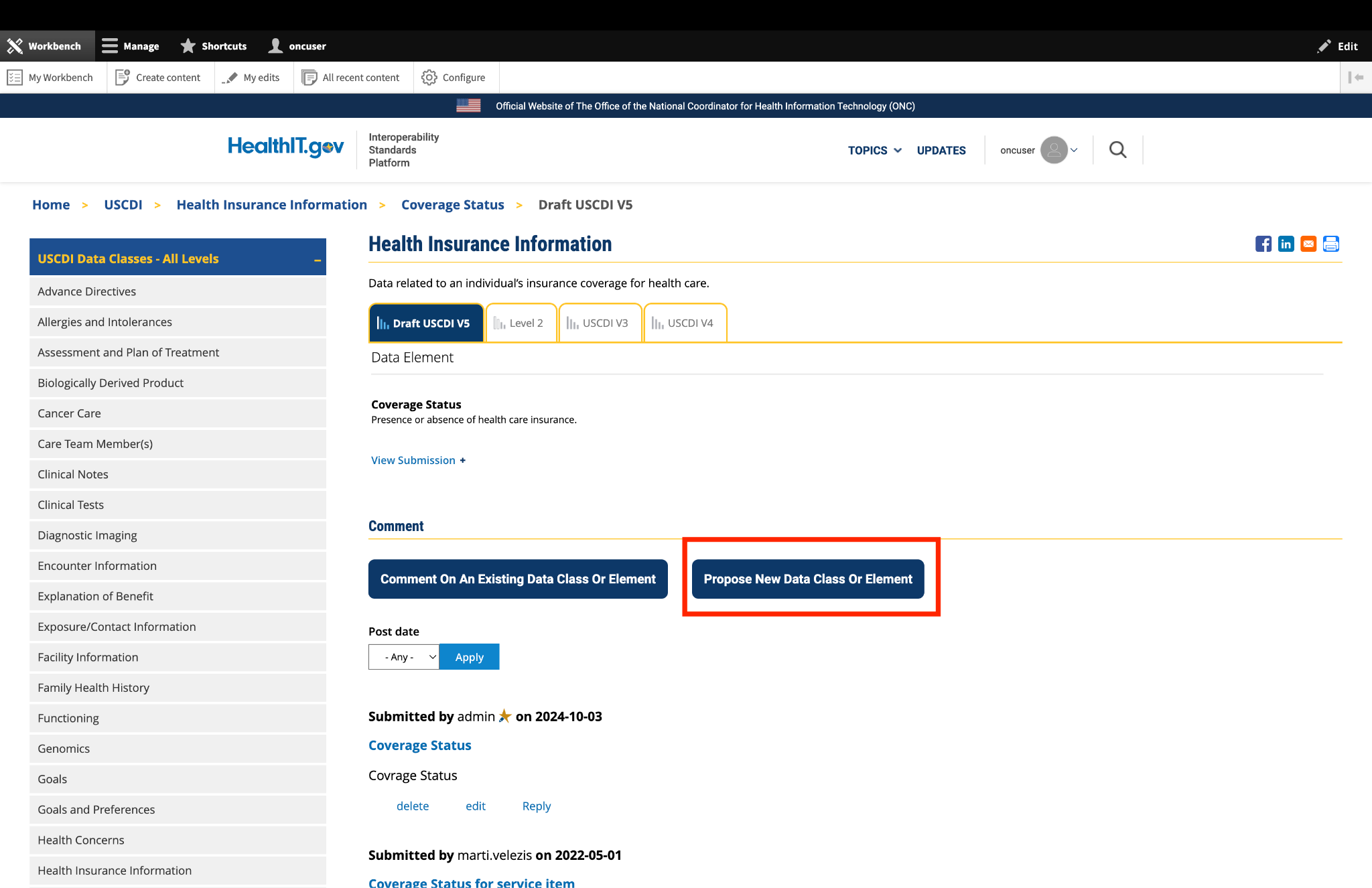
Fig 2 The "Propose a New Data Class or Data Element" button redirects users to the ONDEC Submission System for proposing new data elements not currently available in the system.
Fill out the required fields in the comment form:
Subject: Enter a brief, descriptive title that summarizes your comment. This helps reviewers quickly understand the nature of your feedback.
Comment: In this field, provide the full details of your comment or feedback. Be as clear and specific as possible about your suggestions, concerns, or observations. Include any relevant details that support your position.
If you need to comment on multiple data classes or elements:
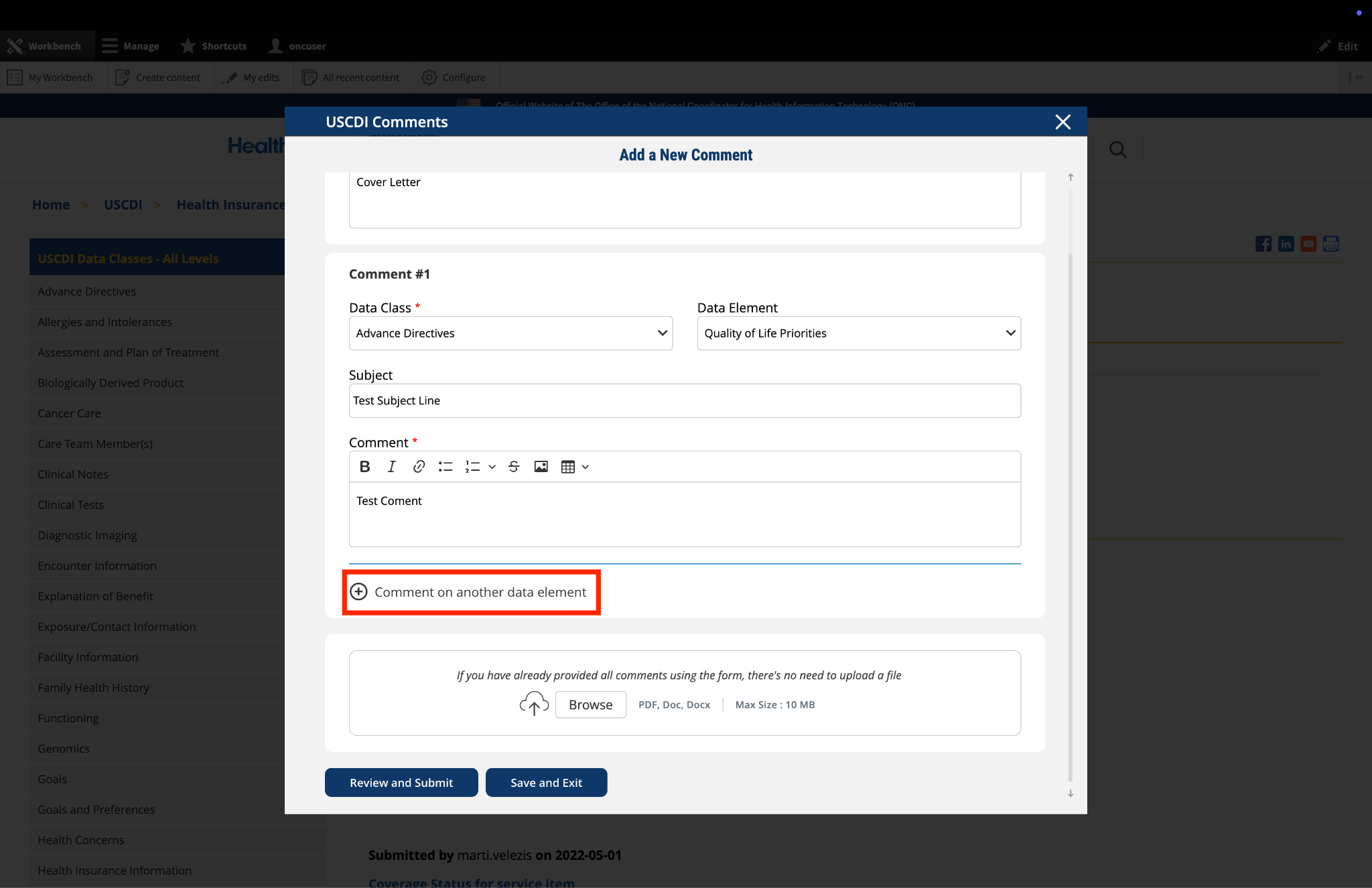
Fig 3 The "Comment on another data element" link enables users to create multiple comments addressing different elements within a single submission.
The platform allows you to upload supporting documentation to enhance your comment:
Important: If you have already entered your comments using the form fields, there is no need to upload duplicate content in PDF format. The file upload feature is intended for supplementary materials only. Please avoid uploading files that contain the same information already provided in your comment text.
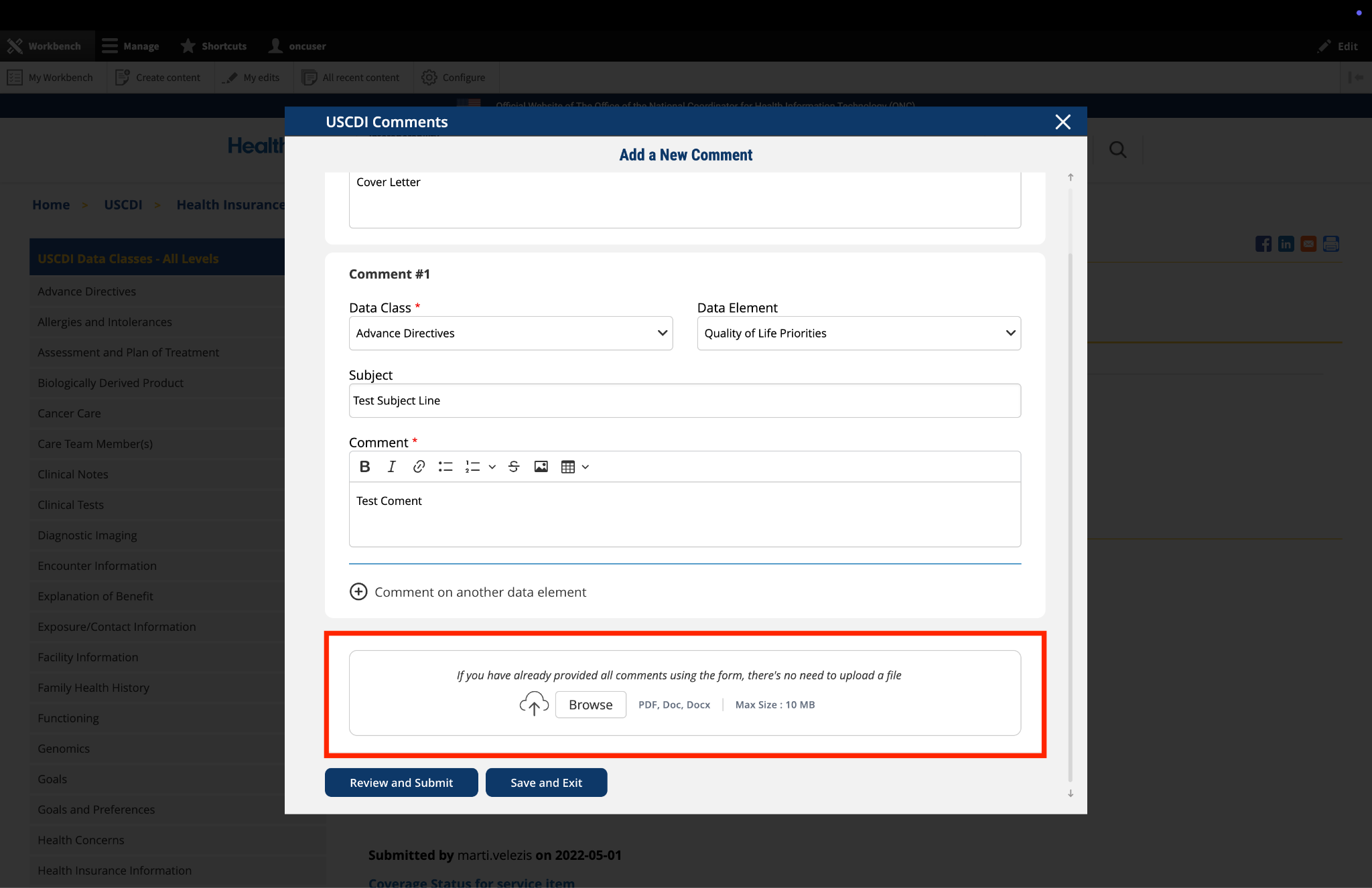
Fig 4 The "File Upload" section permits users to attach supporting documentation that supplements their written comments.
If you need to pause your work and return to complete your comment later:
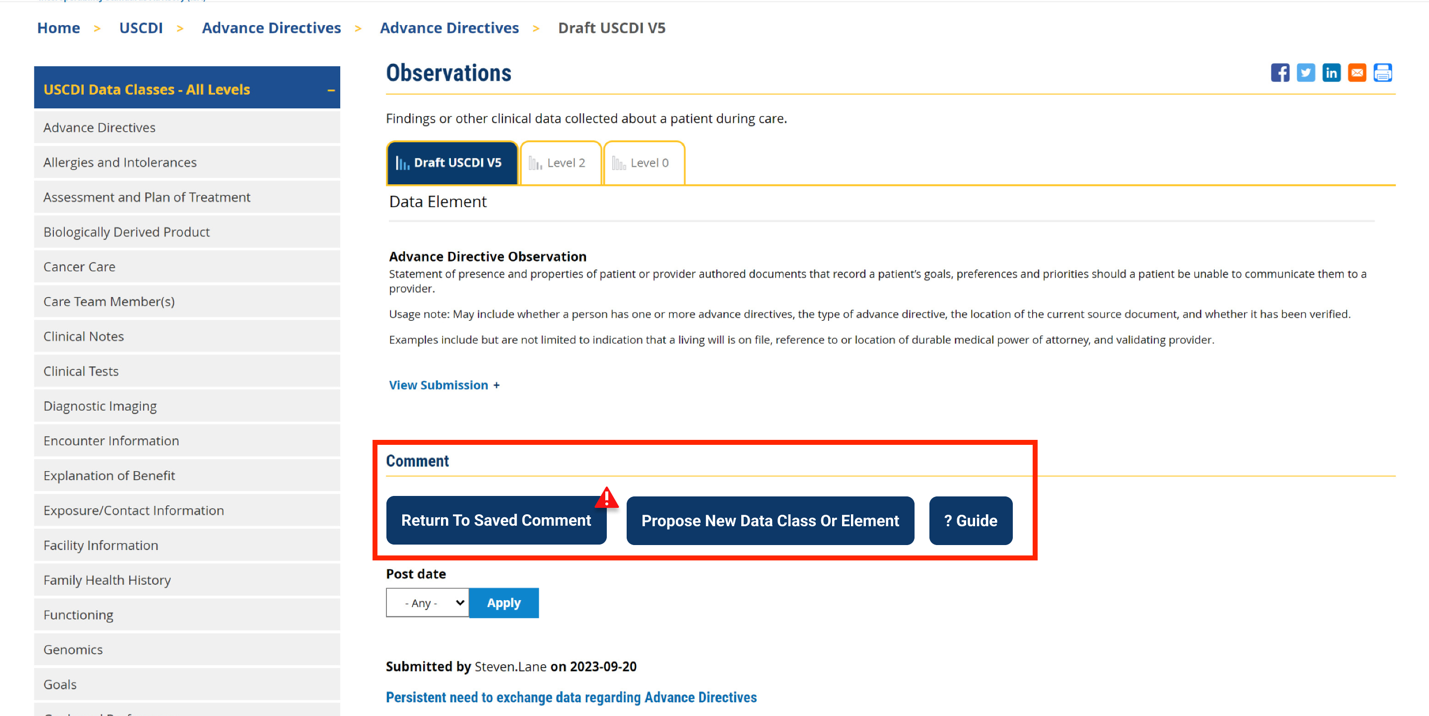
Fig 5 A red triangle with exclamation mark indicator appears next to the “Return to saved Comment” button when draft comments are saved in the system.
Once you have completed your comment:
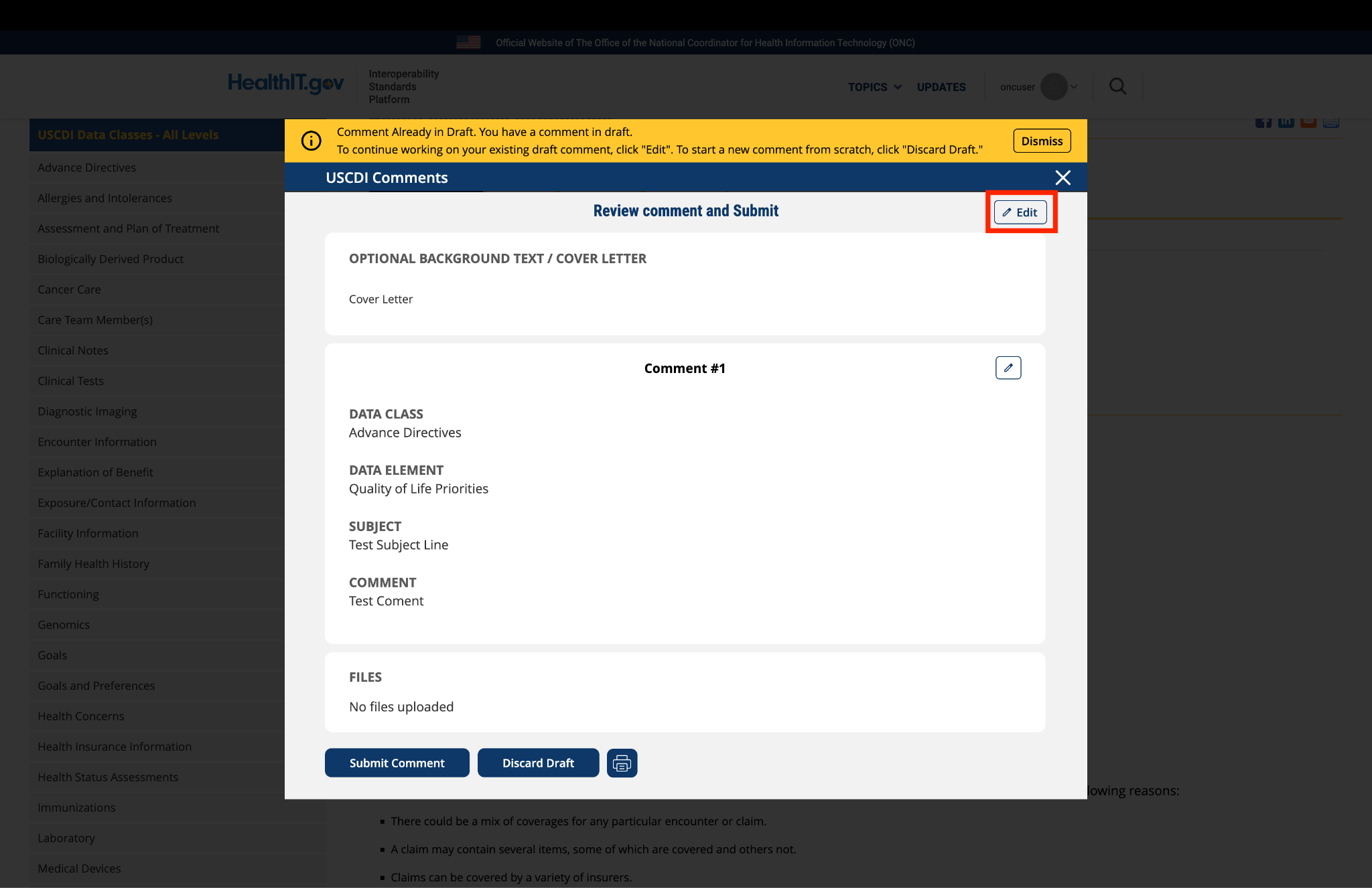
Fig 6 The review screen allows users to verify comment content and make any necessary modifications before final submission.
Submitted by BLampkins_CSTE on
Laboratory results: date and timestamps - CSTE Comment
Name of testing/performing laboratory and associated identifiers (CLIA)(HIGH PRIORITY)
Name of ordering provider and submitter
Address of testing/performing laboratory
Accession number at testing laboratory (HIGH PRIORITY for matching purposes)
Date the test was ordered
Date the test was performed (needs to be reconciled with results date/timestamp)
Specimen collection date and time (HIGH PRIORITY) (Needs to be reconciled with Test Date=Clinically relevant time)
Test result value (needs to be reconciled with values/results in USCDI V1 and V2), units, reference range and interpretation (HIGH PRIORITY)
Abnormal flag (HIGH PRIORITY)
Test kit identifier
Dates and times are critical to evaluating the timeliness of reporting - it is a major indicator for the performance of public health surveillance systems and without this information it is unknown how data exchange is impacting the ability for public health to respond in a timely fashion. Although the date and time data are generated by the system, in practice it has been observed that availability of this data to Public Health Departments is sparse for use in timeliness analysis