
Submitted by CDC_DSMH_WG on
CDC's Consolidated Comment for USCDI v5
CDC continues to support the existing data element Pregnancy Status already in USCDI v3; however, we recommend a specifying LOINC 82810-3 for this data element.
 Official Website of the Office of the National Coordinator for Health Information Technology
Assessments of a health-related matter of interest, importance, or worry to a patient, patient’s authorized representative, or patient’s healthcare provider that could identify a need, problem, or condition.
Data Element |
||||||||||||||||||||||||||||||||||||||||||
|---|---|---|---|---|---|---|---|---|---|---|---|---|---|---|---|---|---|---|---|---|---|---|---|---|---|---|---|---|---|---|---|---|---|---|---|---|---|---|---|---|---|---|
|
Pregnancy Status
Description (*Please confirm or update this field for the new USCDI version*)
State or condition of being pregnant or intent to become pregnant. (e.g., pregnant, not pregnant, intent to become pregnant, unknown) | ||||||||||||||||||||||||||||||||||||||||||
|
||||||||||||||||||||||||||||||||||||||||||
Submitted by CDC_DSMH_WG on
CDC continues to support the existing data element Pregnancy Status already in USCDI v3; however, we recommend a specifying LOINC 82810-3 for this data element.
Submitted by RUy on
This submission references IHE specifications that state LOINC 10162-6 "History of pregnancies Narrative", which is an unstructured, free-text note capture of the history of pregnancy, and not the status of the current pregnancy episode of the patient.
We advise transparency in the advised stated standard terminology, codes that represent pregnancy status at the patient level, captured as structured data, existing in multiple HL7/FHIR IGs and in production by government agencies, academia and community health centers.
Submitted by CDC_DSMH_WG on
CSTE Comment:
Submitted by Lantana Consul… on
According to the 2021 Aspen Health Strategy Group report on “Reversing the U.S. Maternal Mortality Crisis”, 700 women die each year as the result of pregnancy or delivery complications, and 50,000 more face short-term or long-term health consequences because of pregnancy or labor. The U.S. has the highest maternal mortality rate of any high-income nation in the world (17.4 maternal deaths per 100,000 live births) according to The Commonwealth Fund. While rates of maternal mortality have been decreasing in other countries; they have been rising in the United States since 1987. Minority mothers are enduring disparities in care and outcomes at this critical time.
Data are not standardized and data exchange in not interoperable across many settings, which impedes research on maternal morbidity, longitudinal maternal care, and associated impacts to infant and infant health. Capturing data related to pregnancy in a standardized way will improve research and quality measurement by illuminating the causes of these failures in maternal health and allow for adjustments in treatment to improve outcomes and health equity. There are several important initiatives underway to improve maternal health, including the following:
Lantana recommends inclusion of Pregnancy Status, as well as BirthTime to improve standardized data for maternal healthcare, research, and quality measure.
Submitted by RUy on
Pregnancy Status was previously proposed and submitted by NACHC in coordination with ACOG for consideration in both USCDIv1 and USCDIv2. We fully support the previous comments from ACOG, CDC and IMO.
While NACHC agrees that there is a critical need for the pregnancy status data element, the currently submitted concept profile should not ideally be referenced from IPS as the submission is not harmonized with electronic case reporting (eCR) LOINC code for pregnancy status (LOINC 82810-3) with SNOMED-CT terminology bindings. The pregnancy status LOINC code that should be referenced is missing or not immediately transparent from the current USCDIv3 draft proposal.
We appreciate the use case for reported pregnancy status in a patient-facing survey; however, for use in electronic health record systems (EHRs), we believe the intended concept should preferentially be the presence of a confirmed pregnancy status referenced by LOINC 82810-3, with its terminology bound answer codes (LOINC LL4129-4). This code is referenced in the federally supported Family Planning Annual Report (FPAR) program and data system from HHS, which we believe should be included as a reference in the version 3 draft proposal.
NACHC is supportive of ACOG’s position supporting HL7’s CCDA “Pregnancy Status” and related women’s health data elements as its own data class listed in Appendix C in the attached document.
Submitted by CDC_DSMH_WG on
Additional Links:
Submitted by aphillips@imoh… on
IMO supports the inclusion of Pregnancy Status in USCDI V3 but would like to note that the technical specifications cited in the proposal for inclusion in USCDI V3 as a level 2 data element are not currently implemented in production environments.
The 3 technical specifications refer to the FHIR R4 International Patient Summary Implementation Guide (v1.0.0: STU 1) Observation for pregnancy status specified in LOINC with answer list codes from LL4129-4. The specifications do not reference LL4129-4, only the following codes:
IMO agrees for the need for the Data Element for Pregnancy Status in USCDI V3 and would support the inclusion of a data element specified with LOINC coding for Pregnancy status 82810-3. The use of LOINC 82810-3 is aligned with the current version of FHIR R4 International Patient Summary Implementation Guide (v1.0.0 CI Build) as well as ISA recommendations for Representing Patient Pregnancy Status, which incorporates the LL4129-4 answer codes in the correct format. ONC certified HIT can exchange this data element.
Submitted by CDC_DSMH_WG on
General statement:
Specific changes:
CSTE Comment:
Submitted by CDC_DSMH_WG on
The "Optional Background Text / Cover Letter" field provides space for additional context or introductory information related to your comment.
If you wish to provide context, explanation, or an introduction to your comment, enter this information in the field labeled "Optional Background Text / Cover Letter." This is entirely optional and is most useful when submitting multiple related comments or when additional background would help reviewers understand your feedback.
If you are only commenting on a single data class or element, you may leave this field blank.
To specify which data class your comment addresses:
To specify which data element your comment addresses:
Note: Comments on a specific data element will appear on the respective data element page, while comments on a data class (without a specific element selected) will appear on the landing page for that data class.
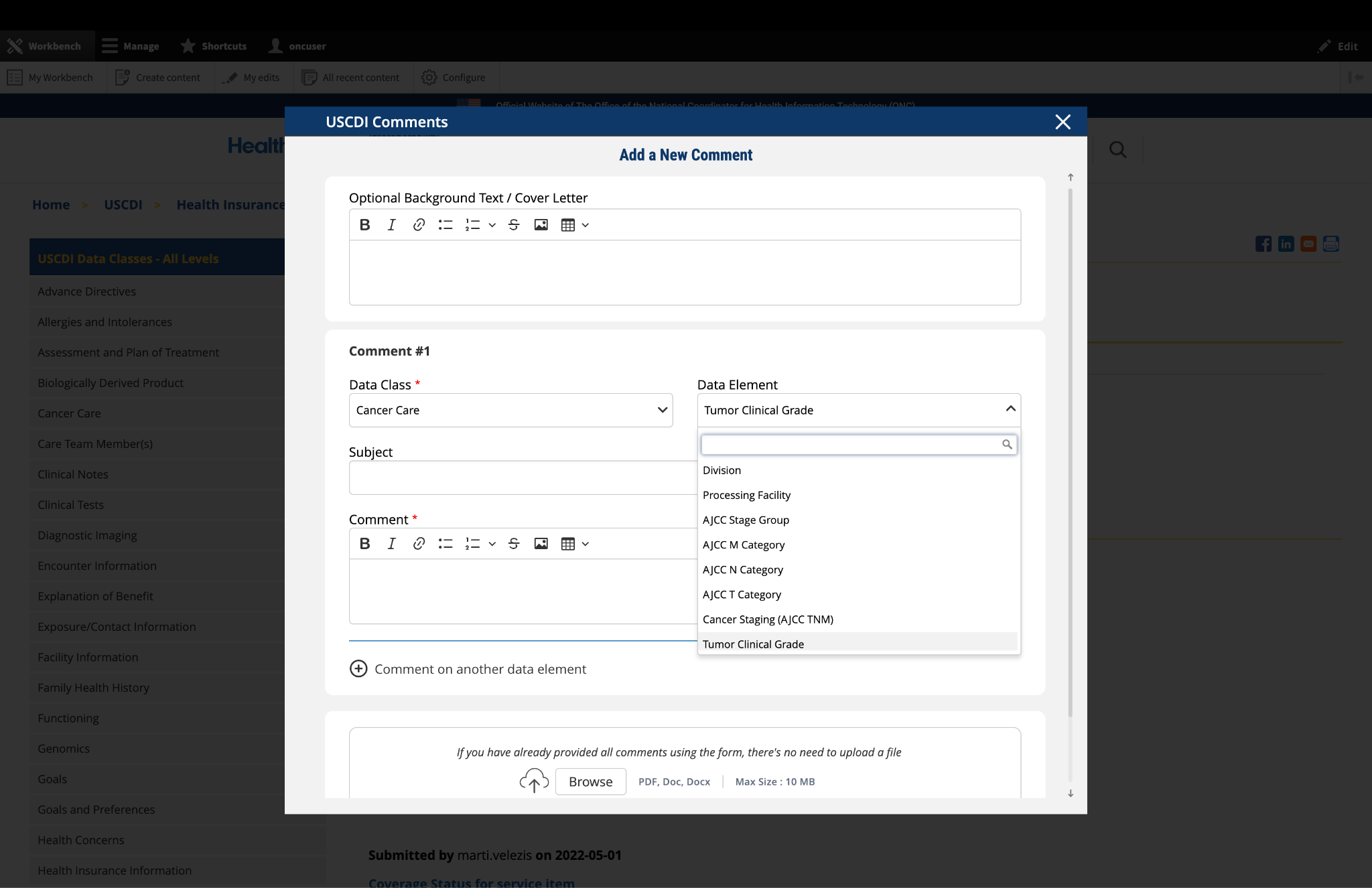
Fig 1 The "Data Class" and "Data Element" dropdown menus allow users to specify the exact content they wish to comment on.
If you cannot find the appropriate data class or element for your comment:
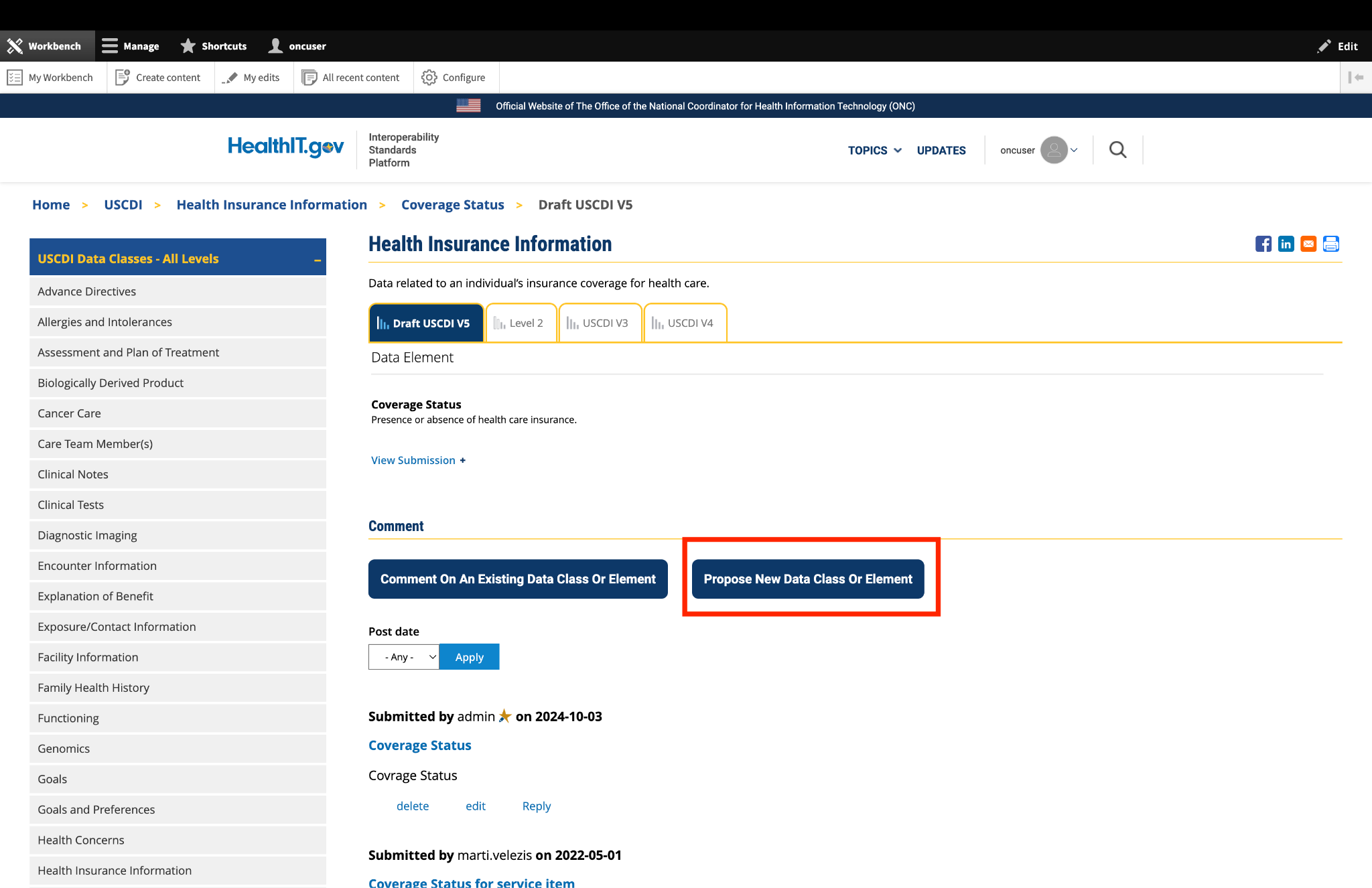
Fig 2 The "Propose a New Data Class or Data Element" button redirects users to the ONDEC Submission System for proposing new data elements not currently available in the system.
Fill out the required fields in the comment form:
Subject: Enter a brief, descriptive title that summarizes your comment. This helps reviewers quickly understand the nature of your feedback.
Comment: In this field, provide the full details of your comment or feedback. Be as clear and specific as possible about your suggestions, concerns, or observations. Include any relevant details that support your position.
If you need to comment on multiple data classes or elements:
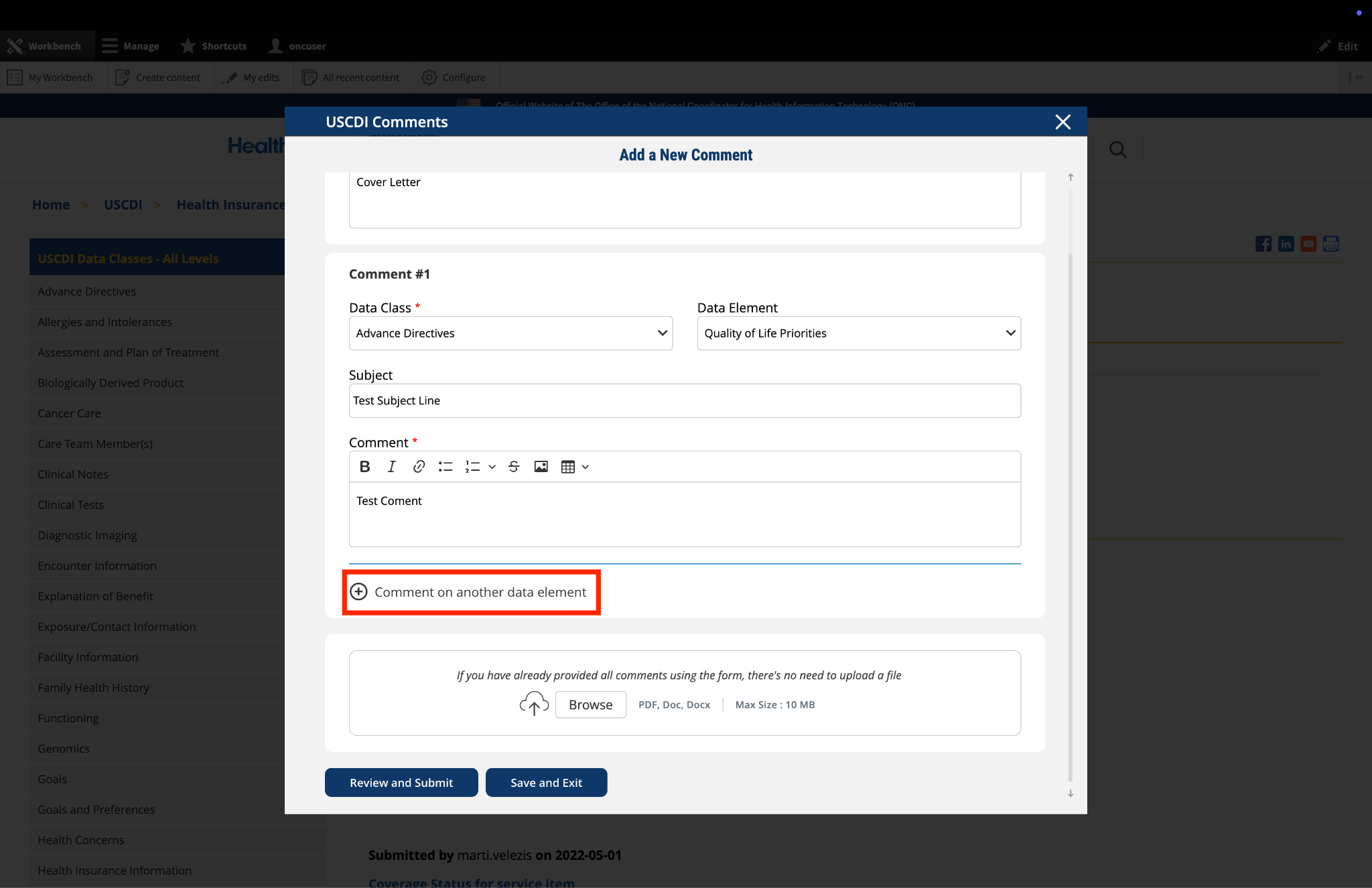
Fig 3 The "Comment on another data element" link enables users to create multiple comments addressing different elements within a single submission.
The platform allows you to upload supporting documentation to enhance your comment:
Important: If you have already entered your comments using the form fields, there is no need to upload duplicate content in PDF format. The file upload feature is intended for supplementary materials only. Please avoid uploading files that contain the same information already provided in your comment text.
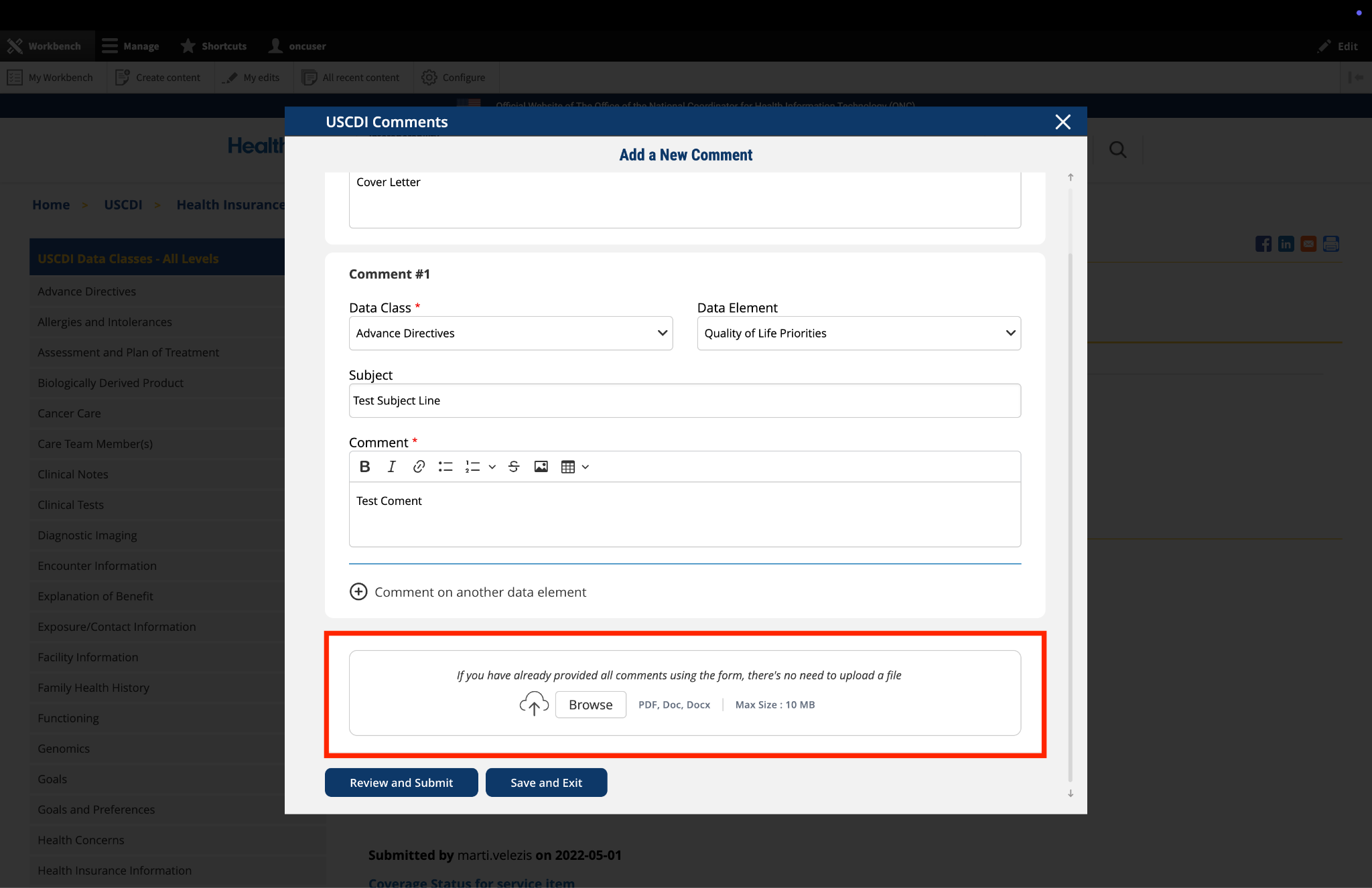
Fig 4 The "File Upload" section permits users to attach supporting documentation that supplements their written comments.
If you need to pause your work and return to complete your comment later:
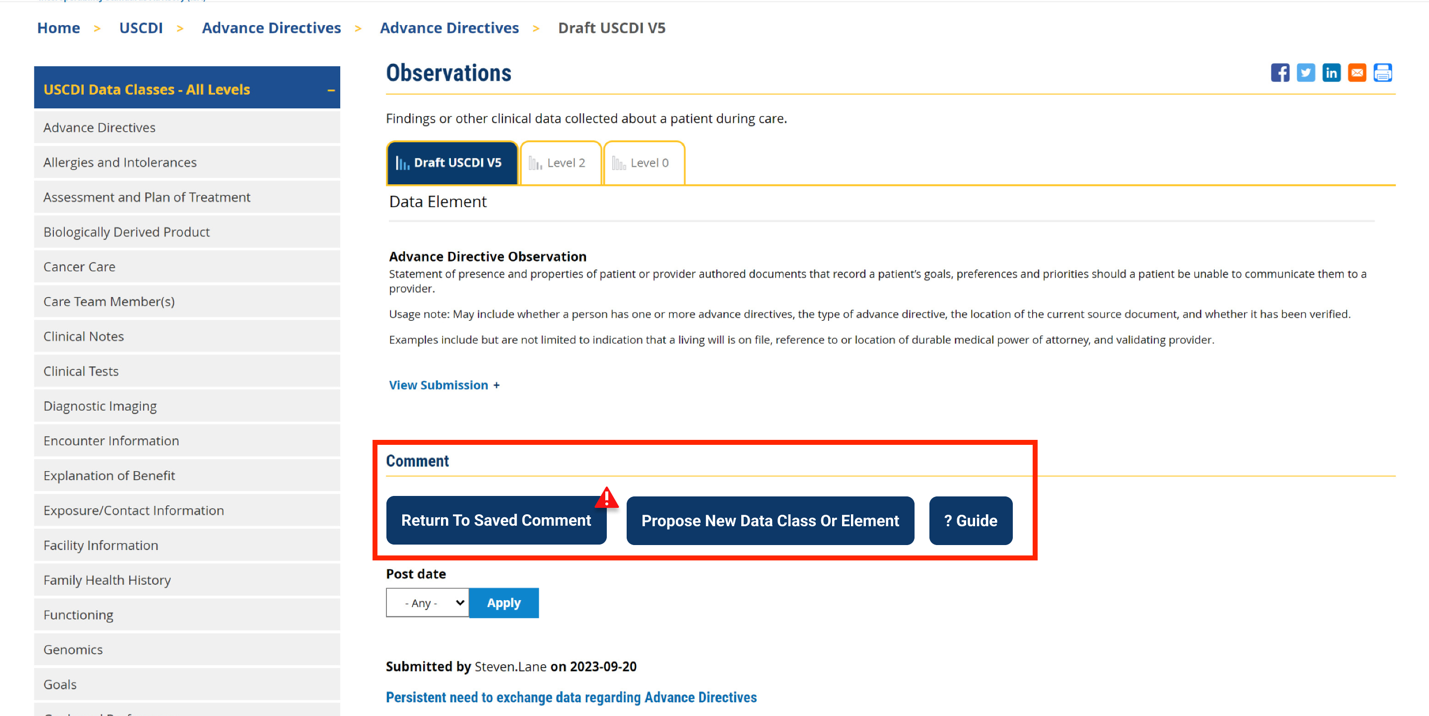
Fig 5 A red triangle with exclamation mark indicator appears next to the “Return to saved Comment” button when draft comments are saved in the system.
Once you have completed your comment:
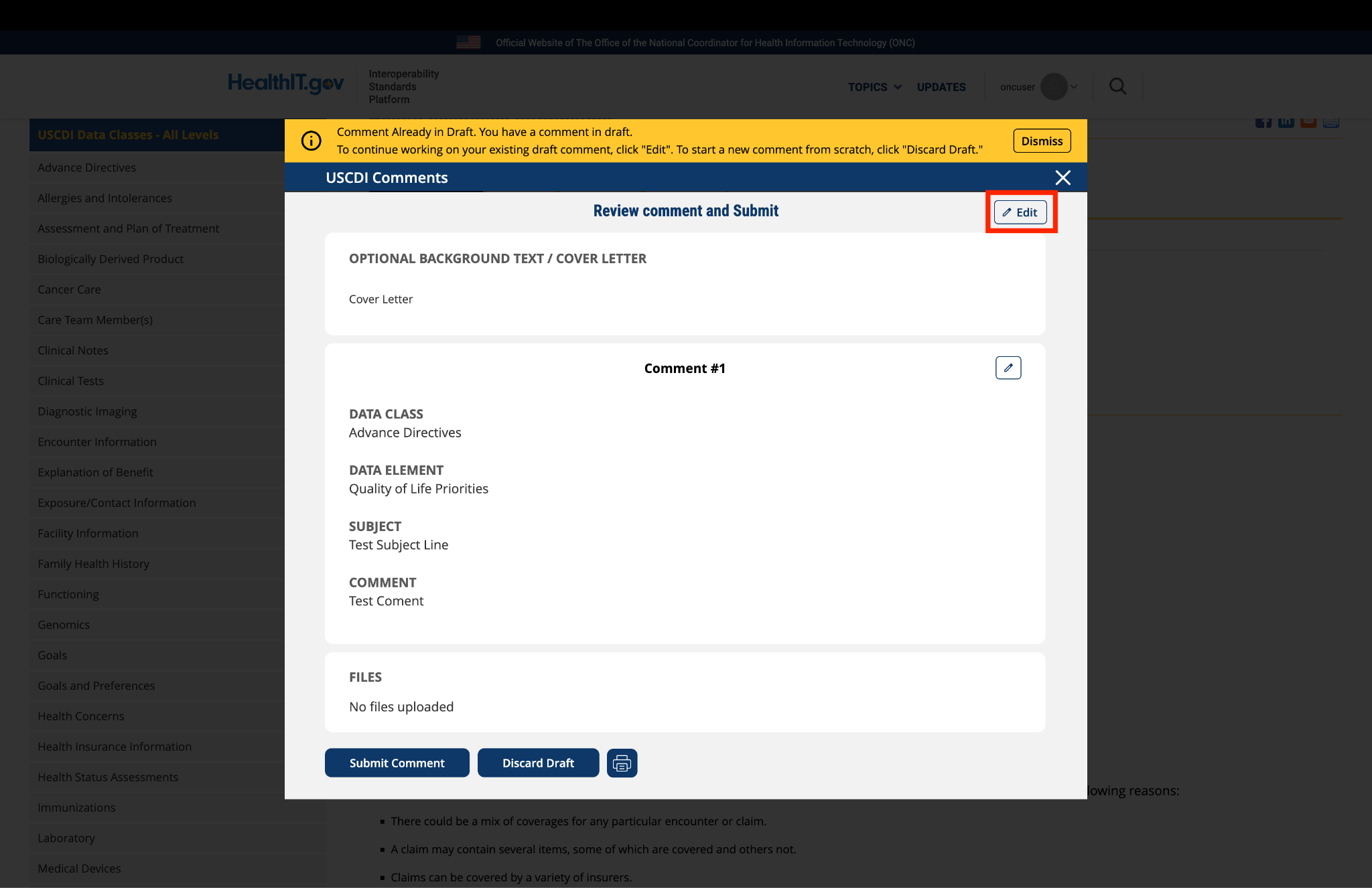
Fig 6 The review screen allows users to verify comment content and make any necessary modifications before final submission.
Submitted by CDC_DSMH_WG on
CDC's Consolidated Comment for USCDI v5
CDC continues to support the existing data element Pregnancy Status already in USCDI v3; however, we recommend a specifying LOINC 82810-3 for this data element.
DHDSP comments_USCDIv5_8-31-23_FINALv2_1.docx