Analysis of clinical specimens to obtain information about the health of a patient.

Data Element

Specimen Collection Method
Description
This is the collection method of the specimen sent for laboratory testing.

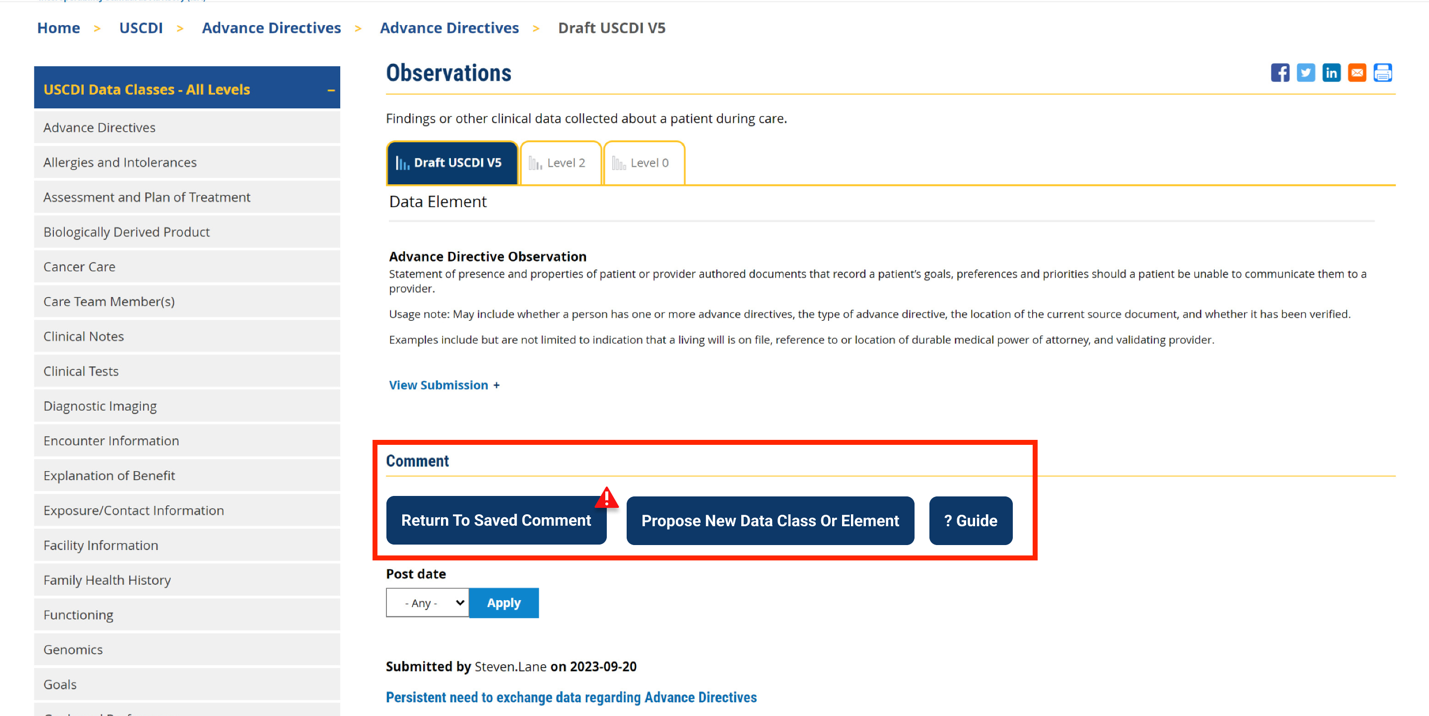
Comment

ACLA Comments: Specimen Collection Method

The American Clinical Laboratory Association (ACLA) appreciates the opportunity to comment on the Specimen Collection Method. Specimen Collection Method is not always received from the ordering provider and could be provided when available but not required. Certain collection methods can be presumed based on the ordered item. This data element is not supported in certified health IT. For example, blood tests are commonly obtained using venipuncture. This may add additional burden to the ordering provider.

Specimen Collection Method - CSTE Comment

CSTE supports inclusion of Specimen Collection Method in USCDI v7. Collection of more granular laboratory data to support case adjudication and reporting as well as patient deduplication and linking of data from cases to ELR is critical for public health. The variables we recommend be added to USCDI v7 include:
Name of testing/performing laboratory and associated identifiers (CLIA)(HIGH PRIORITY)
Name of ordering provider and submitter
Address of testing/performing laboratory
Accession number at testing laboratory (HIGH PRIORITY for matching purposes)
Date the test was ordered
Date the test was performed (needs to be reconciled with results date/timestamp)
Specimen collection date and time (HIGH PRIORITY) (Needs to be reconciled with Test Date=Clinically relevant time)
Test result value (needs to be reconciled with values/results in USCDI V1 and V2), units, reference range and interpretation (HIGH PRIORITY)
Abnormal flag (HIGH PRIORITY)
Test kit identifier

Dates and times are critical to evaluating the timeliness of reporting - it is a major indicator for the performance of public health surveillance systems and without this information it is unknown how data exchange is impacting the ability for public health to respond in a timely fashion. Although the date and time data are generated by the system, in practice it has been observed that availability of this data to Public Health Departments is sparse for use in timeliness analysis

Specimen Collection Method

TDH-OIA supports the inclusion of the Specimen Collection Method data element and recommends that ASTP/ONC clearly document all associated standards and value sets to ensure consistent implementation and interoperability.

SHIELD USCDI V7 Draft Specimen Collection Method element comment

SHIELD supports the inclusion of this data element as is supports the need for detail around the specimen, when it is not included in the precoordinated specimentype element, specifically since the laboratory does not need the full detail of the procedure used to collect the specimen. We suggest to use the same vocabulary used to describe the type of procedure, specifically SNOMED CT from the procedure hierarchy, to allow for post-coordination with the specimentype element, which also uses SNOMED CT. 

SNOMED CT Vocabulary

APHL supports inclusion of this data element as it can provide additional detail not available in the existing Specimen Type element (https://isp.healthit.gov/taxonomy/term/2491/draft-uscdi-v7 ) even if that is using pre-coordinated concepts that include methods, as well as enabling post-coordination. For this new data element, ONC should consider using the same vocabulary used to describe procedures, specifically SNOMED CT from the procedure hierarchy.

Recommendation for required terminology standard designation

SNOMED International recommends that ONC designate SNOMED CT U.S. Edition as the recommended or required  vocabulary standard for Specimen Collection Method due to the rich content coverage. The SNOMED CT procedure hierarchy includes precise, internationally recognised concepts for specimen collection techniques, including 28520004 |Venipuncture (procedure)|, 14766002 |Biopsy (procedure)|, 447339001 |Aspiration of fluid (procedure)|, and 257261003 |Swab (specimen)|. This enables consistent coding of pre-analytical variables across laboratory information systems. 

Standardised specimen collection method coding is essential for laboratory result interpretation, quality assurance, and public health surveillance, as the collection method directly affects analyte stability, reference ranges, and result validity.

SNOMED CT designation for Specimen Collection Method would complement the existing LOINC designation for Laboratory Order and Result data elements, maintaining the established and widely implemented LOINC–SNOMED CT complementarity model used across USCDI. The Regenstrief Institute and SNOMED International maintain a formal collaboration on laboratory terminology harmonisation, and SNOMED CT is referenced for specimen type and collection method coding in HL7 FHIR US Core Laboratory profiles, the FHIR artefacts through which USCDI laboratory data will be exchanged under ONC's certification programme. Naming SNOMED CT for this element ensures alignment between USCDI requirements and FHIR implementation guidance.

CSTE Comment - v6

CSTE supports inclusion of this data element in USCDI V6. Please see previously submitted CSTE comments for additional recommendations.

CSTE Comment - v5

CSTE supports collection of more granular laboratory data to support case adjudication and reporting as well as patient deduplication and linking of data from cases to ELR, which can be critical. The variables we recommend be added to USCDI v5 include:


Name of testing/performing laboratory and associated identifiers (CLIA)(HIGH PRIORITY)
Name of ordering provider and submitter
Address of testing/performing laboratory 
Accession number at testing laboratory (HIGH PRIORITY for matching purposes)
Date the test was ordered
Date the test was performed (needs to be reconciled with results date/timestamp)
Specimen collection date and time (HIGH PRIORITY) (Needs to be reconciled with Test Date=Clinically relevant time)
Test result value (needs to be reconciled with values/results in USCDI V1 and V2), units, reference range and interpretation (HIGH PRIORITY)
Abnormal flag (HIGH PRIORITY)
Test kit identifier

Dates and times are critical to evaluating the timeliness of reporting - it is a major indicator for the performance of public health surveillance systems and without this information it is unknown how data exchange is impacting the ability for public health to respond in a timely fashion. Although the date and time data are generated by the system, in practice it has been observed that availability of this data to Public Health Departments is sparse for use in timeliness analysis
 

CDC's comment for USCDI Draft v5

CDC supports the inclusion of this data element in USCDI v5 as it is an element that may be necessary for calculation of our digital quality metrics from FHIR data. Specimen collection method is also used in laboratory surveillance to identify results from specific collection methods.

Log in or register to post comments

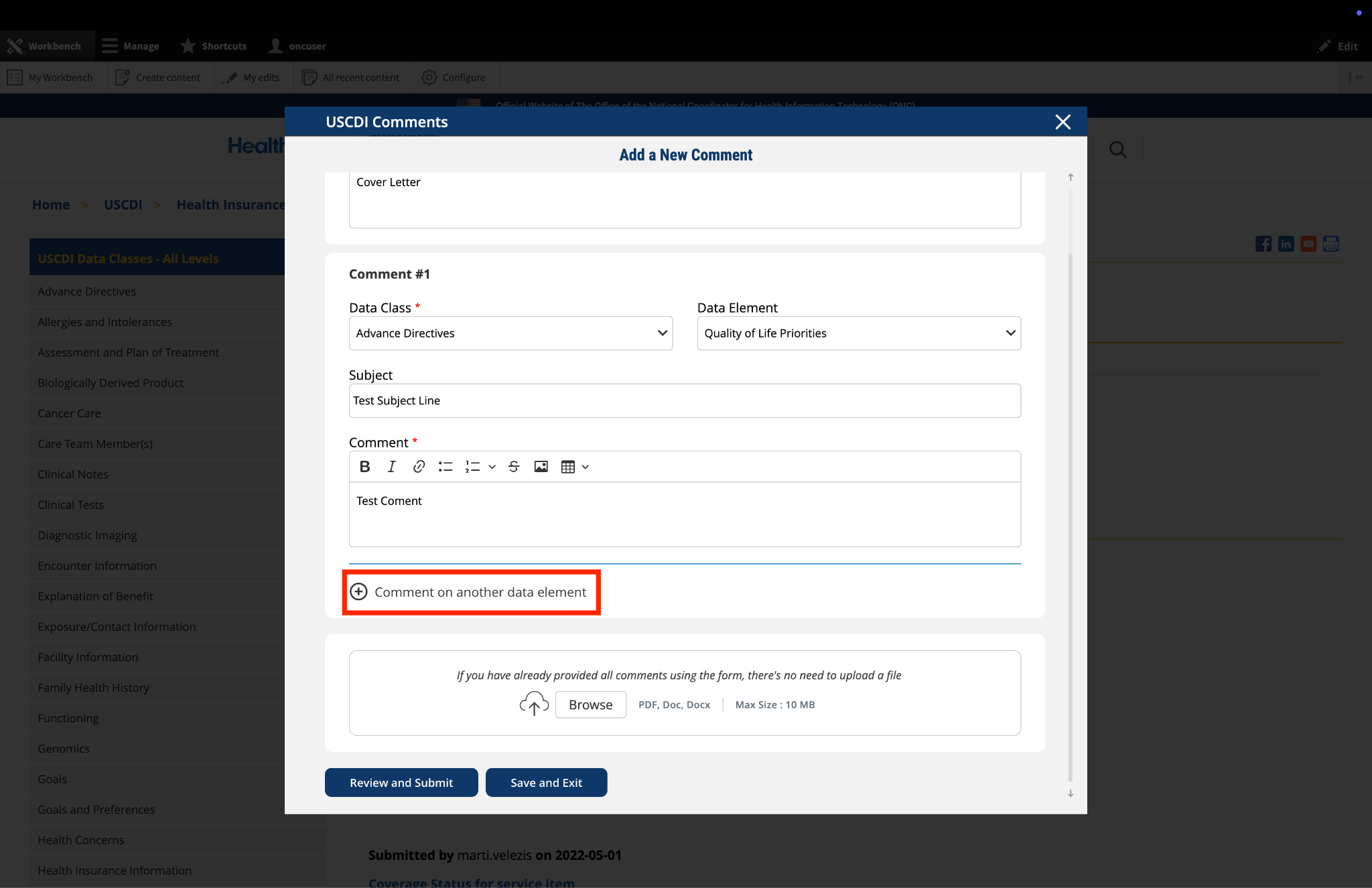
Add a New Comment

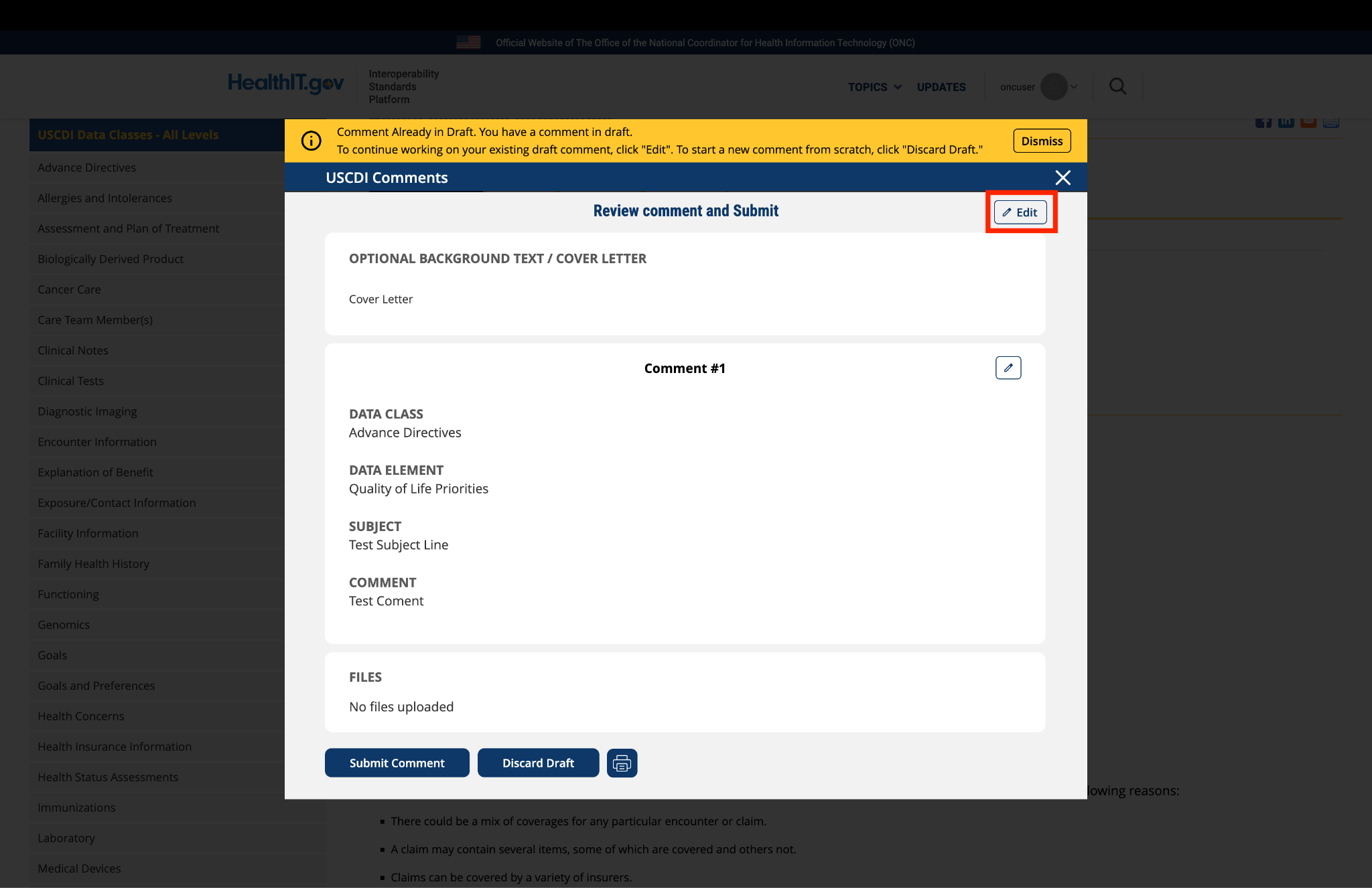
Review comment and Submit

Edit
Comment #1
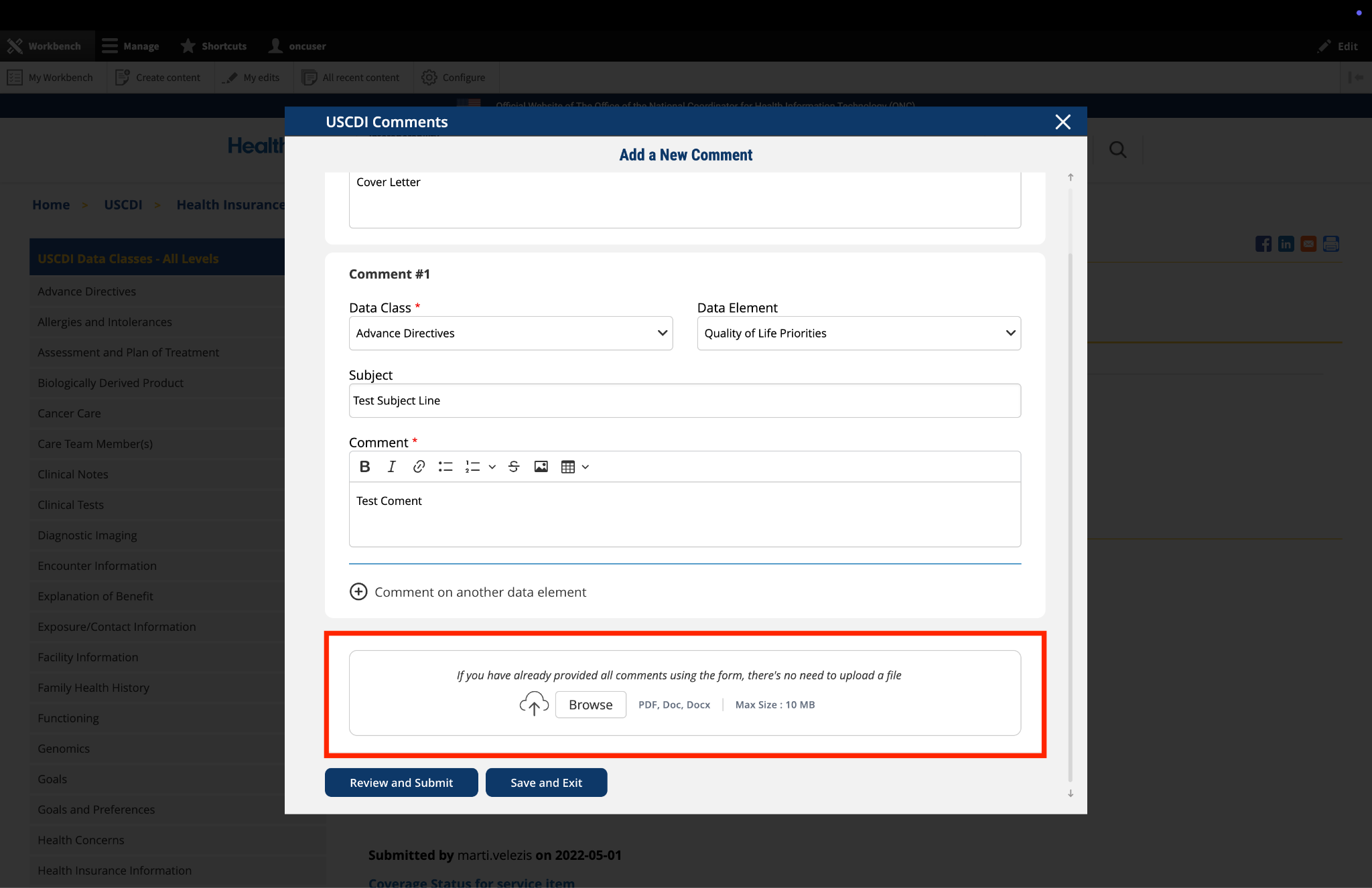
PDF, Doc, Docx
Max Size : 10 MB