Assessments of a health-related matter of interest, importance, or worry to a patient, patient’s authorized representative, or patient’s healthcare provider that could identify a need, problem, or condition.

Data Element

Applicable Vocabulary Standard(s)

Functional Status

Assessment of a patient’s capabilities, or their risks of development or worsening of a condition or problem. (e.g., fall risk, pressure ulcer risk, alcohol use)

  • Logical Observation Identifiers Names and Codes (LOINC®) version 2.72
Disability Status

Assessments of a patient’s physical, cognitive, intellectual, or psychiatric disabilities. (e.g., vision, hearing, memory, activities of daily living)

  • Logical Observation Identifiers Names and Codes (LOINC®) version 2.72
Mental/Cognitive Status

Assessment of a patient's level of cognitive functioning. (e.g., alertness, orientation, comprehension, concentration, and immediate memory for simple commands)

  • Logical Observation Identifiers Names and Codes (LOINC®) version 2.72
Pregnancy Status

State or condition of being pregnant or intent to become pregnant. (e.g., pregnant, not pregnant, intent to become pregnant, unknown)

Health Concerns

Health-related issue or worry. (e.g., weight gain, cancer risk)

Smoking Status

Assessment of a patient's smoking behaviors.

  • SNOMED International, Systematized Nomenclature of Medicine Clinical Terms (SNOMED CT®) U.S. Edition, March 2022 Release

Data Element

Applicable Vocabulary Standard(s)

Functional Status

Assessment of a patient’s capabilities, or their risks of development or worsening of a condition or problem. (e.g., fall risk, pressure ulcer risk, alcohol use)

  • Logical Observation Identifiers Names and Codes (LOINC®) version 2.72
Disability Status

Assessments of a patient’s physical, cognitive, intellectual, or psychiatric disabilities. (e.g., vision, hearing, memory, activities of daily living)

  • Logical Observation Identifiers Names and Codes (LOINC®) version 2.72
Mental/Cognitive Status

Assessment of a patient's level of cognitive functioning. (e.g., alertness, orientation, comprehension, concentration, and immediate memory for simple commands)

  • Logical Observation Identifiers Names and Codes (LOINC®) version 2.72
Pregnancy Status

State or condition of being pregnant or intent to become pregnant. (e.g., pregnant, not pregnant, intent to become pregnant, unknown)

Health Concerns

Health-related issue or worry. (e.g., weight gain, cancer risk)

Smoking Status

Assessment of a patient's smoking behaviors.

  • SNOMED International, Systematized Nomenclature of Medicine Clinical Terms (SNOMED CT®) U.S. Edition, March 2022 Release

Data Element

Applicable Vocabulary Standard(s)

Functional Status

Assessment of a person’s ability to perform activities of daily living and activities across other situations and settings.

Examples include but are not limited to bathing, ambulation, and preparing a light meal.

  • Logical Observation Identifiers Names and Codes (LOINC®) version 2.74
Disability Status

Assessments of a patient’s physical, cognitive, intellectual, or psychiatric disabilities.

Examples include but are not limited to vision, hearing, memory, and activities of daily living.

  • Logical Observation Identifiers Names and Codes (LOINC®) version 2.74
Mental/Cognitive Status

Assessment or screening for the presence of a mental or behavioral problem.

Examples include but are not limited to alertness, orientation, comprehension, concentration, and immediate memory for simple commands.

  • Logical Observation Identifiers Names and Codes (LOINC®) version 2.74
Pregnancy Status

State or condition of being pregnant or intent to become pregnant.

Examples include but are not limited to pregnant, not pregnant, and unknown.

Alcohol Use

Evaluation of a patient's consumption of alcohol.

Examples include but are not limited to history of alcohol use, alcohol use disorder identification test and alcohol intake assessment.

  • Logical Observation Identifiers Names and Codes (LOINC®) version 2.74
Health Concerns

Health-related issue or worry.

Examples include but are not limited to weight gain and cancer risk.

Substance Use

Evaluation of a patient's reported use of drugs or other substances for non-medical purposes or in excess of a valid prescription.

Examples include but are not limited to substance use disorder score, and substance use knowledge assessment. 

  • Logical Observation Identifiers Names and Codes (LOINC®) version 2.74
Physical Activity

Evaluation of a patient's current or usual exercise.

Examples include but are not limited to frequency of muscle-strengthening physical activity, days per week with moderate to strenuous physical activity, and minutes per day of moderate to strenuous physical activity.

  • Logical Observation Identifiers Names and Codes (LOINC®) version 2.74
SDOH Assessment

Screening questionnaire-based, structured evaluation for a Social Determinants of Health-related risk.

Examples include but are not limited to food, housing, and transportation security.

  • Logical Observation Identifiers Names and Codes (LOINC®) version 2.74
  • Systematized Nomenclature of Medicine Clinical Terms (SNOMED CT®) U.S. Edition, March 2023 Release
Smoking Status

Assessment of a patient’s smoking behaviors.

Examples include but are not limited to pack-years and current use.

  • Systematized Nomenclature of Medicine Clinical Terms (SNOMED CT®) U.S. Edition, March 2023 Release

Data Element

Applicable Vocabulary Standard(s)

Functional Status

Assessment of a person’s ability to perform activities of daily living and activities across other situations and settings.

Examples include but are not limited to Functional Assessment Standardized Items (FASI) and Timed Up and Go (TUG).

  • Logical Observation Identifiers Names and Codes (LOINC®) version 2.77
Disability Status

Assessment of a patient’s physical, cognitive, or psychiatric disabilities.

Examples include but are not limited to American Community Survey, Veterans RAND Health Survey, and Patient-Reported Outcomes Measurement Information System (PROMIS).

  • Logical Observation Identifiers Names and Codes (LOINC®) version 2.77
Mental/Cognitive Status

Assessment or screening for the presence of a mental or behavioral problem.

Examples include but are not limited to Confusion Assessment Method (CAM) and Patient Health Questionnaire (PHQ).

  • Logical Observation Identifiers Names and Codes (LOINC®) version 2.77
Pregnancy Status

State or condition of being pregnant or intent to become pregnant.

Examples include but are not limited to pregnant, not pregnant, and unknown.

Alcohol Use

Evaluation of a patient's consumption of alcohol.

Examples include but are not limited to history of alcohol use, alcohol use disorder identification test, and alcohol intake assessment.

  • Logical Observation Identifiers Names and Codes (LOINC®) version 2.77
Health Concerns

Health-related issue or worry.

Examples include but are not limited to weight gain and cancer risk.

Substance Use

Evaluation of a patient's reported use of drugs or other substances for non-medical purposes or in excess of a valid prescription.

Examples include but are not limited to substance use disorder score, and substance use knowledge assessment.

  • Logical Observation Identifiers Names and Codes (LOINC®) version 2.77
Physical Activity

Evaluation of a patient's current or usual exercise.

Examples include but are not limited to frequency of muscle-strengthening physical activity, days per week with moderate to strenuous physical activity, and minutes per day of moderate to strenuous physical activity.

  • Logical Observation Identifiers Names and Codes (LOINC®) version 2.77
SDOH Assessment

Screening questionnaire-based, structured evaluation for a Social Determinants of Health-related risk.

Examples include but are not limited to food, housing, and transportation security.

  • Logical Observation Identifiers Names and Codes (LOINC®) version 2.77
  • SNOMED Clinical Terms (SNOMED CT®) U.S. Edition, March 2024 Release
Smoking Status

Assessment of a patient’s smoking behaviors.

Examples include but are not limited to pack-years and current use.

  • SNOMED Clinical Terms (SNOMED CT®) U.S. Edition, March 2024 Release

Data Element

Applicable Vocabulary Standard(s)

Functional Status

Assessment of a person’s ability to perform activities of daily living and activities across other situations and settings.

Examples include but are not limited to Functional Assessment Standardized Items (FASI) and Timed Up and Go (TUG).

  • Logical Observation Identifiers Names and Codes (LOINC®) version 2.80
Disability Status

Assessment of a patient’s physical, cognitive, or psychiatric disabilities.

Examples include but are not limited to American Community Survey, Veterans RAND Health Survey, and Patient-Reported Outcomes Measurement Information System (PROMIS).

  • Logical Observation Identifiers Names and Codes (LOINC®) version 2.80
Mental/Cognitive Status

Assessment or screening for the presence of a mental or behavioral problem.

Examples include but are not limited to Confusion Assessment Method (CAM) and Patient Health Questionnaire (PHQ).

  • Logical Observation Identifiers Names and Codes (LOINC®) version 2.80
Pregnancy Status

State or condition of being pregnant or intent to become pregnant.

Examples include but are not limited to pregnant, not pregnant, and unknown.

Alcohol Use

Evaluation of a patient's consumption of alcohol.

Examples include but are not limited to history of alcohol use, alcohol use disorder identification test, and alcohol intake assessment.

  • Logical Observation Identifiers Names and Codes (LOINC®) version 2.80
Health Concerns

Health-related issue or worry.

Examples include but are not limited to weight gain and cancer risk.

Substance Use

Evaluation of a patient's reported use of drugs or other substances for non-medical purposes or in excess of a valid prescription.

Examples include but are not limited to substance use disorder score, and substance use knowledge assessment.

  • Logical Observation Identifiers Names and Codes (LOINC®) version 2.80
Physical Activity

Evaluation of a patient's current or usual exercise.

Examples include but are not limited to frequency of muscle-strengthening physical activity, days per week with moderate to strenuous physical activity, and minutes per day of moderate to strenuous physical activity.

  • Logical Observation Identifiers Names and Codes (LOINC®) version 2.80
SDOH Assessment

Screening questionnaire-based, structured evaluation for a Social Determinants of Health-related risk.

Examples include but are not limited to food, housing, transportation security, and health literacy.

  • Logical Observation Identifiers Names and Codes (LOINC®) version 2.80
  • SNOMED Clinical Terms® (SNOMED CT®) U.S. Edition, March 2025 Release
Smoking Status

Assessment of a patient’s smoking behaviors.

Examples include but are not limited to pack-years and current use.

  • SNOMED Clinical Terms® (SNOMED CT®) U.S. Edition, March 2025 Release

Data Element

Applicable Vocabulary Standard(s)

Functional Status

Assessment of a person’s ability to perform activities of daily living and activities across other situations and settings.

Examples include but are not limited to Functional Assessment Standardized Items (FASI) and Timed Up and Go (TUG).

  • Logical Observation Identifiers Names and Codes (LOINC®)
Disability Status

Assessment of a patient’s physical, cognitive, or psychiatric disabilities.

Examples include but are not limited to American Community Survey, Veterans RAND Health Survey, and Patient-Reported Outcomes Measurement Information System (PROMIS).

  • Logical Observation Identifiers Names and Codes (LOINC®)
Mental/Cognitive Status

Assessment or screening for the presence of a mental or behavioral problem.

Examples include but are not limited to Confusion Assessment Method (CAM) and Patient Health Questionnaire (PHQ).

  • Logical Observation Identifiers Names and Codes (LOINC®)
Pregnancy Status

State or condition of being pregnant or intent to become pregnant.

Examples include but are not limited to pregnant, not pregnant, and unknown.

  • Logical Observation Identifiers Names and Codes (LOINC®)
Alcohol Use

Evaluation of a patient's consumption of alcohol.

Examples include but are not limited to history of alcohol use, alcohol use disorder identification test, and alcohol intake assessment.

  • Logical Observation Identifiers Names and Codes (LOINC®)
Substance Use

Evaluation of a patient's reported use of drugs or other substances for non-medical purposes or in excess of a valid prescription.

Examples include but are not limited to substance use disorder score, and substance use knowledge assessment.

  • Logical Observation Identifiers Names and Codes (LOINC®)
Physical Activity

Evaluation of a patient's current or usual exercise.

Examples include but are not limited to frequency of muscle-strengthening physical activity, days per week with moderate to strenuous physical activity, and minutes per day of moderate to strenuous physical activity.

  • Logical Observation Identifiers Names and Codes (LOINC®)
SDOH Assessment

Screening questionnaire-based, structured evaluation for a Social Determinants of Health-related risk.

Examples include but are not limited to food, housing, transportation security, and health literacy.

  • Logical Observation Identifiers Names and Codes (LOINC®)
  • SNOMED Clinical Terms® (SNOMED CT®) U.S. Edition
Tobacco Use

Assessment of a patient’s tobacco product use behaviors. Tobacco products may include smokeless tobacco, cigarette tobacco, cigars, pipe tobacco, waterpipes (or hookah), nicotine pouches, nicotine gum, e-cigarettes, and other electronic nicotine delivery systems.

Examples include but are not limited to duration and frequency of use, mode of consumption, and type of product used.
 

  • Logical Observation Identifiers Names and Codes (LOINC®)
  • SNOMED Clinical Terms® (SNOMED CT®) U.S. Edition
Nutrition Assessment

Assessment of a person’s dietary intake.

Data Element

Nutrition Assessment

Comment

CMS-CCSQ Support for Health Status/Assessments Expansion

CMS recommends that “Health Status/Assessments” should be expanded to include not only the specified assessment question, but to also include the responses/results of such assessments and that these responses and results be incorporated into the USCDI in alignment with the PACIO Project IGs. Information garnered via patient health assessments is critical for planning patient-centered care and should be exchanged between providers during transitions of care to support care coordination. CMS is also encouraging ONC to adopt the value sets developed by the PACIO project for the “Personal Functioning and Engagement” FHIR IG that incorporates Functional Status and Cognitive Status data elements into PACIO’s prior published IGs.

PACIO Project Recommends Creation of New Data Element

  • Data Class: Health Status Assessments (V4 Draft) 

  • Data Element: Patient Communication Status 

  • Recommendation: Create data elements specifically for patient communication status under the USCDI class of Health Status Assessments in a future version of the USCDI. 

  • Rationale: The PACIO (Post-Acute Care Interoperability) Project, established February 2019, is a collaborative effort between industry, government, and other stakeholders, with the goal of establishing a framework for the development of FHIR implementation guides to facilitate health information exchange. The PACIO community strongly recommends creating an element specifically for patient communication status under the USCDI category of Health Status Assessments. The most current version of USCDI does not include any data elements addressing communication. Communication is the active process of exchanging information and ideas. Communication involves both understanding and expression. Forms of expression may include personalized movements, gestures, objects, vocalizations, verbalizations, signs, pictures, symbols, printed words, and output from augmentative and alternative (AAC) devices (2).  When an individual communicates effectively, they are able to express needs, wants, feelings, and preferences that others can understand and can accurately receive messages from others. A person’s ability to comprehend and express information plays a critical role in medical decision making, sharing wishes with caregivers and practitioners, navigating the health care system, patient safety and satisfaction, decrease diagnostic errors, and shapes the journey and interactions when traveling between different health care institutions where one relies heavily on patient’s communication skills (4). The PACIO community encourages the ONC/USCDI to incorporate communication as a data element under the proposed USCDI V4 data class of Health Status Assessments.  Assessment or screening the presence of communication deficits and need for special accommodations should be considered under this data element. Effective communication not only improves a patient’s quality of life and independence but improves health outcomes, reduces health care costs, and eases administrative burden. Communication can take many forms. Examples include but are not limited to the person’s ability to understand spoken or written language, person’s ability to express needs, wants and wishes through spoken or written language, person’s ability to produce intelligible speech, use of sign language, use of Augmentative and Alternative Communication (AAC), use of communication devices, or strategies to be used by the communication partner. 


Glossary of Terms 


  • Receptive Language Skills: Receptive language skills are a person’s ability to understand spoken and written language, signs, or gestures. The PACIO community encourages the data element to include assessment or screening and what strategies to be used to improve a person’s ability to understand the given content. 


  • Expressive Language Skills: Expressive language skills are a person’s ability to express needs, wants, feelings and wishes through spoken and written language, signs, and gestures. The PACIO community encourages the data element to include assessment or screening and what methods/strategies to be used to improve a person’s ability to express themselves. 


  • Augmentative Alternate Communication (AAC): AAC means all of the ways that someone communicates besides talking. People of all ages can use AAC if they have trouble with speech or language skills. Augmentative means to add to someone’s speech. Alternative means to be used instead of speech. Some people use AAC throughout their life. Others may use AAC only for a short time, like when they have surgery and can’t talk. There are many types of AAC. No-tech and low-tech options include things like gestures and facial expressions, writing, drawing, spelling words by pointing to letters, and pointing to photos, pictures, or written words. High-tech options include things like using an app on an iPad or tablet to communicate and using a computer with a “voice," sometimes called a speech-generating device (1).  The PACIO community encourages the data element to include assessment or screening and what methods/strategies to be used to incorporate AAC. 


  • Speech: Speech and Language are different. A person can have problems with one or both. Speech is how we say sounds and words, which includes articulation, voice, and fluency. A person might have slurred speech limiting their ability to communicate. The PACIO community encourages the data element to include assessment or screening for speech deficits and to identify what methods/strategies to be used to improve a person’s ability to express themselves. 


  • Sign Language: Sign Language consists of linguistically specified handshapes, locations, movements, palm orientations, and non-manual markers to convey information (3). The PACIO community encourages the data element to include assessment/screening and methods to incorporate the use of sign language for communication.  


We appreciate the opportunity to comment on USDCI V.4 and respectfully request the addition of communication measures to accurately capture the full functional status of patients If you have further questions, please feel free to contact the PACIO community by emailing info@PACIO.org


  • References
    • American Speech-Language-Hearing Association, ASHA Practice Portal 
    • Beukelman, D. & Mirenda, P. (2013). Augmentative and Alternative Communication: Supporting Children & Adults with Complex Communication Needs 4th Edition. Baltimore: Paul H. Brookes Publishing. 
    • Valli, C., Lucas, C., Mulrooney, K. J., & Rankin, M. N. P. (2011). Linguistics of American Sign Language: An introduction (5th ed.). Washington, DC: Gallaudet University Press. 
    • Schnipper, J., Fitall, E, Hall, K., Gale, B. (2021) Approach to Improving Patient Safety: Communication 
CMS-OBRHI Submission for USCDI v4

Please see the attached comments from The Centers for Medicare and Medicaid Services, Office of Burden Reduction and Health Informatics for USCDI v4. Suggestions include:

  • Include function and cognition assessment results in the Health Status/Assessments data class
  • Define the Health Status/Assessments Data Class and Disability Status data element more clearly
  • Include data elements that pose a significant risk to patients if not exchanged during transitions of care
  • CMS PAC assessment LOINCs for use as testing criteria

CMS-LTPAC USCDI v4 Submission Letter- Final_9-30-22.pdf

Functional Status, Disability Status, Personal Priorities

We support the inclusion of new data classes including functional status, disability status and mental function. Self-care, mobility, instrumental activities of daily living, living arrangements and caregiving domains are important aspects related to successful community living. In assessments such as the Functional Assessment Standardized Items (FASI) set and the IRF-PAI, MDS, and OASIS Functional Assessment and Goals, function is assessed as the assistance needed to perform everyday self-care, mobility, and other daily living tasks. This appears to align more with the proposed class of Disability status. The proposed class labeled “Functional Status” includes data elements more related underlying capacity and health status. An alternative label to “functional status” may help avoid confusion with existing terminology.

We believe that locating personal priorities and goals under a data single class of "Goals" poses a risk of separating functional (i.e., disability) goals and personal priorities from the specific domains of data elements to which they relate. With regards to FASI personal priorities (listed below with relevant LOINC codes), we recommend these be located within the data class of relevant functional (i.e., disability) items.

Public comment to ONC 4-29-22.pdf

PACIO Update re: data elements in v3 Health Status data class

The PACIO Community (Post-Acute Care Interoperability) leadership wishes to update the ONC/USCDI with current efforts relating to several of the data elements under the proposed USCDI v.3 data class of Health Status (Health Concerns, Functional Status, Disability Status, and Mental Function). The PACIO community recognized the value of creating data models (like Gravity’s SDOH) that allow for expansion across multiple domains. As a result, PACIO created a new FHIR Implementation Guide (IG) for the general term “Functional Performance” and will test it at the May 2022 HL7 Connectathon. This IG consolidates PACIO’s prior published IGs (STU1) “Cognitive Status” and “Functional Status”. The PACIO group is also considering adding data elements of communication, swallowing, and hearing to the “Functional Performance” IG currently under development.   Currently the Functional Performance IG data structures focus on observation/assessment data. However, possibilities for future expansion could be considered as the work matures.

The concept of “Functional Performance” encompasses both an individual’s abilities (positive strengths) and disabilities (impairments) across all types of functioning. The PACIO Community examined and incorporated the International Classification of Functioning, Disability and Health (ICF) as a conceptual framework that underpins this new PACIO Functional Performance IG. PACIO’s current work focuses on ICF “Body Functions” including mental functions, sensory functions (including hearing), voice and speech functions, and ingestion functions (swallowing). Current PACIO focus for ICF “Activities and Participation” functions include Learning and Applying Knowledge, Communication, Mobility, and Self-care.

Health Status

In USCDI V3, Health Concerns are categorized under both Health Status and Problems, making this notion less clear for implementers. 

There is a subtle relationship between Encounter Diagnoses, Problems, and Health Concerns.  When an encounter diagnosis is an issue that requires follow-up and management over a span of time, the encounter diagnosis goes onto something called a “Problem List” which practitioners use to track progress as they manage the ongoing problem which the patient was diagnosed to have. When a patient has been diagnosed with a long-term condition that includes other risks and issues to be addressed or when a patient’s social condition includes risk factors that should be addressed to ensure optimal health outcomes, these health concerns also become part of the issues addressed in a patient’s care plan. 

For clarity, consider moving Health Concerns out of the Health Status category. Having it here confuses things. A health status describes the assessment of the person’s health in a certain area or dimension of wellness. Based on that health status, there may or may not be a health concern that needs to be addressed.  Not all issues that are assessed to exist need to be addressed, mitigated, or resolved.  For a variety of reasons, it may not be appropriate to make the issue a health concern that needs a plan and should be worked on to be changed

While ICD-10 is the better single vocabulary for coding diagnoses, problems, and health concerns for which the patient will receive care services, SNOMED CT is ideally positioned to provide the clinical vocabulary for addressing clinical findings which are documented to describe a person’s health status.  In fact, many health status assessment tools use a combination of SNOMED CT and LOINC to effectively express and exchange health status assessment information.  Separating the uses of ICD-10 for diagnoses and the use of SNOMED CT for clinical findings would eliminate the requirement to translate between these two code systems. ICD-10 and SNOMED CT do not align well. Removing the need to map between when populating a single data element would offer a significant reduction in the burden to provide coded information for interoperability.


USCDI V3 Comment 20220429_2.pdf

Data Class: Health Status

Data Class: Health Status

Data Element: Health Concerns (reclassified?)

Level 2 Data Element: Functional Status (see Functioning Data Class)

Level 2 Data Element: Disability Status (see Functioning Data Class)

Level 2 Data Element: Mental Function (see Functioning Data Class)

Level 2 Data Element: Pregnancy Status (see Pregnancy Information Data Class)

Data Element: Smoking Status (reclassified?)

IMO would like clarification from the ONC if the Data Class for Health Status, introduced in the January 2022 Draft USCDI V3, will be eliminated in the final USCDI V3 publication in July of 2022 if the proposed Level 2 Data Class, Functioning is finalized?

Health Status

The Regenstrief Institute believes that Health Status is a critical data class to support patient care and health information exchange. We recommend including LOINC® as a terminology standard to capture all data elements associated with Health Status. The Clinical section of LOINC includes an extensive set of concepts related to health status and we also have a mechanism to include additional concepts as needed.  We are pleased that USCDI has chosen LOINC codes to represent almost all status and assessment variables.  In general, LOINC concepts related to Health Status will represent the question. For example, LOINC would be used to encode a data field “Pregnancy status” (What is the patient’s pregnancy status?)  using 82810-3, whereas other terminologies (such as SNOMED CT) could be used to encode the response (“Pregnant”, “Not pregnant”).

Regenstrief also recommends re-naming smoking status to Tobacco Use Status to more effectively reflect other types of tobacco use (e.g. smokeless tobacco, e-cigarette use) that is routinely captured in patient assessments and exchanged in health IT systems.  We also recommend adding LOINC as a terminology standard to capture tobacco use status which would include smoking status.  As noted previously, the LOINC terminology is ideally suited to encode a data field that asks for a patient’s Tobacco use status, the question (for example, with a code such as 72166-2 “Tobacco smoking status” or 88031-0 “Smokeless tobacco status”).  Other terminologies such as SNOMED CT would be best suited to encode the response.

In addition to this, we recommend the addition of a broader data element such as Substance Use status which capture a wider variety of substance use that is routinely captured in patient assessments and exchanged in health IT systems.

Terminal Illness

Recommended to have element for Terminal Illness Staus in this Data Class. This is a matter of interest to Next of Kin, Care Team and can help with Transition and Coordination of Care.

AAPM&R USCDI_v3 Comments

On behalf of the more than 9,000 physiatrists of the American Academy of Physical Medicine and Rehabilitation (AAPM&R), we appreciate the opportunity to provide feedback on the new data classes and elements in the Draft United States Core Data for Interoperability (USCDI) Version 3.


AAPM&R is the national medical specialty organization representing physicians who are specialists in physical medicine and rehabilitation (PM&R). PM&R physicians, also known as physiatrists, treat a wide variety of medical conditions affecting the brain, spinal cord, nerves, bones, joints, ligaments, muscles, and tendons. PM&R physicians evaluate and treat injuries, illnesses, and disability and are experts in designing comprehensive, patient-centered treatment plans. Physiatrists utilize cutting‐edge, as well as time‐tested treatments to maximize function and quality of life.


We are thrilled to see that Functional Status, Disability Status and Mental Function have been added to the Health Status data class as new data elements. These elements are vital to understanding patients and their goals in rehabilitation. Our main concern is the excruciating slow pace of interoperability within healthcare systems and practices. Mapping out data classes and elements for interoperability is hugely important, however if electronic medical record (EMR) vendors are not making this easy for healthcare systems to adopt, we fear this work will be outdated before it gets put into practice. We believe a firm emphasis on educating stakeholders on the importance and need for interoperability is needed in this space.

Log in or register to post comments

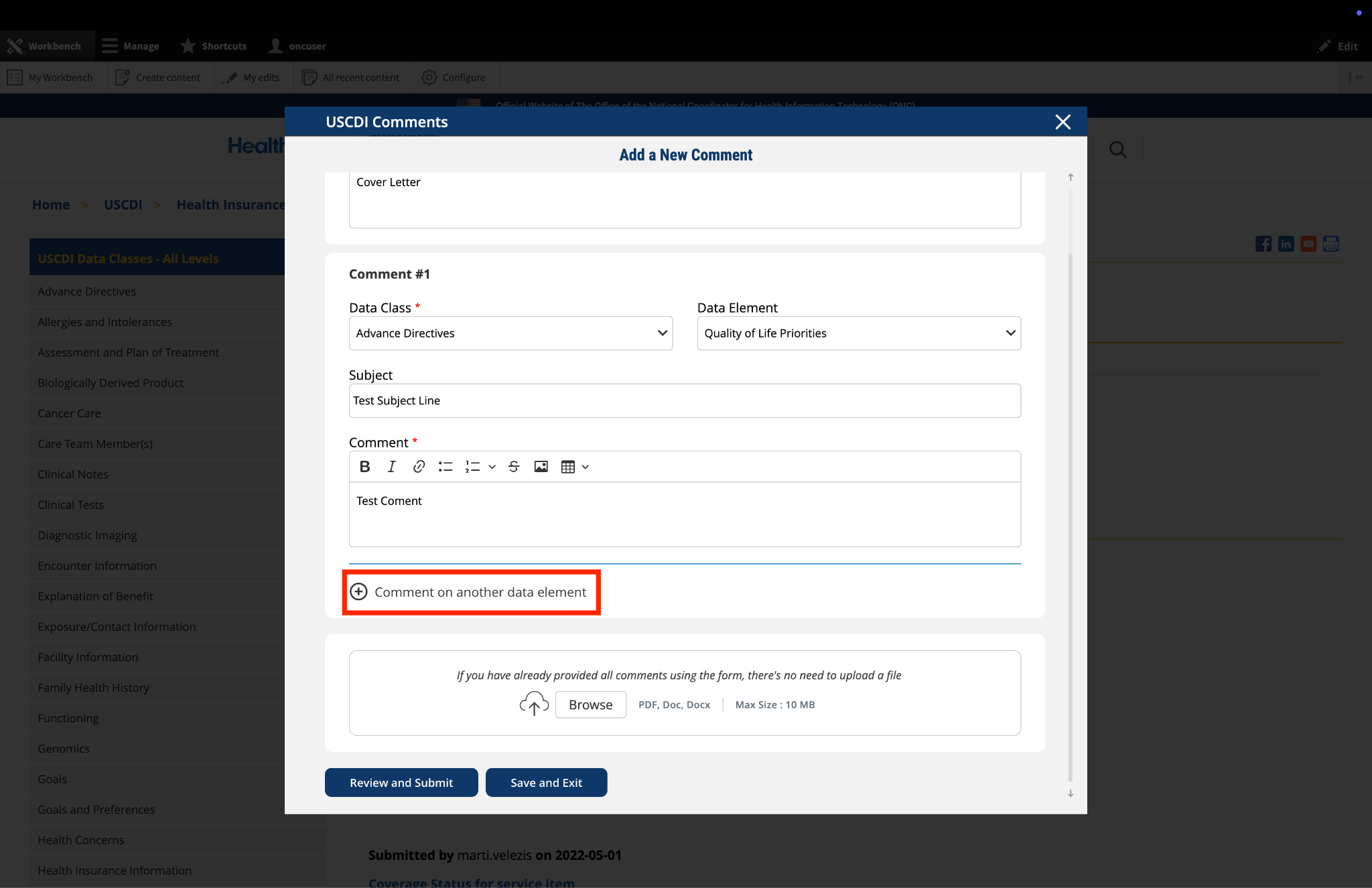
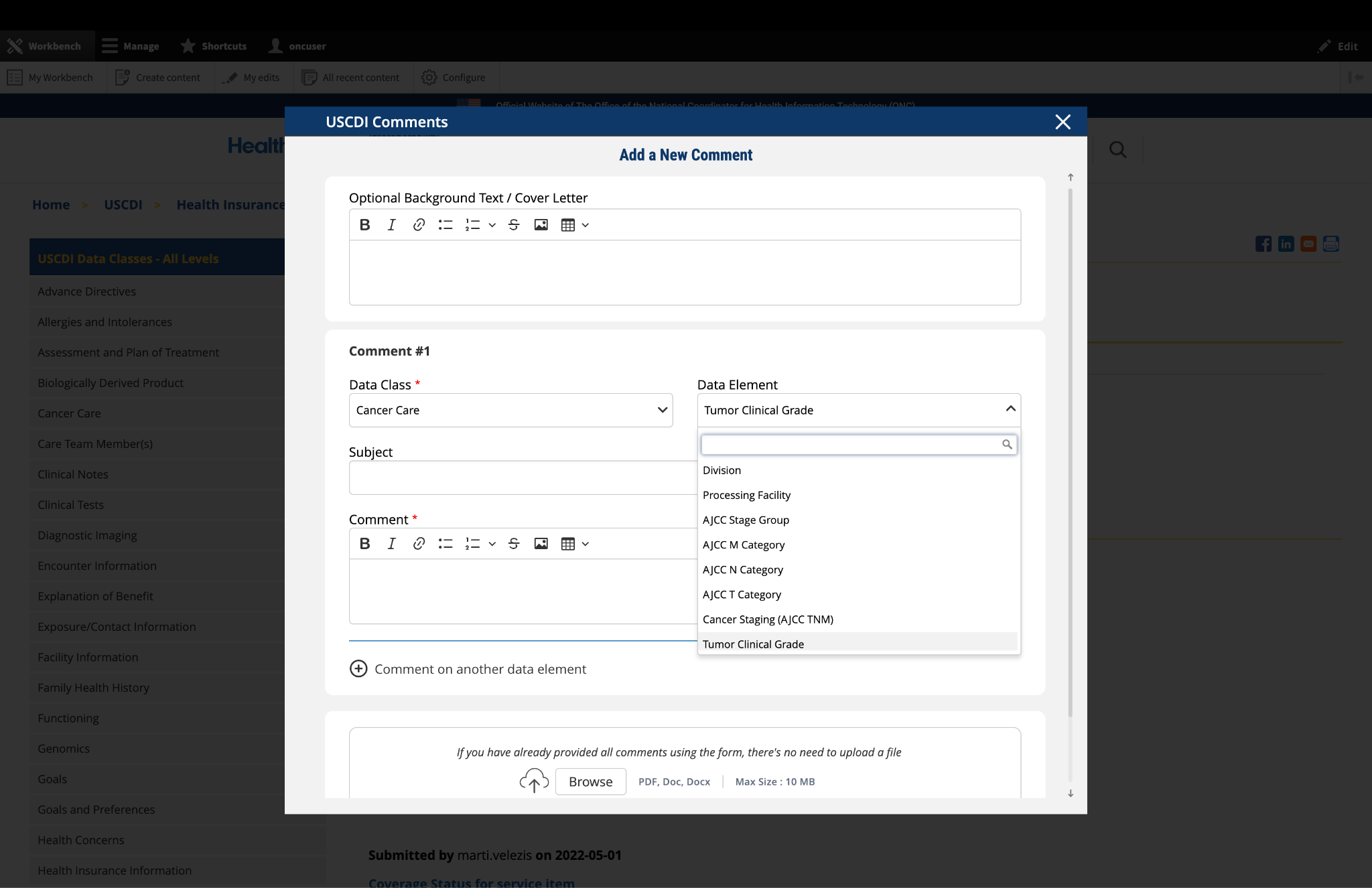
Add a New Comment

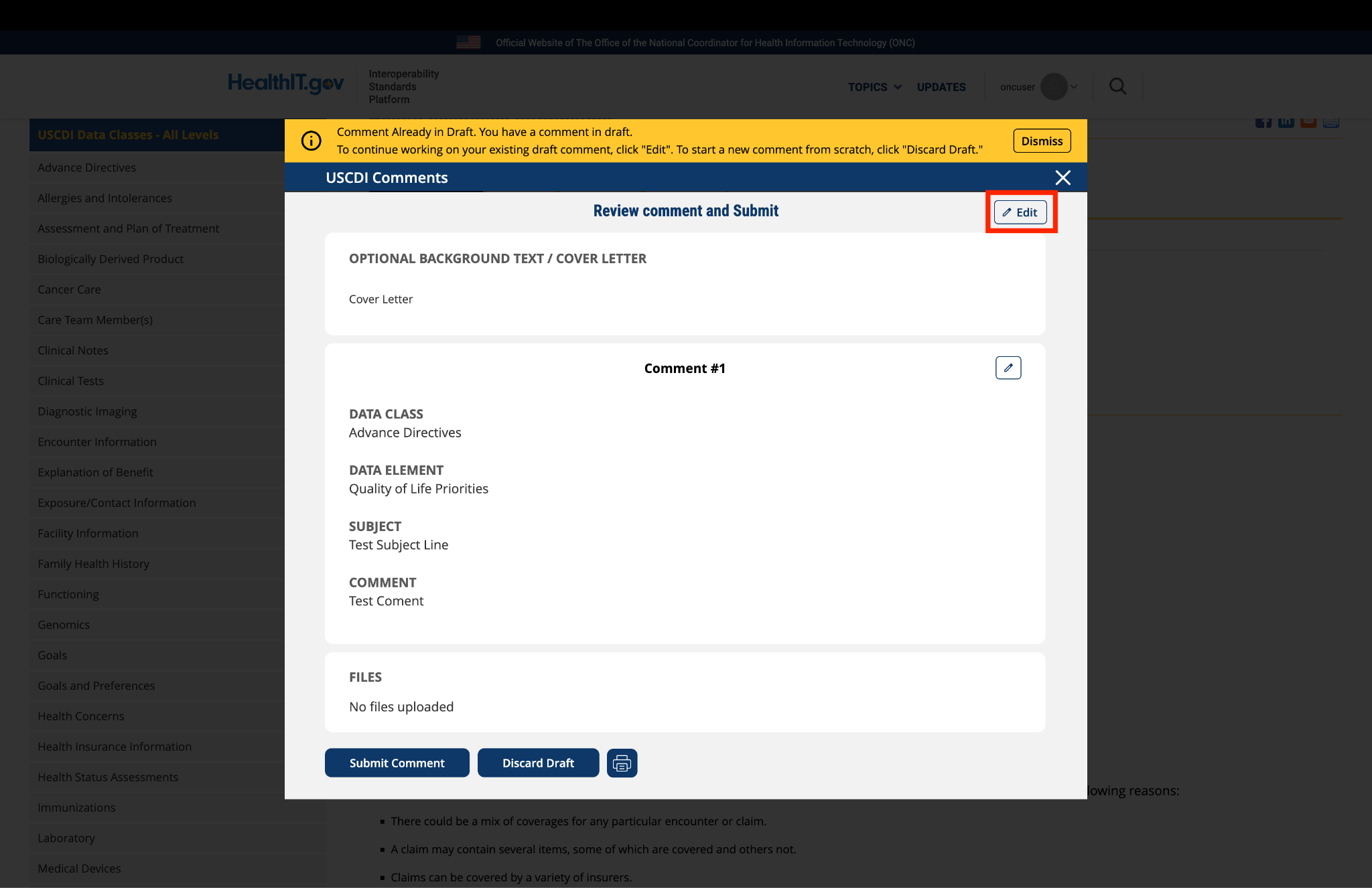
Review comment and Submit

Edit
Comment #1
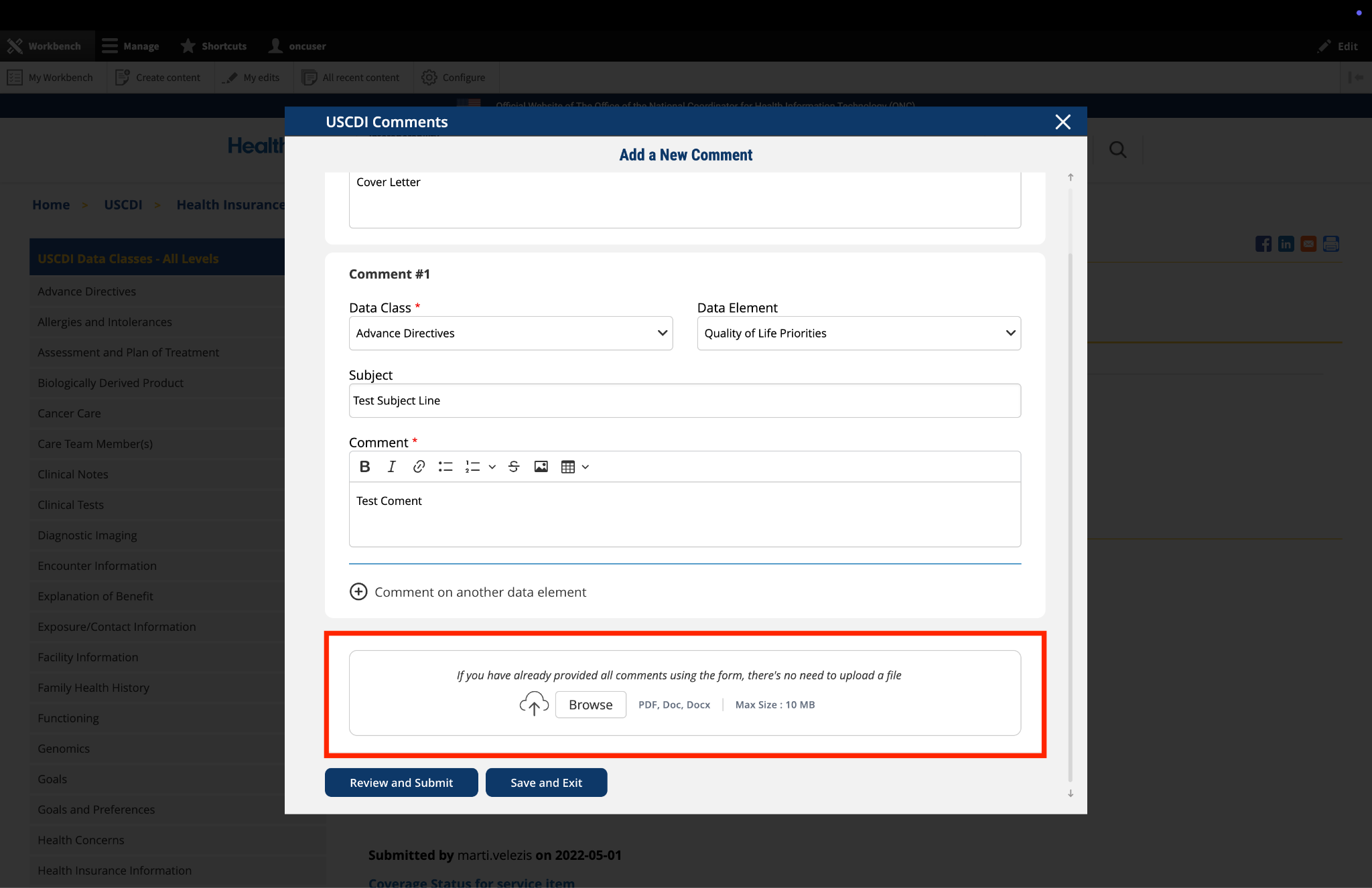
PDF, Doc, Docx
Max Size : 10 MB