

United States Core Data for Interoperability (USCDI)
The United States Core Data for Interoperability (USCDI) is a standardized set of health data classes and constituent data elements for nationwide, interoperable health information exchange. Review the USCDI Fact Sheet to learn more.
A USCDI Data Class is an aggregation of Data Elements by a common theme or use case.
A USCDI Data Element is a piece of data defined in USCDI for access, exchange or use of electronic health information.
USCDI ONC New Data Element & Class (ONDEC) Submission System
- USCDI V1
- USCDI V2
- USCDI V3
- USCDI V3.1
- USCDI V4
- USCDI V5
- USCDI V6
- Draft USCDI V7
- Level 2
- Level 1
- Level 0
USCDI V1
Please reference the USCDI version 1 document to the left for applicable standards versions associated with USCDI v1.
Harmful or undesired physiological responses associated with exposure to a substance.
Health professional’s conclusions and working assumptions that will guide treatment of the patient.
Information about a person who participates or is expected to participate in the care of a patient.
Narrative patient data relevant to the context identified by note types.
-
- Usage note: Clinical Notes data elements are content exchange standard agnostic. They should not be interpreted or associated with the structured document templates that may share the same name.
Desired state to be achieved by a patient.
Health related matter that is of interest, importance, or worry to someone who may be the patient, patient’s family or patient’s health care provider.
Record of vaccine administration.
Analysis of clinical specimens to obtain information about the health of a patient.
Pharmacologic agents used in the diagnosis, cure, mitigation, treatment, or prevention of disease.
Data used to categorize individuals for identification, records matching, and other purposes.
Activity performed for or on a patient as part of the provision of care.
The metadata, or extra information about data, regarding who created the data and when it was created.
Representing a patient’s smoking behavior.
Unique identifier(s) for a patient's implantable device(s).
Physiologic measurements of a patient that indicate the status of the body’s life sustaining functions.
USCDI V2
The USCDI v2 contains data classes and elements from USCDI v1 and new data classes and elements submitted through the ONDEC system. Please reference the USCDI Version 2 document to the left for applicable vocabulary standards versions associated with USCDI v2 and to the ONC Standards Bulletin 21-3 for more information about the process to develop USCDI v2 and future versions.
Harmful or undesired physiological responses associated with exposure to a substance.
Health professional’s conclusions and working assumptions that will guide treatment of the patient.
Information about a person who participates or is expected to participate in the care of a patient.
Narrative patient data relevant to the context identified by note types.
-
- Usage note: Clinical Notes data elements are content exchange standard agnostic. They should not be interpreted or associated with the structured document templates that may share the same name.
Non-imaging and non-laboratory tests performed that result in structured or unstructured findings specific to the patient to facilitate the diagnosis and management of conditions.
Tests that result in visual images requiring interpretation by a credentialed professional.
Information related to interactions between healthcare providers and a patient.
Desired state to be achieved by a patient.
Health related matter that is of interest, importance, or worry to someone who may be the patient, patient’s family or patient’s health care provider.
Record of vaccine administration.
Analysis of clinical specimens to obtain information about the health of a patient.
Pharmacologic agents used in the diagnosis, cure, mitigation, treatment, or prevention of disease.
Data used to categorize individuals for identification, records matching, and other purposes.
Condition, diagnosis, or reason for seeking medical attention.
Activity performed for or on a patient as part of the provision of care.
The metadata, or extra information about data, regarding who created the data and when it was created.
Representing a patient’s smoking behavior.
Unique identifier(s) for a patient's implantable device(s).
Physiologic measurements of a patient that indicate the status of the body’s life sustaining functions.
USCDI V3
Please read the USCDI v3 standard document and the ONC Standards Bulletin 22-2 for details. Consistent with EO 14168 and OPM guidance, ASTP/ONC is exercising enforcement and issuing certification guidance for the ONC Health IT Certification Program with respect to certain data elements in USCDI v3. For more information see https://www.healthit.gov/topic/uscdi-v3-data-elements-enforcement-discretion.
Harmful or undesired physiological responses associated with exposure to a substance.
Health professional’s conclusions and working assumptions that will guide treatment of the patient.
Information about a person who participates or is expected to participate in the care of a patient.
Narrative patient data relevant to the context identified by note types.
-
- Usage note: Clinical Notes data elements are content exchange standard agnostic. They should not be interpreted or associated with the structured document templates that may share the same name.
Non-imaging and non-laboratory tests performed that result in structured or unstructured findings specific to the patient to facilitate the diagnosis and management of conditions.
Tests that result in visual images requiring interpretation by a credentialed professional.
Information related to interactions between healthcare providers and a patient.
Desired state to be achieved by a patient.
Data related to an individual’s insurance coverage for healthcare.
Assessments of a health-related matter of interest, importance, or worry to a patient, patient’s authorized representative, or patient’s healthcare provider that could identify a need, problem, or condition.
Record of vaccine administration.
Analysis of clinical specimens to obtain information about the health of a patient.
Pharmacologic agents used in the diagnosis, cure, mitigation, treatment, or prevention of disease.
Data used to categorize individuals for identification, records matching, and other purposes.
Condition, diagnosis, or reason for seeking medical attention.
Activity performed for or on a patient as part of the provision of care.
The metadata, or extra information about data, regarding who created the data and when it was created.
Unique identifier(s) for a patient's implantable device(s).
Physiologic measurements of a patient that indicate the status of the body’s life sustaining functions.
USCDI V3.1
Please read the USCDI v3.1 standard document and the ONC Standards Bulletin 22-2 for details. USCDI version 3.1 updates USCDI version 3 with the following changes: consistent with Executive Order 14168, the Sex, Sexual Orientation, and Gender Identity data elements have been removed or updated in the Patient Demographics/Information Data Class.
Harmful or undesired physiological responses associated with exposure to a substance.
Health professional’s conclusions and working assumptions that will guide treatment of the patient.
Information about a person who participates or is expected to participate in the care of a patient.
Narrative patient data relevant to the context identified by note types.
-
- Usage note: Clinical Notes data elements are content exchange standard agnostic. They should not be interpreted or associated with the structured document templates that may share the same name.
Non-imaging and non-laboratory tests performed that result in structured or unstructured findings specific to the patient to facilitate the diagnosis and management of conditions.
Tests that result in visual images requiring interpretation by a credentialed professional.
Information related to interactions between healthcare providers and a patient.
Desired state to be achieved by a patient.
Data related to an individual’s insurance coverage for healthcare.
Assessments of a health-related matter of interest, importance, or worry to a patient, patient’s authorized representative, or patient’s healthcare provider that could identify a need, problem, or condition.
Record of vaccine administration.
Analysis of clinical specimens to obtain information about the health of a patient.
Pharmacologic agents used in the diagnosis, cure, mitigation, treatment, or prevention of disease.
Data used to categorize individuals for identification, records matching, and other purposes.
Condition, diagnosis, or reason for seeking medical attention.
Activity performed for or on a patient as part of the provision of care.
The metadata, or extra information about data, regarding who created the data and when it was created.
Unique identifier(s) for a patient's implantable device(s).
Physiologic measurements of a patient that indicate the status of the body’s life sustaining functions.
USCDI V4
USCDI v4 added 20 data elements and one data class to USCDI v3. Please reference the USCDI v4 standard document and the ONC Standards Bulletin 23-2 for details. To review the prioritization criteria ONC used to select the USCDI v4 data elements, refer to the ONC Standards Bulletin 22-2.
Harmful or undesired physiological responses associated with exposure to a substance.
Information about a person who participates or is expected to participate in the care of a patient.
Narrative patient data relevant to the context identified by note types.
-
- Usage note: Clinical Notes data elements are content exchange standard agnostic. They should not be interpreted or associated with the structured document templates that may share the same name.
Non-imaging and non-laboratory tests performed that result in structured or unstructured findings specific to the patient to facilitate the diagnosis and management of conditions.
Tests that result in visual images requiring interpretation by a credentialed professional.
Information related to interactions between healthcare providers and a patient.
Physical place of available services or resources.
Desired state to be achieved by a person or a person’s elections to guide care.
Data related to an individual’s insurance coverage for healthcare.
Assessments of a health-related matter of interest, importance, or worry to a patient, patient’s authorized representative, or patient’s healthcare provider that could identify a need, problem, or condition.
Record of vaccine administration.
Analysis of clinical specimens to obtain information about the health of a patient.
Instrument, machine, appliance, implant, software, or similar device intended to be used for a medical purpose.
Pharmacologic agents used in the diagnosis, cure, mitigation, treatment, or prevention of disease.
Data used to categorize individuals for identification, records matching, and other purposes.
Information that guides treatment of the patient and recommendations for future treatment.
Condition, diagnosis, or reason for seeking medical attention.
Activity performed for or on a patient as part of the provision of care.
The metadata, or extra information about data, regarding who created the data and when it was created.
Physiologic measurements of a patient that indicate the status of the body’s life sustaining functions.
USCDI V5
USCDI v5 was published on July 16, 2024, and includes 16 new data elements and two new data classes. Please read the USCDI v5 standard document and the ONC Standards Bulletin 24-2 for details.
Harmful or undesired physiological responses associated with exposure to a substance.
Information about a person who participates or is expected to participate in the care of a patient.
Narrative patient data relevant to the context identified by note types.
-
- Usage note: Clinical Notes data elements are content exchange standard agnostic. They should not be interpreted or associated with the structured document templates that may share the same name.
Non-imaging and non-laboratory tests performed that result in structured or unstructured findings specific to the patient to facilitate the diagnosis and management of conditions.
Tests that result in visual images requiring interpretation by a credentialed professional.
Information related to interactions between healthcare providers and a patient.
Physical place of available services or resources.
Desired state to be achieved by a person or a person’s elections to guide care.
Data related to an individual’s insurance coverage for healthcare.
Assessments of a health-related matter of interest, importance, or worry to a patient, patient’s authorized representative, or patient’s healthcare provider that could identify a need, problem, or condition.
Record of vaccine administration.
Analysis of clinical specimens to obtain information about the health of a patient.
Instrument, machine, appliance, implant, software, or similar device intended to be used for a medical purpose.
Pharmacologic agents used in the diagnosis, cure, mitigation, treatment, or prevention of disease.
Findings or other clinical data collected about a patient during care.
Provider-authored request for the delivery of patient care services.
Usage notes: Orders convey a provider’s intent to have a service performed on or for a patient, or to give instructions on future care.
Data used to categorize individuals for identification, records matching, and other purposes.
Information that guides treatment of the patient and recommendations for future treatment.
Condition, diagnosis, or reason for seeking medical attention.
Activity performed for or on a patient as part of the provision of care.
The metadata, or extra information about data, regarding who created the data and when it was created.
Physiologic measurements of a patient that indicate the status of the body’s life sustaining functions.
USCDI V6
ASTP/ONC published USCDI v6 on July 24, 2025, which includes 6 new data elements. Please read the USCDI v6 Standard Document and the ASTP/ONC Standards Bulletin 25-2 for details.
Harmful or undesired physiological responses associated with exposure to a substance.
Information that guides treatment of the patient and recommendations for future treatment.
Information about a person who participates or is expected to participate in the care of a patient.
Narrative patient data relevant to the context identified by note types.
-
- Usage note: Clinical Notes data elements are content exchange standard agnostic. They should not be interpreted or associated with the structured document templates that may share the same name.
Non-imaging and non-laboratory tests performed that result in structured or unstructured findings specific to the patient to facilitate the diagnosis and management of conditions.
Tests that result in visual images requiring interpretation by a credentialed professional.
Information related to interactions between healthcare providers and a patient.
Physical place of available services or resources.
Family member health condition(s) that are relevant to a patient's care.
Desired state to be achieved by a person or a person’s elections to guide care.
Data related to an individual’s insurance coverage for healthcare.
Assessments of a health-related matter of interest, importance, or worry to a patient, patient’s authorized representative, or patient’s healthcare provider that could identify a need, problem, or condition.
Record of vaccine administration.
Analysis of clinical specimens to obtain information about the health of a patient.
Instrument, machine, appliance, implant, software, or similar device intended to be used for a medical purpose.
Pharmacologic agents used in the diagnosis, cure, mitigation, treatment, or prevention of disease.
Provider-authored request for the delivery of patient care services.
Usage notes: Orders convey a provider’s intent to have a service performed on or for a patient, or to give instructions on future care.
Data used to categorize individuals for identification, records matching, and other purposes.
Condition, diagnosis, or reason for seeking medical attention.
Activity performed for or on a patient as part of the provision of care.
The metadata, or extra information about data, regarding who created the data and when it was created.
Physiologic measurements of a patient that indicate the status of the body’s life sustaining functions.
Draft USCDI V7
ASTP/ONC published Draft USCDI v7 on January 29, 2026, which includes 30 new data elements. For the official reference, please read the Draft USCDI v7 Standards Document; the ASTP/ONC Standards Bulletin 26-1 provides additional information. ASTP/ONC welcomes input on future versions during the USCDI feedback period, open through April 13, at 11:59 PM ET. During this time, ASTP/ONC is accepting new data element submissions through ONDEC, and comments on data elements may be entered via the updated commenting feature on the USCDI data element pages.
Unintended effects associated with clinical interventions.

Harmful or undesired physiological responses associated with exposure to a substance.
Information that guides treatment of the patient and recommendations for future treatment.
Information about a person who participates or is expected to participate in the care of a patient.
Narrative patient data relevant to the context identified by note types.
-
- Usage note: Clinical Notes data elements are content exchange standard agnostic. They should not be interpreted or associated with the structured document templates that may share the same name.
Non-imaging and non-laboratory tests performed that result in structured or unstructured findings specific to the patient to facilitate the diagnosis and management of conditions.
Tests that result in visual images requiring interpretation by a credentialed professional.
Information related to interactions between healthcare providers and a patient.
Physical place of available services or resources.
Family member health condition(s) that are relevant to a patient's care.
Desired state to be achieved by a person or a person’s elections to guide care.
Data related to an individual’s insurance coverage for healthcare.
Assessments of a health-related matter of interest, importance, or worry to a patient, patient’s authorized representative, or patient’s healthcare provider that could identify a need, problem, or condition.
Contextual information that provides supporting details for healthcare data.
Record of vaccine administration.
Analysis of clinical specimens to obtain information about the health of a patient.
Instrument, machine, appliance, implant, software, or similar device intended to be used for a medical purpose.
Pharmacologic agents used in the diagnosis, cure, mitigation, treatment, or prevention of disease.
Provider-authored request for the delivery of patient care services.
Usage notes: Orders convey a provider’s intent to have a service performed on or for a patient, or to give instructions on future care.
Data used to categorize individuals for identification, records matching, and other purposes.
Condition, diagnosis, or reason for seeking medical attention.
Activity performed for or on a patient as part of the provision of care.
The metadata, or extra information about data, regarding who created the data and when it was created.
Physiologic measurements of a patient that indicate the status of the body’s life sustaining functions.
- Represented by a terminology standard or SDO-balloted technical specification or implementation guide.
- Data element is captured, stored, or accessed in multiple production EHRs or other HIT modules from more than one developer.
- Data element is electronically exchanged between more than two production EHRs or other HIT modules of different developers using available interoperability standards.
- Use cases apply to most care settings or specialties.
Level 2

Unintended effects associated with clinical interventions.
Harmful or undesired physiological responses associated with exposure to a substance.
Material substance originating from a biological entity intended to be transplanted or infused into another (possibly the same) biological entity.
Narrative patient data relevant to the context identified by note types.
-
- Usage note: Clinical Notes data elements are content exchange standard agnostic. They should not be interpreted or associated with the structured document templates that may share the same name.
Tests that result in visual images requiring interpretation by a credentialed professional.
Information related to interactions between healthcare providers and a patient.
Physical place of available services or resources.
Data related to an individual’s insurance coverage for healthcare.
Assessments of a health-related matter of interest, importance, or worry to a patient, patient’s authorized representative, or patient’s healthcare provider that could identify a need, problem, or condition.
Contextual information that provides supporting details for healthcare data.
Record of vaccine administration.
Analysis of clinical specimens to obtain information about the health of a patient.
Instrument, machine, appliance, implant, software, or similar device intended to be used for a medical purpose.
Pharmacologic agents used in the diagnosis, cure, mitigation, treatment, or prevention of disease.
Provider-authored request for the delivery of patient care services.
Usage notes: Orders convey a provider’s intent to have a service performed on or for a patient, or to give instructions on future care.
Data used to categorize individuals for identification, records matching, and other purposes.
Condition, diagnosis, or reason for seeking medical attention.
Activity performed for or on a patient as part of the provision of care.
Physiologic measurements of a patient that indicate the status of the body’s life sustaining functions.
- Represented by a terminology standard or SDO-balloted technical specification or implementation guide.
- Data element is captured, stored, or accessed in at least one production EHR or HIT module.
- Data element is electronically exchanged between two production EHRs or other HIT modules using available interoperability standards.
- Use cases apply to several care settings or specialties.
Level 1
Material substance originating from a biological entity intended to be transplanted or infused into another (possibly the same) biological entity.
Narrative patient data relevant to the context identified by note types.
-
- Usage note: Clinical Notes data elements are content exchange standard agnostic. They should not be interpreted or associated with the structured document templates that may share the same name.
Physical place of available services or resources.
Assessments of a health-related matter of interest, importance, or worry to a patient, patient’s authorized representative, or patient’s healthcare provider that could identify a need, problem, or condition.
Analysis of clinical specimens to obtain information about the health of a patient.
Pharmacologic agents used in the diagnosis, cure, mitigation, treatment, or prevention of disease.
Data used to categorize individuals for identification, records matching, and other purposes.
The metadata, or extra information about data, regarding who created the data and when it was created.
Physiologic measurements of a patient that indicate the status of the body’s life sustaining functions.
- Not represented by a terminology standard or SDO-balloted technical specification or implementation guide.
- Data element is captured, stored, or accessed in limited settings such as a pilot or proof of concept demonstration.
- Data element is electronically exchanged in limited environments, such as connectathons or pilots.
- Use cases apply to a limited number of care settings or specialties, or data element represents a specialization of other, more general data elements.
Level 0
Unintended effects associated with clinical interventions.
Harmful or undesired physiological responses associated with exposure to a substance.
Material substance originating from a biological entity intended to be transplanted or infused into another (possibly the same) biological entity.
Information about a person who participates or is expected to participate in the care of a patient.
Narrative patient data relevant to the context identified by note types.
-
- Usage note: Clinical Notes data elements are content exchange standard agnostic. They should not be interpreted or associated with the structured document templates that may share the same name.
Non-imaging and non-laboratory tests performed that result in structured or unstructured findings specific to the patient to facilitate the diagnosis and management of conditions.
Tests that result in visual images requiring interpretation by a credentialed professional.
Information related to interactions between healthcare providers and a patient.
Health data as reflected in a patient's Explanation of Benefits (EOB) statements, typically derived from claims and other administrative data.
Physical place of available services or resources.
Desired state to be achieved by a patient.
Desired state to be achieved by a person or a person’s elections to guide care.
Data related to an individual’s insurance coverage for healthcare.
Assessments of a health-related matter of interest, importance, or worry to a patient, patient’s authorized representative, or patient’s healthcare provider that could identify a need, problem, or condition.
Record of vaccine administration.
Analysis of clinical specimens to obtain information about the health of a patient.
Instrument, machine, appliance, implant, software, or similar device intended to be used for a medical purpose.
Pharmacologic agents used in the diagnosis, cure, mitigation, treatment, or prevention of disease.
Findings or other clinical data collected about a patient during care.
Provider-authored request for the delivery of patient care services.
Usage notes: Orders convey a provider’s intent to have a service performed on or for a patient, or to give instructions on future care.
Data used to categorize individuals for identification, records matching, and other purposes.
Information that guides treatment of the patient and recommendations for future treatment.
Condition, diagnosis, or reason for seeking medical attention.
Activity performed for or on a patient as part of the provision of care.
The metadata, or extra information about data, regarding who created the data and when it was created.
Physiologic measurements of a patient that indicate the status of the body’s life sustaining functions.




The USCDI ONC New Data Element and Class (ONDEC) Submission System supports a predictable, transparent, and collaborative process, allowing health IT stakeholders to submit new data elements and classes for future versions of USCDI. Click here for more information and to submit new data elements.
The USCDI standard will follow the Standards Version Advancement Process described in the Cures rule to allow health IT developers to update their systems to newer version of USCDI and provide these updates to their customers.
Comment
Submitted by mashafa on
Academy of Nutrition and Dietetics: Comments on USCDI v7 Draft
The Academy of Nutrition and Dietetics provides the following comments regarding the USCDI Draft Version 7, as detailed in the attached document.
Submitted by Robert Hussey on
Comments from Wolters Kluwer on USCDI v7
Attached are comments from Wolters Kluwer on the draft USCDI v7. Thanks for allowing us to share our views.
Submitted by melanie.kourba… on
Overall Comments
Clear guidance from ONC on how to interpret USCDI data elements encourages consistent use across the industry. APHL therefore suggests that ONC focus on the following:
a) Prioritize clinical utility and implementability: data elements should include clear definitions, usage notes, examples, and (where relevant) code system examples to communicate scope. Ideally data elements could also support the use of synonyms, as some domains are accustomed to the names that they use, making it hard to identify, that the need is already supported by an existing data element (e.g. Performance Date/Time).
b) Strengthen semantic interoperability: expand USCDI in a manner that supports computable exchange (e.g., clear value sets (at minimum constraining to specific hierarchies in SNOMED CT), terminology guidance, versioning expectations, as well as clarification about pre-and post-coordination), not just transport.
c) Clarify definitions and scope boundaries (including relationships between similar elements such as Device Type vs UDI, Encounter vs Appointment; Procedures vs Orders; and Events vs Outcomes).
d) Remove the convenience classes and instead create listings of data elements by use case / domain, so that all applicable data elements for a particular use case are viewable together. Distributing data elements from one use case across multiple convenience classes causes confusion and makes the USCDI hierarchy more complicated than it needs to be. For example, data elements related to laboratory data exchange are currently spread across 7 classes; visualizing these data elements in a single list would simplify things for implementers. Potentially USCDI+ could serve that purpose, but then ONC should provide more explanation so that users know where exactly to look for the domain specific requirements. While convenience classes with a clear and commonly understood definition might be okay to retain (e.g., Patient Demographics) or to create (e.g., Date/Time Elements), those that do not have a clear and unambiguous interpretation (e.g. Healthcare Information Attributes) ” should be removed to reduce confusion for implementers.
Submitted by Erin_ORourke_AHIP on
AHIP Comments on Draft USCDI V7
AHIP is the national association that represents health insurance plans that provide coverage, services, and solutions for over 205 million Americans through Medicare and Medicaid, employer-sponsored insurance, and the individual insurance market. AHIP appreciates the opportunity to provide comments on the United States Core Data for Interoperability (USCDI) Draft Version 7.
We commend the Office of the National Coordinator for Health Information Technology’s (ONC) efforts to develop this critical national foundation for interoperability. By establishing a standardized set of core data elements, USCDI promotes greater consistency and more reliable health information exchange across stakeholders. As ONC continues to advance USCDI, we encourage ongoing refinement to ensure it facilitates comprehensive, scalable, and clinically meaningful data exchange.
Data Class: Health Insurance Information
We continue to be concerned that several data elements in the Health Insurance Information data class do not exist or risk exposing personally identifiable information without providing value to consumers. We strongly recommend ONC revise the Health Insurance Information data class to focus on sharing information that is clinically meaningful, feasible and, does not risk patient privacy, such as whether the person has insurance coverage and the type of coverage.
First, ONC should remove data elements that jeopardize privacy and security without adding significant value to a person’s health record. The privacy and security of member data is a paramount responsibility and a major concern for health plans and the consumers they serve. While this information may be robustly protected when held by a physician, hospital, or health insurance provider, the data are outside the reach of the Health Insurance Portability and Accountability Act (HIPAA) once shared through the API to third-party applications per the ONC Cures Act Rule or the Centers for Medicare & Medicaid Services Interoperability and Patient Access Rule. Moreover, all USCDI data elements are required to be shared with the selected third-party applications under the CMS rules— there is no data segmentation opportunity to pull out elements that the patient may consider sensitive.
For the Health Insurance Information data class, the data elements include identifiers (ID) of not only the patient but also their spouse or parent (if they are the subscriber) and where they are employed. While the patient ID may be useful in the EHR to match information with practice management systems or payer claims information, this sort of detailed benefit information does not provide clinically relevant or even intelligible information for third party applications unless the identifier is also the patient’s social security number. Moreover, it is information consumers already know, so they do not need to access it through a third party. However, in the hands of third-party applications via the Patient Access API, the information could be used to identify someone in a different data set, make associations with other people in other data sets, or even re-identify a de-identified data set. Thus, while there may be important reasons to share some of this data among HIPAA covered entities, sharing it with entities outside of HIPAA exposes patients to risk without material benefit.
To remedy this threat CMS and ONC should reconsider the automatic link between the USCDI and the Patient Access API. Instead, each data element for the purposes of standardizing EHR data should be weighed separately from whether it should be shared with third-party applications that are not covered by HIPAA. Otherwise, we are providing patients with a false choice: access the data they need to make informed choices, or risk potential exposure of sensitive information. Until then, ONC should remove the following data elements to protect consumer privacy:
- Member identifier,
- Subscriber identifier,
- Relationship to subscriber,
- Group identifier.
Next, the USCDI should not contain elements that have no associated value set or national standard, but rather only include information that is feasible to collect and has a specific use case. ONC should remove such data elements to ensure that USCDI only includes information that is feasible to collect and has a specific use case. For example, there is no national standard for health plan identifier; the Centers for Medicare & Medicaid Services never finalized health plan enumeration. While the National Association of Insurance Commissioners assign unique identifiers to health plans, these are not universal across all plans. There are also Health Insurance Oversight System identifiers for Marketplace plans, but again these are not universal. ONC should not add the Health Insurance Payer, Health Insurance Plan, and Health Insurance Plan Identifier data elements to USCDI V7 and should remove the Health Insurance Payer Identifier data element.
Similarly, ONC should also not add the Health Insurance Coverage Period data element to the USCDI. This information could quickly become outdated and risks causing confusion if this information is not shared from the source of truth-the health plan. For example, a person could change employers or have another qualifying life event that causes them to switch health plans. However, the Cure Act Final rule requires providers to share USCDI with patients and other providers, risking outdated or inaccurate information on a person’s coverage being passed through the system. Once this data is in a person’s record, there will not be an easy way to determine if it is accurate or its provenance.
Data Element: Tobacco Use
We support ONC’s revisions to the Tobacco Use data element. These revisions will ensure that plans and providers can exchange information on the full scope of a person’s tobacco use, not just smoking status. As vaping and other modes of tobacco use gain popularity, it is critical to address all potential risks to a person’s health from tobacco. This revision will also allow health plans to more feasibly implement the National Committee for Quality Assurance’s (NCQA) new HEDIS measure for Measurement Year (MY) 2026: Tobacco Use Screening and Cessation Intervention (TSC-E). It is imperative that this measure can be feasibly implemented and the necessary electronic data exchanged as CMS has proposed for use in accountability programs such as the Health Insurance Exchange Quality Rating System (QRS). ONC should add the revised Tobacco Use data element to USCDI V7.
Future Directions: Support Digital Quality Measurement
We appreciate ONC’s efforts to coordinate with the Core Quality Measures Collaborative (CQMC) and build on the CQMC’s work when developing the USCDI+ Quality. Aligned measures based on interoperable data have the potential to reduce the burden on clinicians and providers while providing all stakeholders with more robust information on performance. We strongly encourage ONC to continue to collaborate with the CQMC when updating the USCDI+ Quality in the future and prioritize the data elements necessary to calculate the CQMC core measures for future versions. However, ONC should also add data elements necessary to calculate digital quality measures in the baseline USCDI to ensure they are available for all payers and health care providers to use.
Additionally, we urge ONC to include data elements for high-value measures beyond CMS programs in the USCDI and the USCDI+ Quality. For example, ONC should add data elements to support the exchange of data to support NCQA’s HEDIS measures to support aligned measures across public and private payers. ONC should also prioritize high-value but high burden measures such as patient experience measures and patient-reported outcomes-based performance measures (PRO-PMs) where digital measurement could materially advance their use and facilitate the exchange of person-centered data. Promoting the interoperability of patient-generated data could allow for it to be used across the system while reducing the response burden on patients.
AHIP and its members look forward to working with ONC to continue to advance interoperability to empower patients and support patient care.
Submitted by NCQA on
NCQA USCDI v7 Comment
The National Committee for Quality Assurance (NCQA) thanks you for the opportunity to provide feedback on draft version 7 of the US Core Data for Interoperability (USCDI).
NCQA is a private, 501(c)(3) not-for-profit, independent organization dedicated to improving health care quality through our Accreditation and measurement programs. We are a national leader in quality oversight and a pioneer in quality measurement. Leveraging our strengths as a trusted third party, we are committed to helping organizations navigate the challenges associated with improving the health care system. Our mission to improve the quality of health for all Americans propels our daily work.
NCQA is pleased to provide the following comments, summarized below and detailed in the attached letter (and individual element pages), on the proposals and considerations for USCDI v7.
- Strong support for draft USCDI v7 new elements
- NCQA supports all additions to draft USCDI v7. Specifically, we strongly support the following added elements: Device Type, Referral Orders, Medical Device Orders, Medication Administration, Medication Dispense Quantity, Health Insurance Information elements, Tobacco Use, Accommodations and Healthcare Agent.
- Additional recommendations for Final USCDI v7
- Device Type data element: Add HCPCS terminology.
- Device Orders data element: Add HCPCS terminology.
- Performance Time data element: Broaden stated examples to include care plans, notes, and health status assessments.
- Indication data element: Revise definition to be inclusive of additional indications for care activities (i.e., screenings).
- Health Stats Assessment data class: Clarify scope to include both the assessment (LOINC) and the result of that assessment (LOINC, SNOMED).
- Other comments
- Race and Ethnicity: Recommend alignment of the data elements to the updated OMB SPD 15 standard to support clear, aligned standards requirements across the industry.
- NCQA also supports several recommendations submitted by PACIO to advance and clarify key USCDI data elements.
Thank you for the opportunity to comment. We remain committed to working with ASTP to build a more efficient and responsible American health care system. If you have any questions, please contact Eric Musser, Vice President of Federal Affairs, at (202) 955-3590 or at musser@ncqa.org.
Submitted by nicole.toth@pr… on
Inclusion of HEDIS Measure Data in USCDI
We recommend that all data elements necessary for HEDIS measures be incorporated into the United States Core Data for Interoperability (USCDI). The current requirement to extract CPT Level 2 codes, evidence of follow-up, and other supporting information through disparate processes introduces additional cost and complexity to our workflows. Consolidating these data elements within USCDI would streamline data extraction and facilitate more efficient sharing of quality measures with payers. This improvement would help reduce administrative burden and enhance interoperability across systems.
Submitted by mattreid on
AMA comments on Draft USCDI v7
The American Medical Association (AMA) appreciates the opportunity to provide comments on Draft USCDI v7. The AMA supports a USCDI that advances nationwide interoperability while reducing clinician burden and ensuring that exchanged data are clinically meaningful, well defined, and implementable in real world workflows.
In prior ONC rulemaking and USCDI-related comments, the AMA has emphasized the need for a predictable and transparent process for USCDI updates, clear definitions and scope for data elements, and standards-based APIs that reduce implementation complexity and cost. The AMA has also consistently encouraged approaches that prioritize patient privacy, data provenance/governance, and usability for clinicians and patients.
I. Overarching Recommendations
- Maintain a predictable and transparent annual process for USCDI evolution, with sufficient time for implementers to assess workflow and technical impacts.
- Prioritize clinical utility and implementability: data elements should include clear definitions, usage notes, examples, and (where relevant) code system examples to communicate scope.
- Reduce clinician burden by avoiding requirements that force duplicative documentation or manual data capture that is not already part of routine care.
- Strengthen semantic interoperability: expand USCDI in a manner that supports computable exchange (e.g., clear value sets, terminology guidance, and versioning expectations), not just transport.
- Address privacy, consent, provenance, and governance as foundational to trust—particularly as the number of required elements expands and more data are accessed through APIs.
II. General Support for Draft USCDI v7 with Targeted Refinements
ASTP/ONC notes that Draft USCDI v7 includes 29 proposed data elements and one significantly revised data element (Tobacco Use) and introduces two new data classes (Adverse Events and Healthcare Information Attributes). The AMA supports thoughtful expansion of the USCDI baseline when additions are technically mature, broadly applicable, and paired with clear implementation guidance.
The AMA recommends ASTP/ONC focus on three practical refinements across Draft USCDI v7:
- Clarify definitions and scope boundaries (including relationships between similar elements such as Encounter vs Appointment; Procedures vs Orders; and events vs outcomes).
- Provide “code system examples” and implementation notes wherever ambiguity could lead to inconsistent capture or exchange.
- Explicitly address versioning, provenance, and governance expectations to improve downstream usability for clinical care, quality measurement, and administrative processes.
III. Comments on Selected Draft USCDI v7 Data Elements and Data Classes
A. New Data Class: Adverse Events (Adverse Event; Adverse Event Outcome)
The AMA supports the addition of an Adverse Events data class. Adverse event information is critical for patient safety, post market surveillance, and learning health system functions. To maximize utility and reduce burden, ASTP/ONC should:
- Provide clear guidance distinguishing “adverse event” from related concepts (e.g., complication, side effect, medical error, sentinel event).
- Clarify relationships between event, outcome, severity, and attribution (including whether and how causality is represented).
- Align examples and recommended vocabularies with widely implemented clinical documentation patterns to avoid new documentation burden.
B. Healthcare Information Attributes (Reason Not Performed; Diagnostic Report Date; Indication; Performance Time)
The AMA supports creation of a Healthcare Information Attributes data class to capture contextual information that improves interpretability. For Reason Not Performed in particular, ASTP/ONC should ensure:
- Reason values are represented in a consistent, computable way (e.g., contraindication, patient refusal, access/logistical constraints), supporting quality measurement and analytics.
- The element is implementable without requiring clinicians to provide new structured data beyond what is already captured in clinical documentation.
- Guidance clarifies how Reason Not Performed is associated with the specific ordered/attempted service (test, procedure, immunization, etc.).
C. Orders and Care Coordination (Medical Device Order; Nutrition Order; Referral Order; Referral Note)
The AMA supports additions that improve care coordination, reduce administrative burden, and support transitions of care—particularly for referrals and device ordering. To avoid fragmentation, the AMA recommends:
- Clarify how Referral Order and Referral Note relate to existing referral/consult workflows and how they are linked to scheduling (Appointment) and clinical interactions (Encounter).
- Provide scope guidance and examples for Medical Device Order to ensure consistent representation across settings (DME, home monitoring, infusion, implanted devices, etc.).
- For Nutrition Assessment and Nutrition Order, provide examples that reflect interdisciplinary workflows and avoid duplicative clinician documentation.
D. Diagnostic Imaging (Diagnostic Imaging Reference)
The AMA supports adding Diagnostic Imaging Reference, recognizing the patient safety and efficiency gains from avoiding duplicative imaging and enabling access to prior studies. To realize these benefits, ASTP/ONC should:
- Clarify the minimum expectations for a computable reference (e.g., link type, access method, and metadata needed for safe use).
- Encourage implementation approaches that support secure access, patient matching, and provenance (who created the study, where it is hosted, and when it was performed).
- Promote alignment with standards-based imaging access patterns (e.g., DICOM web and FHIR-based references), while allowing flexibility for implementation maturity.
E. Administrative Data (Health Insurance Coverage Period; Payer; Plan; Plan Identifier)
The AMA supports the Health Insurance Information data elements to reduce administrative burden and improve care coordination. However, insurance information is highly dynamic and varies across workflows. ASTP/ONC should:
- Clarify the intended uses (eligibility verification, care coordination, patient access) and avoid implying that USCDI elements alone constitute eligibility determinations.
- Recommend governance/refresh patterns to ensure that exchanged data reflect current coverage without creating clinician burden.
- Provide guidance on consistent identifiers for plans/payers when available, and how to represent unknown or changing values.
F. Procedures and Status Elements (Procedure Status; Condition Status; Immunization Status)
The AMA supports expansion of status elements that improve interpretability and longitudinal tracking. ASTP/ONC should provide clear value set guidance and examples to ensure consistent use across systems and settings, especially where status may be inferred from workflow rather than explicitly documented.
G. Revised Data Element: Tobacco Use (expanding Smoking Status)
The AMA supports modernization of Smoking Status to a broader Tobacco Use concept that reflects evolving products (including e-cigarettes/vaping and smokeless tobacco). To improve clinical utility and comparability while minimizing burden, ASTP/ONC should:
- Clarify whether Tobacco Use is intended to be a single summarized status, a set of product-specific statements, or both (and how systems should exchange each).
- Encourage consistent representation of product type, frequency/intensity, and temporal status (current, former, never) where feasible.
- Align with existing clinical assessment workflows so that structured capture does not increase documentation burden.
IV. Recommendations on “Code System Examples” and Terminology/Implementation Guidance
Standards Bulletin 2026-1 explicitly requests examples of code systems used by developers and implementers to communicate data element scope. The AMA recommends ASTP/ONC use this opportunity to strengthen semantic interoperability by providing practical, implementer-ready guidance:
- For each data element where scope can vary materially, provide one or more widely used code system examples and explain the intended scope boundaries.
- Encourage versioned value sets and mapping guidance where multiple vocabularies are in common use and emphasize provenance of mappings/values.
- Promote terminology services and implementation patterns that support consistent validation and translation (e.g., use of standard APIs for terminology operations).
As a physician-led organization, the AMA is particularly focused on ensuring that USCDI expansion results in data that are usable for patient care and does not inadvertently increase clinician burden. Strong terminology and implementation guidance is one of the most effective ways to reduce variability, lower costs for implementers, and improve the reliability of downstream use cases (clinical decision support, quality measurement, prior authorization, and patient access).
V. Conclusion
The AMA appreciates ASTP/ONC’s continued stewardship of the USCDI and supports Draft USCDI v7’s overall direction. We urge ASTP/ONC to pair expansion with clear definitions, scope boundaries, and practical implementation guidance—especially code system examples, governance, and provenance—to ensure that USCDI data are interoperable in practice and do not add unnecessary burden to clinicians.
Submitted by Parul.goyal on
Becton, Dickinson and Company (BD) comments on USCDI Version 7
BD (Becton, Dickinson and Company) commends the Offices of the Assistant Secretary for Technology Policy (ASTP) and the National Coordinator for Health Information Technology (ONC) for their leadership in advancing data interoperability and digital advancements in healthcare. We support the administration’s broader innovation agenda and welcome the opportunity to contribute to this important work.
BD is committed to ensuring patients have access to medical technologies globally, touching billions of patients and helping improve and save lives. In the U.S., BD manufactures more medical devices than any other company and operates more than 30 manufacturing sites and distribution centers across the country. Throughout our 128-year history, BD has been a long-standing partner to the U.S. government in its efforts to ensure access to innovative medical technologies that are critical to American healthcare. Our focus on interoperability and digital quality measures reflects our dedication to reducing harm and supporting frontline care teams.
We recognize the importance of the USCDI framework in building scalable, standardized systems that enhance care and safety. As updates are considered, we offer the following recommendations:
- Leveraging encounter data: Root Cause Analyses for mandatory reportable never events, such as healthcare-associated infections (HAIs) and hospital-acquired pressure ulcers (HAPUs), are closely tied to CMS reimbursement and can inform targeted prevention strategies. Encounter data is a critical digital resource for identifying where and when such events occur, helping pinpoint opportunities for intervention along the patient journey. To enhance its utility, we recommend capturing not only the locations a patient has visited but also the specific timeframes of their presence at each location. Additionally, including more granular details about the type of care setting (e.g., inpatient, outpatient, emergency department, home) would provide valuable context for understanding the care environment.
- Tracking medication errors: Medication errors occur in acute care settings at a rate of approximately 6.5 per 100 admissions. While retrospective reviews are commonly used to address these issues, a digital database that provides real-time visibility into when, where, and at what dose medications are administered could accelerate quality improvement efforts and strengthen medication stewardship. Although adherence indicators offer insight into overall medication-taking behavior, capturing actual administration events such as those recorded in the Electronic Medication Administration Record (eMAR) is essential for improving patient safety and reducing preventable errors.
- Capturing timing of specimen collection: The timing of specimen collection is often critical to the clinical relevance of laboratory results, particularly for drug therapeutic levels and markers of organ function. We recommend capturing specimen collection time to support accurate diagnosis, assess sample quality, and enhance workflow efficiency, resource allocation, and patient safety.
We recognize this is an iterative process and look forward to providing detailed input in future comment cycles. Please don’t hesitate to reach out to us with any questions in the meantime.

Jessica C. Johnston
Vice President, Market Access and Payment Policy
Submitted by melanie.kourba… on
Assigning Authority
APHL recommends ASTP include the assigning authority and identifier code typewith ANY identifier data element (in all HL7 products, assignment authority is part of the various supported identifier type data types). This comment applies to Identifier (Identifier), Specimen Identifier (Specimen Identifier), Medical Record Number (Medical Record Number), and Medicare Patient Identifier (Medicare Patient Identifier). We recommend that the definitions for these data elements include the following language: "Alphanumeric value that uniquely identifies the declared identifier type over time, at minimum within one organization, ideally at the national level, including a means to identify the organization or system that assigned it."
Ideally, the complete identifier should consist of the alphanumeric string, the assigning authority, and the identifier code type. This combination would promote data interoperability by allowing data modelers to confidently merge alphanumeric strings that are identical. Just because the alphanumeric string in the Identifier field in two different messages is identical, the data modeler cannot assume that the patient is the same. It may be that the string refers to a medical record number in one and a patient identifier in another, or to medical record numbers from two different EHR implementation that just happen to be the same. A more complete identifier with assigning authority and identifier code type would eliminate this confusion and lead to more transparent, interoperable data and ultimately actionable data.
Help
1. Optional: Background Text / Cover Letter
The "Optional Background Text / Cover Letter" field provides space for additional context or introductory information related to your comment.
If you wish to provide context, explanation, or an introduction to your comment, enter this information in the field labeled "Optional Background Text / Cover Letter." This is entirely optional and is most useful when submitting multiple related comments or when additional background would help reviewers understand your feedback.
If you are only commenting on a single data class or element, you may leave this field blank.
2. Select the Data Class
To specify which data class your comment addresses:
- In the "Data Class" drop-down menu, select the appropriate data class you want to comment on.
- If you are providing a general comment that is not specific to a data element, select "General" from the options. Comments with this designation will be displayed on the USCDI landing page.
- Note that the Data Class field will automatically populate based on your current location in the platform:
- If you are on a data class page, the field will be set to that specific data class
- If you are on a data element page, the corresponding data class will be pre-selected
3. Select the Data Element
To specify which data element your comment addresses:
- In the "Data Element" drop-down menu, select the specific data element you want to comment on.
- The drop-down menu will display only the elements available under the data class you selected in the previous step.
- You can use the search function within the drop-down to quickly locate a specific data element.
- If you are commenting on the data class itself rather than a specific element, you may leave this field blank.
Note: Comments on a specific data element will appear on the respective data element page, while comments on a data class (without a specific element selected) will appear on the landing page for that data class.
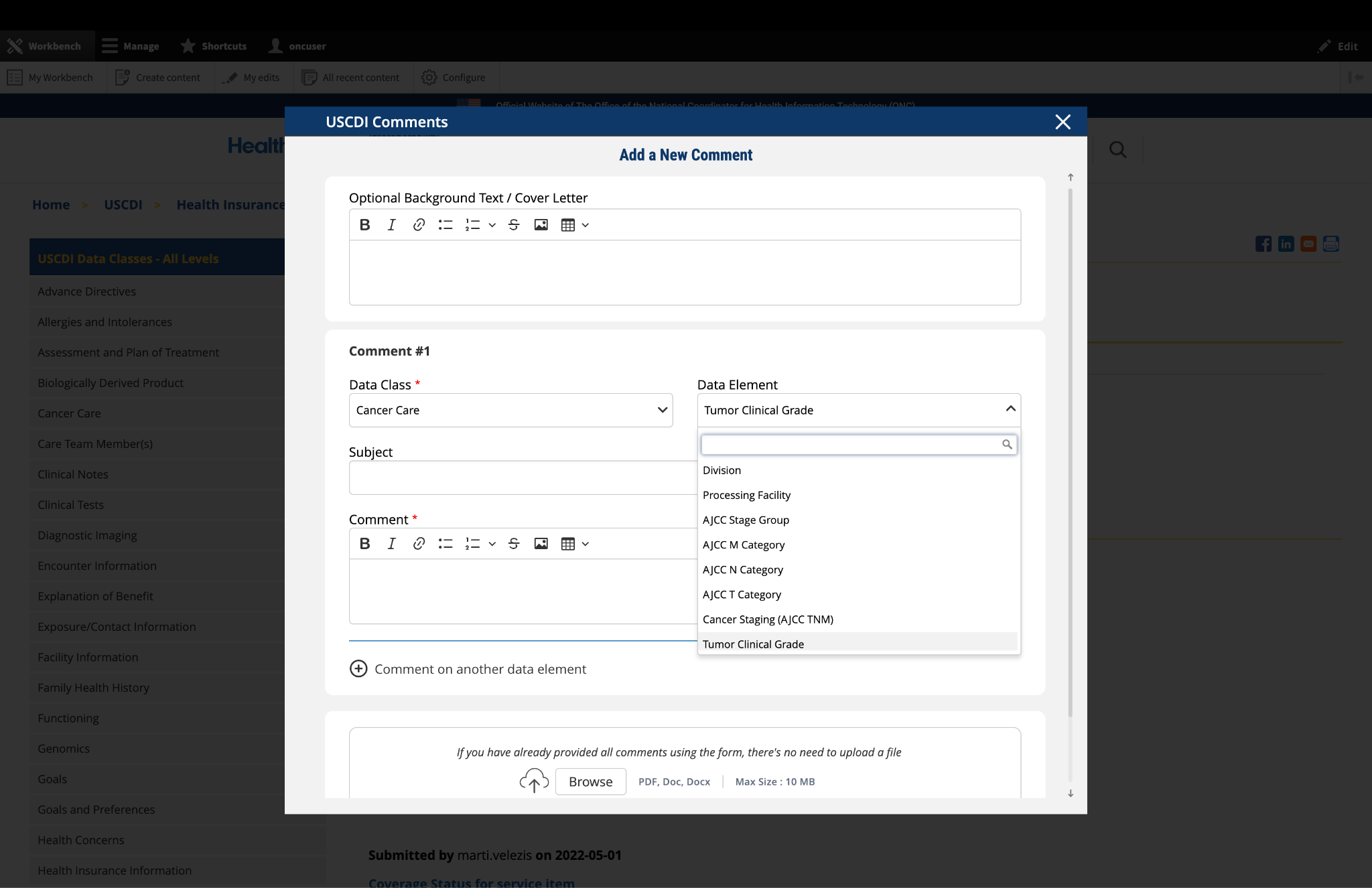
Fig 1 The "Data Class" and "Data Element" dropdown menus allow users to specify the exact content they wish to comment on.
4. Optional: Propose New Data Class or Element
If you cannot find the appropriate data class or element for your comment:
- Instead of clicking the "Comment On An Existing Data Class Or Element" button, click the adjacent button labeled "Propose a New Data Class or Data Element."
- This will redirect you to the ONDEC (ONC New Data Element and Class) Submission System.
- In the ONDEC system, follow the provided instructions to submit your proposal for a new data class or element.
- Once your proposal is submitted through ONDEC, it will be reviewed separately from the commenting process.
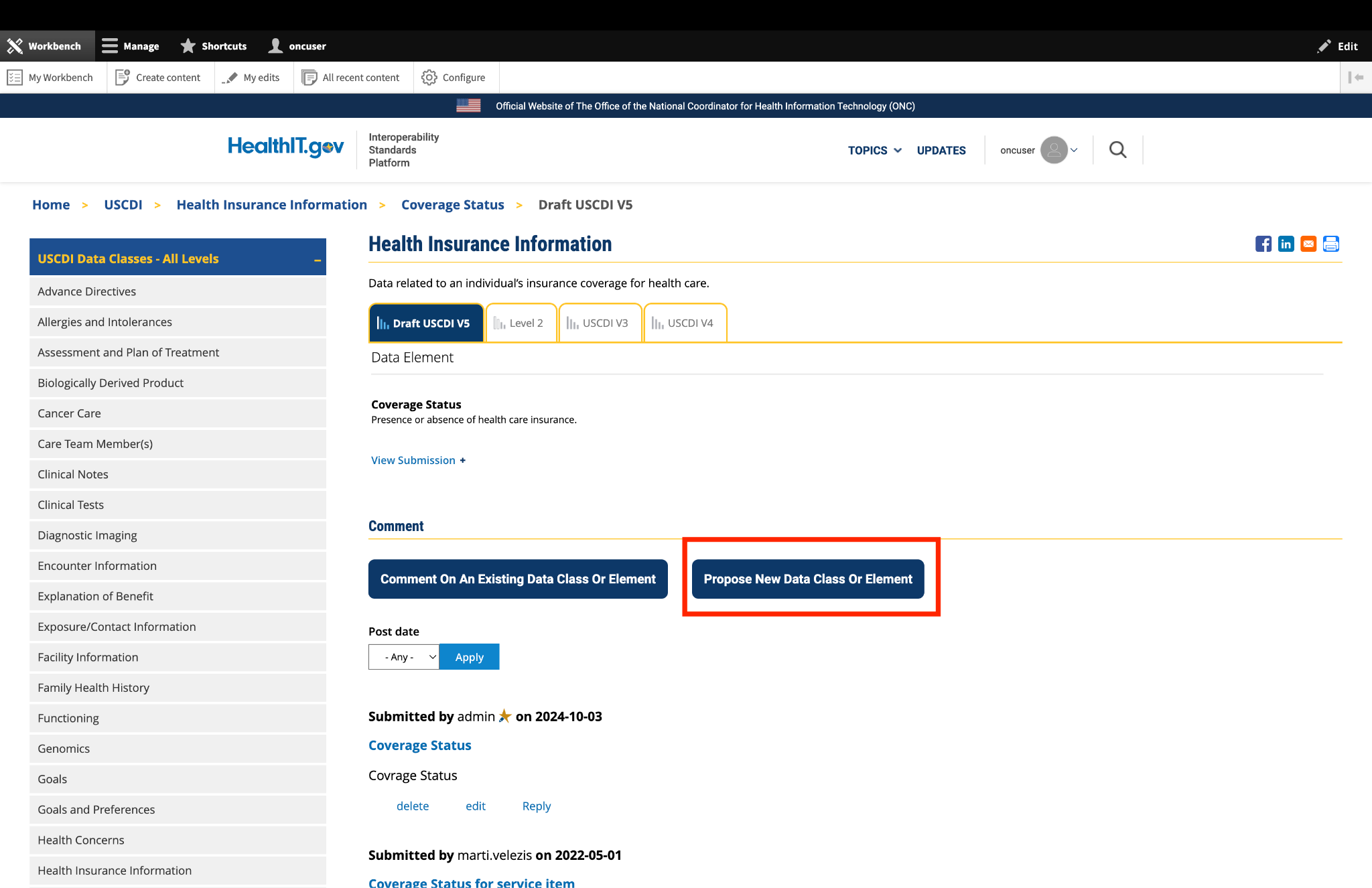
Fig 2 The "Propose a New Data Class or Data Element" button redirects users to the ONDEC Submission System for proposing new data elements not currently available in the system.
5. Complete the Comment Form
Fill out the required fields in the comment form:
Subject: Enter a brief, descriptive title that summarizes your comment. This helps reviewers quickly understand the nature of your feedback.
Comment: In this field, provide the full details of your comment or feedback. Be as clear and specific as possible about your suggestions, concerns, or observations. Include any relevant details that support your position.
6. Optional: Add Additional Comments
If you need to comment on multiple data classes or elements:
- After completing your first comment, click the link labeled "Comment on another data element" at the bottom of the form.
- A new comment section will appear, allowing you to enter details for your additional comment.
- For each additional comment, you must select the appropriate data class and data element from the drop-down menus.
- Complete the Subject and Comment fields for your additional comment.
- Repeat this process for each additional comment you wish to submit.
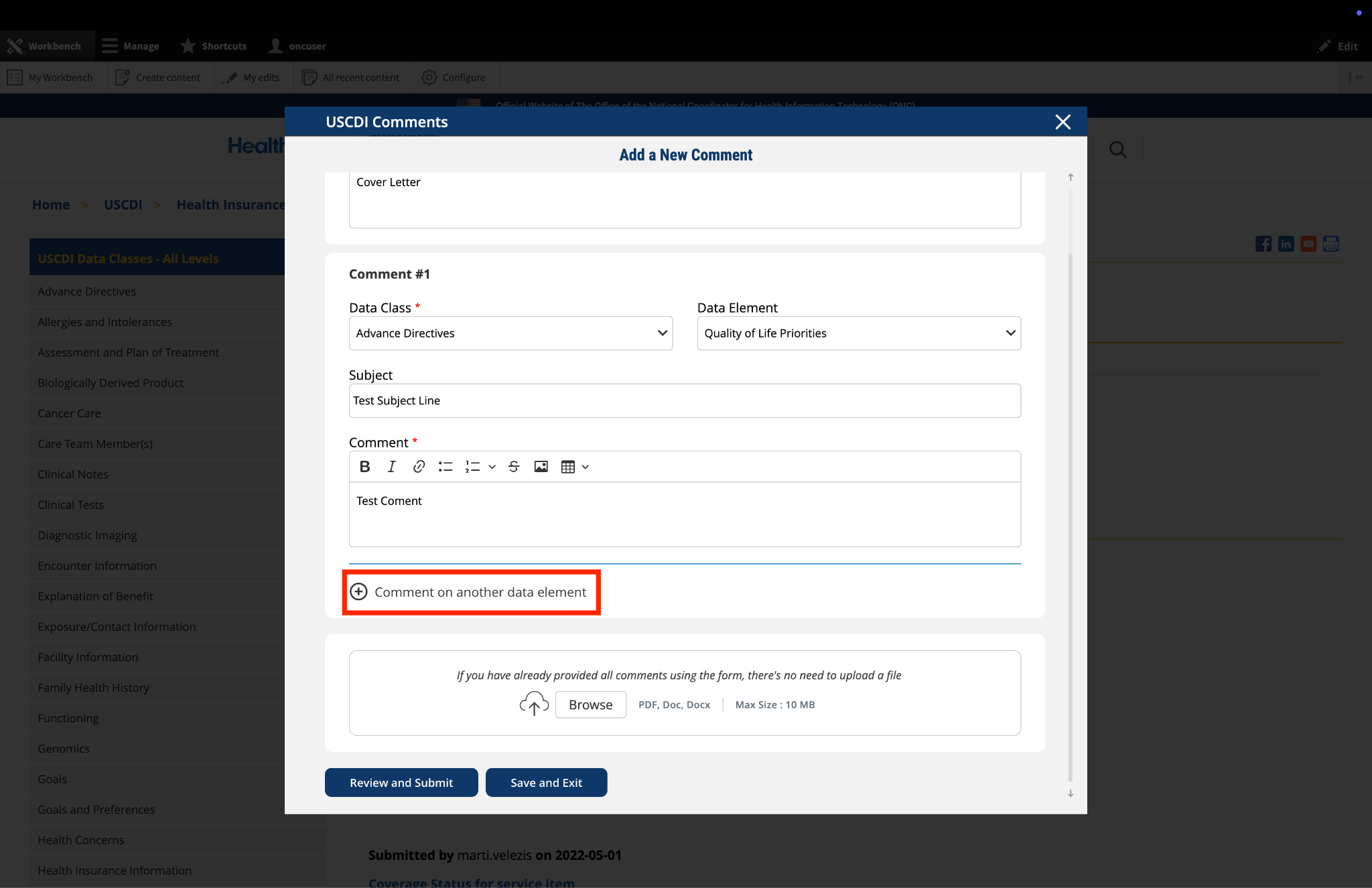
Fig 3 The "Comment on another data element" link enables users to create multiple comments addressing different elements within a single submission.
7. Optional: Upload Supporting Files
The platform allows you to upload supporting documentation to enhance your comment:
- Locate the "File Upload" section at the bottom of the comment form.
- Click to upload any files (such as PDFs or documents) that provide additional context, evidence, or clarification for your comment.
Important: If you have already entered your comments using the form fields, there is no need to upload duplicate content in PDF format. The file upload feature is intended for supplementary materials only. Please avoid uploading files that contain the same information already provided in your comment text.
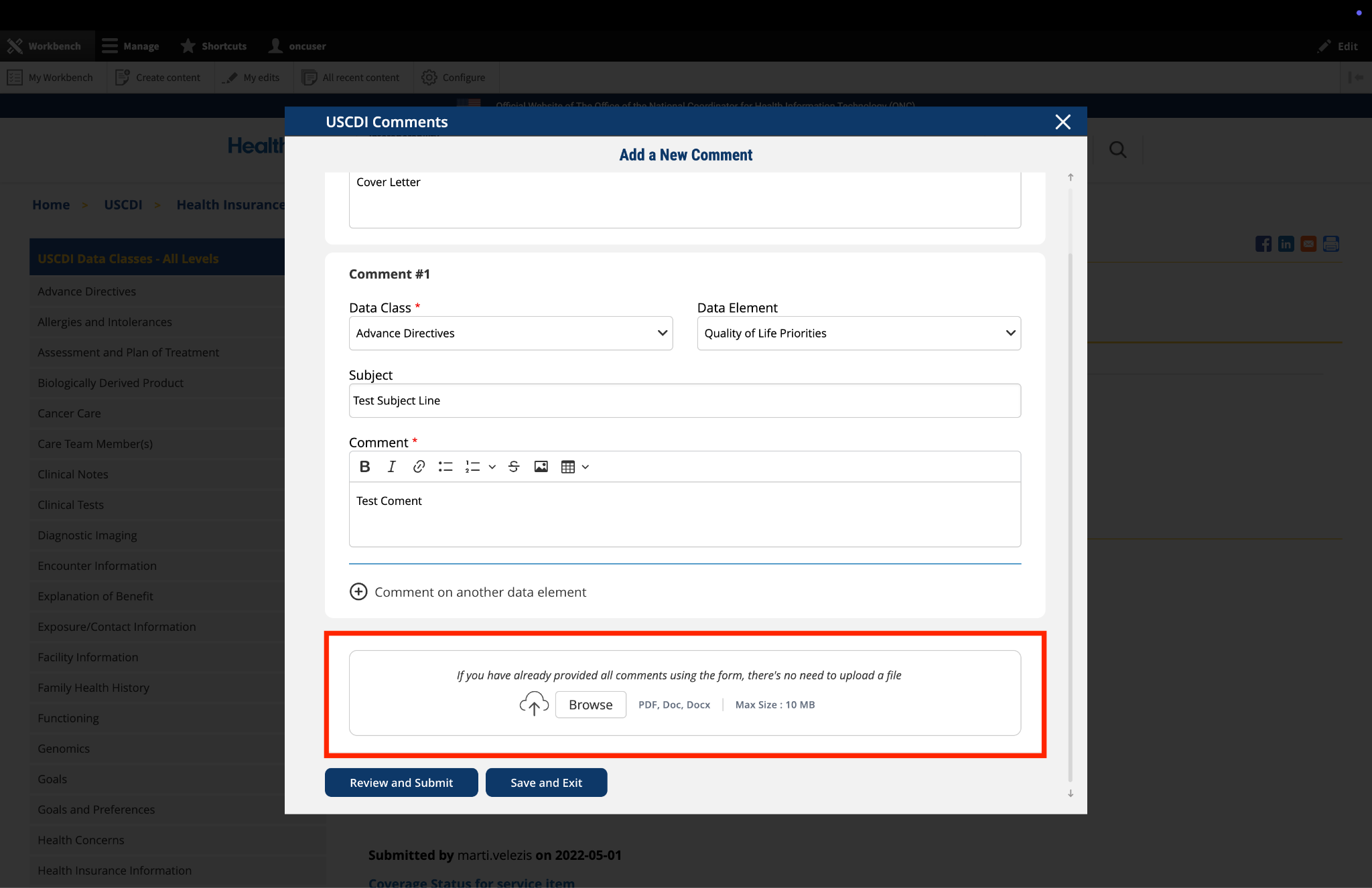
Fig 4 The "File Upload" section permits users to attach supporting documentation that supplements their written comments.
8. Optional: Save and Exit
If you need to pause your work and return to complete your comment later:
- Click the "Save and Exit" button at the bottom of the form.
- Your comment will be saved as a draft that you can access and complete later.
- When you return to the platform, you will see a red triangle with an exclamation mark next to the “Return to saved Comment” button, indicating that you have saved comments in draft status.
- Click this button to continue working on your draft.
- You will be taken to a review page where you can:
- Select "Submit Comment" to officially submit your feedback.
- Click "Edit" to return to the comment form and make changes
- Select "Discard Draft" to delete the saved draft and start fresh
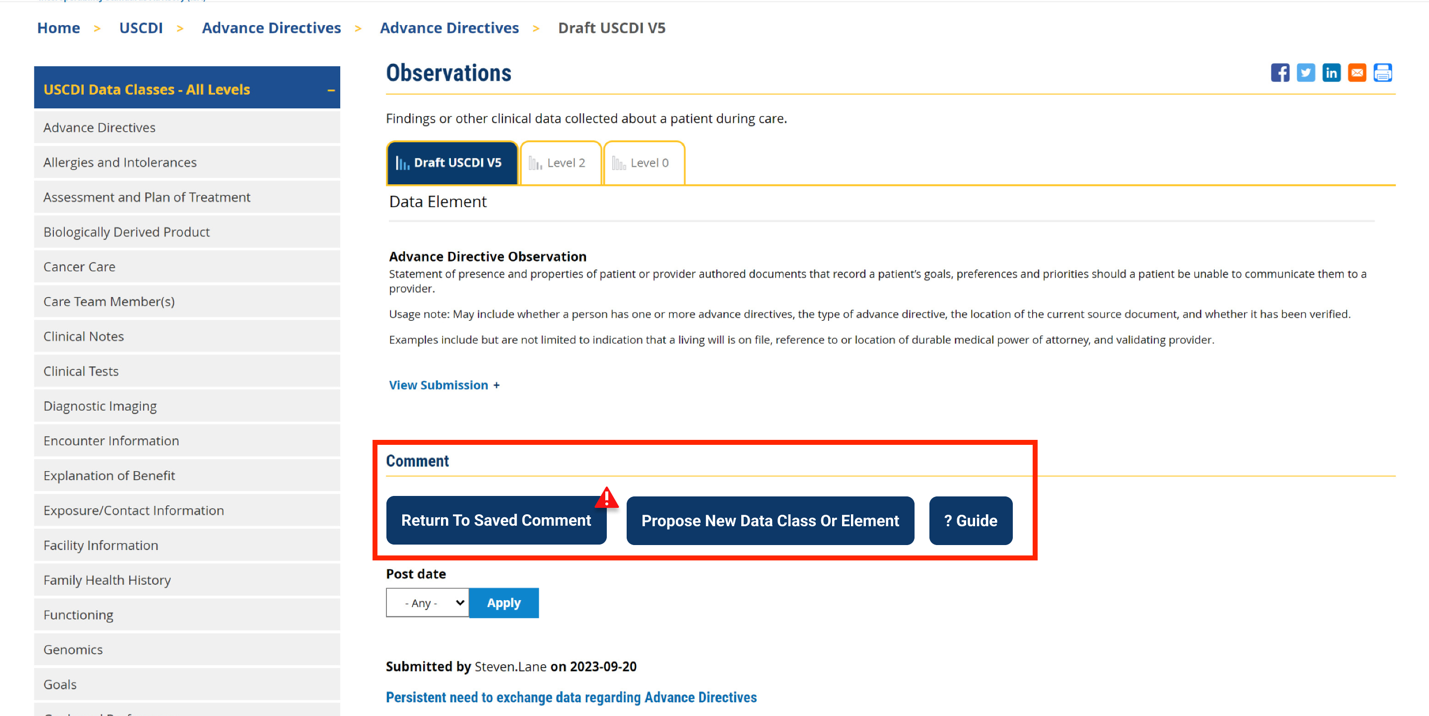
Fig 5 A red triangle with exclamation mark indicator appears next to the “Return to saved Comment” button when draft comments are saved in the system.
9. Review and Submit
Once you have completed your comment:
- Click the "Review and Submit" button at the bottom of the form.
- This will take you to a review screen displaying your comment(s) in full.
- Review all information for accuracy and completeness.
- On this review screen, you have three options:
- Click "Submit Comment" to officially submit your feedback
- Click "Edit" to return to the comment form and make changes
- Click "Discard Draft" to delete the comment and start fresh
- The review screen also includes a "Print" button that allows you to create a printed copy of your comments for your records.
- If you choose to submit, your comment will be recorded in the system and made available for review by the appropriate stakeholders.
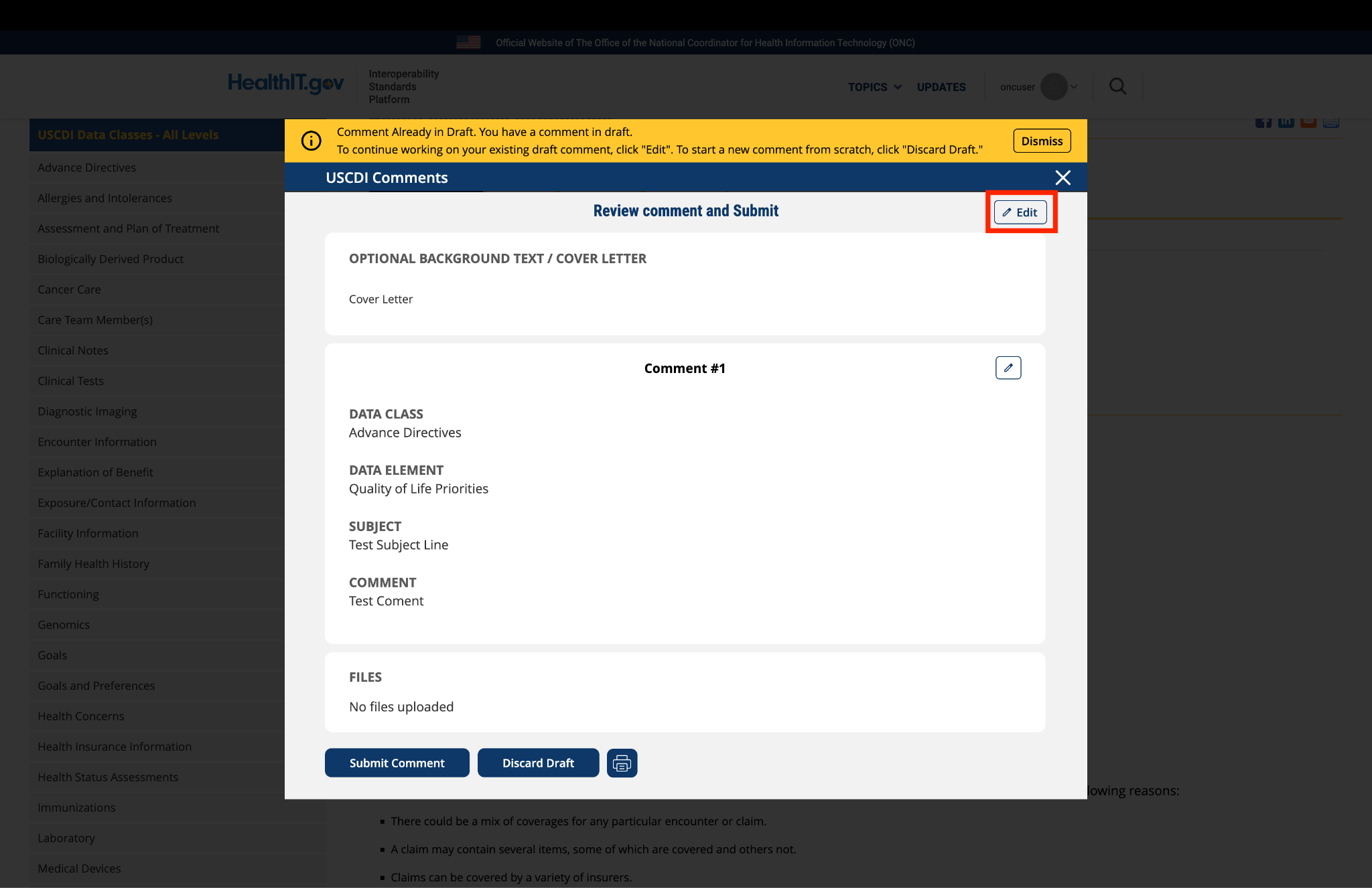
Fig 6 The review screen allows users to verify comment content and make any necessary modifications before final submission.
Submitted by mrallins on
Regenstrief Institute Health Data Standards Comment on USCDI V7
Thank you for the opportunity to comment on Draft USCDI Version 7, published January 2026. We appreciate ONC’s continued commitment to expanding standardized health data exchange through an open, transparent, stakeholder-driven process. The 30 proposed data element additions - including two new data classes (Adverse Events and Healthcare Information Attributes)- represent meaningful progress toward improved patient safety, nutrition care, and administrative interoperability.
These comments are submitted from the perspective of the Regenstrief Institute which maintains deep expertise in clinical terminology standards and their application to structured data exchange. Our feedback is grounded in a systematic gap analysis comparing Draft USCDI V7 requirements against the current LOINC v2.82 content set, with a focus on vocabulary readiness, implementation feasibility, and alignment with the SHIELD (Strengthening Health through Integration of Electronic Laboratory Data) initiative’s public health informatics priorities.
USCDI v7 cover letter and comments_Regenstrief Instistute_2026-04-10_FINAL.pdf